


Can Berberine HCL Pakistan Support Healthy Cholesterol and Triglyceride Levels?

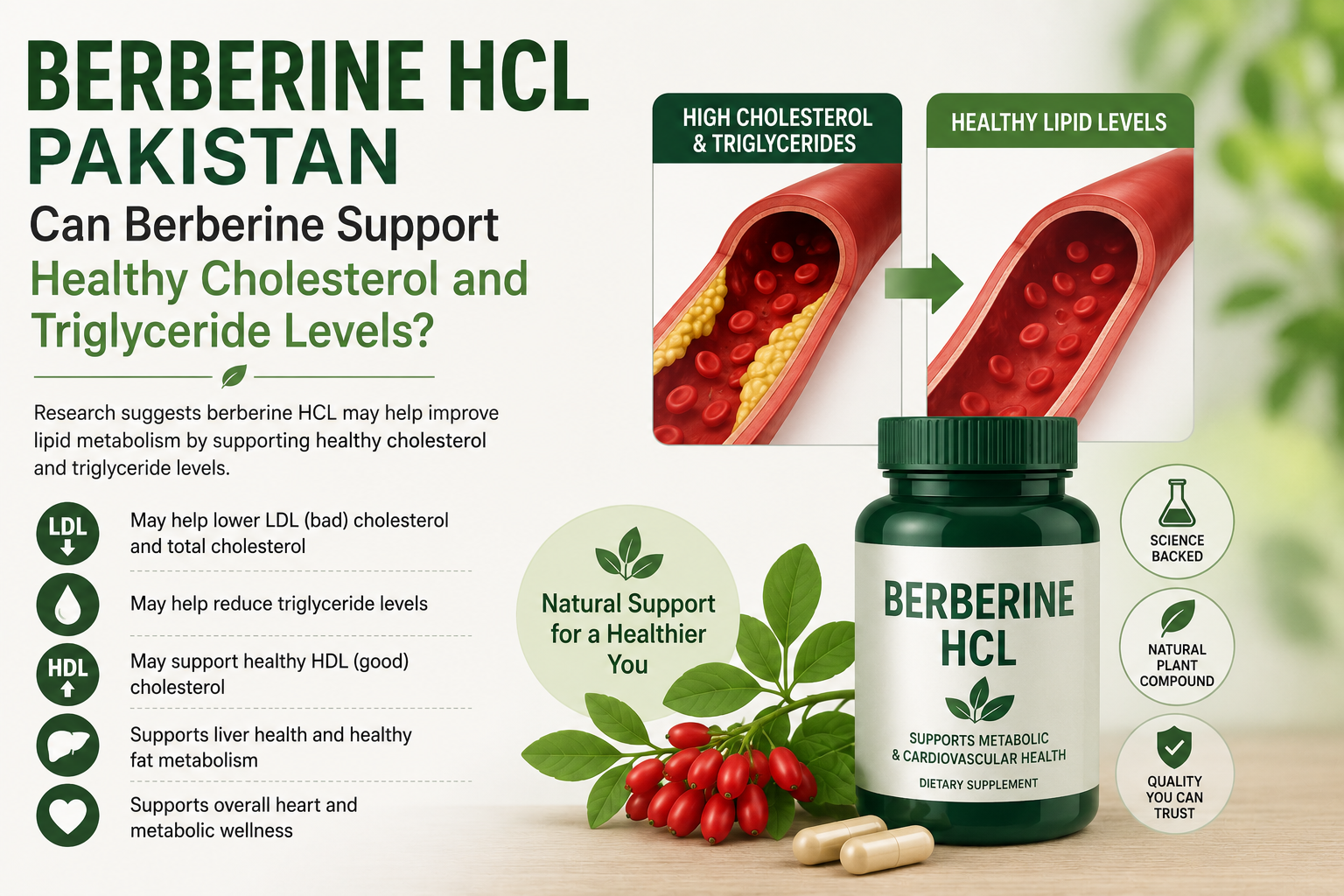
High cholesterol and elevated triglycerides are common metabolic concerns that can develop quietly over time. Many people experience no obvious symptoms until abnormal lipid levels are discovered through a blood test. When these markers remain uncontrolled, they may contribute to atherosclerosis, fatty liver disease, cardiovascular complications and a higher risk of metabolic disorders.
Diet, physical activity, body weight, genetics, smoking, diabetes, thyroid disorders and certain medicines can all influence blood lipids. Alongside established lifestyle and medical treatments, researchers have studied several plant-derived compounds for their potential effects on lipid metabolism. Berberine is one of the most frequently discussed.
This growing body of research has increased interest in berberine HCL Pakistan, particularly among adults seeking natural and evidence-informed ways to support metabolic wellness. However, berberine should not be treated as a replacement for prescribed cholesterol medicine or professional care. The most useful approach is to examine what the research actually suggests, how berberine may affect cholesterol and triglycerides, and where the evidence remains limited.
Understanding Cholesterol and Triglycerides
Cholesterol and triglycerides are both lipids, but they serve different functions in the body.
Cholesterol is needed to produce cell membranes, hormones, bile acids and vitamin D. Because cholesterol cannot move through the bloodstream independently, it travels inside particles called lipoproteins.
The main lipid markers measured in a standard blood test include:
-
LDL cholesterol: Often described as “bad” cholesterol because high levels can contribute to plaque accumulation in arteries.
-
HDL cholesterol: Commonly called “good” cholesterol because it helps transport excess cholesterol back to the liver.
-
Total cholesterol: A combined measurement that includes several cholesterol-containing particles.
-
Triglycerides: The primary form in which the body stores unused energy from food.
Elevated triglycerides may occur when a person regularly consumes more calories than the body needs, particularly from refined carbohydrates, sugary drinks or alcohol. They may also be associated with obesity, insulin resistance, poorly controlled diabetes, fatty liver disease and certain genetic conditions.
Although LDL cholesterol and triglycerides are different markers, both can be affected by insulin resistance and broader metabolic dysfunction.
What Is Berberine HCL?
Berberine is a naturally occurring alkaloid found in plants such as barberry and several other species used in traditional Chinese and Ayurvedic health practices.
Berberine hydrochloride, commonly abbreviated as berberine HCL, is the form frequently used in dietary supplements. The hydrochloride form offers stability and allows the compound to be incorporated into tablets, capsules, and Berberine HCL Gummies.
Researchers have examined berberine for its possible effects on:
-
LDL cholesterol
-
Total cholesterol
-
Triglycerides
-
Blood glucose
-
Insulin sensitivity
-
Liver fat accumulation
-
Inflammatory signalling
-
Gut microbial activity
These areas are interconnected. For example, insulin resistance can increase liver triglyceride production, while fatty liver disease can worsen glucose and lipid regulation.
How Berberine HCL Pakistan May Affect Lipid Metabolism
The potential lipid-related Berberine HCL benefits appear to involve several biological pathways rather than one single mechanism.
Increasing LDL Receptor Activity
LDL receptors are located mainly on liver cells. Their role is to remove LDL particles from the bloodstream.
Research suggests that berberine may increase the expression and stability of LDL receptors. More active LDL receptors could allow the liver to clear circulating LDL cholesterol more efficiently.
This proposed mechanism is different from the primary mechanism of statins, which mainly reduce cholesterol production in the liver. However, this difference does not mean that berberine is equivalent to or safer than prescription medicine.
Influencing PCSK9
PCSK9 is a protein that contributes to the breakdown of LDL receptors. Higher PCSK9 activity can leave fewer LDL receptors available to remove cholesterol from the blood.
Berberine has been studied as a possible natural regulator of PCSK9 activity. A 2024 systematic review and meta-analysis found that berberine-containing interventions were associated with reductions in several lipid markers, although the included studies differed in formulation, design and quality.
This pathway helps explain why researchers continue to investigate berberine for dyslipidaemia, but it does not establish that supplements can replace clinically approved PCSK9 inhibitors.
Reducing Liver Fat Production
The liver plays a central role in both cholesterol and triglyceride metabolism. Insulin resistance can encourage the liver to convert excess glucose into fatty acids, which are then packaged into triglyceride-rich particles.
Berberine may affect enzymes involved in fatty-acid synthesis and fat storage. It may also influence AMP-activated protein kinase, or AMPK, a cellular energy sensor associated with glucose uptake and fat oxidation.
Through these pathways, berberine may reduce excessive liver lipid production and improve metabolic efficiency. This mechanism may be especially relevant to people with metabolic syndrome, type 2 diabetes, or fatty liver disease.
Supporting Insulin Sensitivity
Insulin resistance often contributes to elevated triglycerides. When insulin signalling becomes less effective, fat cells release more fatty acids into circulation, and the liver may produce more triglycerides.
By potentially supporting insulin sensitivity, berberine may indirectly improve lipid regulation. A 2025 meta-analysis involving 12 randomized trials and 889 participants with metabolic syndrome reported significant improvements in triglycerides, fasting glucose and waist circumference. It also found effects on LDL cholesterol and total cholesterol, although no significant improvement in HDL cholesterol was observed.
What Does Research Say About Cholesterol?
Several systematic reviews and clinical trials have reported reductions in LDL cholesterol and total cholesterol after berberine supplementation.
A 2021 meta-analysis evaluating berberine alone across metabolic conditions found reductions in total cholesterol, LDL cholesterol and triglycerides. However, study quality, participant characteristics, supplement doses and trial durations varied considerably.
Earlier clinical research also reported favourable lipid changes. In one placebo-controlled trial, participants with low cardiovascular risk experienced reductions in total cholesterol, LDL cholesterol and triglycerides after three months of berberine use. HDL cholesterol also increased in that particular study.
These findings are encouraging, but they should be interpreted carefully. Not every trial has shown meaningful effects. A randomized clinical trial published in 2022 found no statistically significant changes in triglycerides, LDL cholesterol, HDL cholesterol or total cholesterol compared with the control group.
This inconsistency may reflect differences in:
-
Participant health status
-
Baseline cholesterol levels
-
Supplement dosage
-
Treatment duration
-
Berberine formulation
-
Dietary habits
-
Medication use
-
Study size and quality
The total evidence suggests possible benefit, but not a guaranteed response for every person.
Can Berberine Lower Triglycerides?
Triglycerides appear to be among the lipid markers most consistently affected in some berberine studies.
The 2025 metabolic-syndrome meta-analysis found a significant reduction in triglycerides, while another 2024 meta-analysis in people with non-alcoholic fatty liver disease reported improvements in lipid profiles, liver enzymes and insulin sensitivity.
Berberine may influence triglycerides by:
-
Reducing liver fatty-acid synthesis
-
Supporting glucose regulation
-
Improving insulin sensitivity
-
Increasing fat oxidation
-
Modifying gut microbial metabolites
-
Reducing the flow of excess fatty acids to the liver
However, severely elevated triglycerides can increase the risk of acute pancreatitis and require medical treatment. A Berberine supplement should never be used as the only response to a dangerously abnormal test result.
Does Berberine Increase HDL Cholesterol?
The evidence for HDL cholesterol is less consistent than the evidence for LDL cholesterol and triglycerides.
Some individual studies have reported a modest increase in HDL, while larger reviews have found little or no significant effect. The 2025 analysis of metabolic syndrome did not find a statistically significant improvement in HDL cholesterol.
This matters because claims that berberine automatically “raises good cholesterol” are too broad. Its effects appear to vary, and HDL should not be considered in isolation. Cardiovascular risk assessment also considers LDL cholesterol, triglycerides, blood pressure, blood glucose, smoking status, family history and other clinical factors.
Berberine Is Not a Replacement for Statins
Statins are among the most extensively studied medicines for lowering LDL cholesterol and reducing cardiovascular events. Berberine does not have the same quantity or quality of long-term outcome evidence.
Research has explored berberine both alone and alongside lipid-lowering treatments. Some small studies suggest that it may have an additive effect when combined with statins, but this does not mean the combination is appropriate for everyone. Larger and better-designed studies are still needed.
A person should not stop, reduce, or replace prescribed cholesterol medicine without consulting the prescribing clinician. Changes in LDL cholesterol matter, but preventing heart attacks and strokes requires evidence that extends beyond improving a laboratory number.
Lifestyle Measures Still Matter Most
A supplement cannot compensate for an overall pattern that continues to raise cholesterol or triglycerides.
Evidence-based steps for supporting healthier lipid levels include:
-
Replacing trans fats and excessive saturated fats with unsaturated fats
-
Eating more vegetables, legumes, whole grains and soluble fibre
-
Limiting sugary drinks and refined carbohydrates
-
Maintaining regular aerobic and resistance exercise
-
Managing body weight where medically appropriate
-
Avoiding tobacco
-
Limiting alcohol, particularly when triglycerides are elevated
-
Improving sleep quality
-
Managing diabetes, thyroid disease and other underlying conditions
For adults , practical changes might include reducing frequent intake of deep-fried foods, bakery products, sugary tea, sweetened beverages and heavily refined carbohydrates while increasing lentils, vegetables, oats, fruit, nuts and seeds.
Safety, Side Effects and Interactions
Berberine is often described as natural, but natural does not mean risk-free.
Common adverse effects include:
-
Nausea
-
Diarrhoea
-
Constipation
-
Abdominal discomfort
-
Bloating
-
Vomiting
Berberine may also interact with medicines. The National Center for Complementary and Integrative Health notes that it can interact with cyclosporine and potentially with other drugs.
Extra caution is needed for people taking:
-
Statins or other cholesterol medicines
-
Diabetes medicines
-
Blood-pressure treatments
-
Anticoagulants or antiplatelet drugs
-
Immunosuppressive medicines
-
Multiple prescription medications
Pregnant and breastfeeding individuals should not use berberine, and it should not be given to infants because of the risk of serious bilirubin-related complications.
Choosing a Berberine Supplement Responsibly
People comparing Berberine HCL in Pakistan should assess more than the wording on the front label.
Important factors include:
-
Berberine HCL amount per full serving
-
Number of capsules or gummies required
-
Added sugar content in gummies
-
Manufacturing standards
-
Ingredient transparency
-
Independent laboratory testing
-
Batch number and expiry date
-
Allergen information
-
Clear safety warnings
Those researching Berberine HCL Gummies in Pakistan can review the serving details published by Vitalis Living, while remembering that individual suitability should be discussed with a qualified healthcare professional.
Conclusion
Interest in berberine HCL in Pakistan reflects a broader demand for natural options that may support cholesterol, triglycerides and overall metabolic health.
Current research suggests that berberine may help reduce LDL cholesterol, total cholesterol and triglycerides in some people, particularly those with insulin resistance, metabolic syndrome, diabetes or fatty liver disease. Its possible mechanisms include increasing LDL receptor activity, affecting PCSK9, supporting insulin sensitivity and reducing liver fat production.
However, results are not consistent across all studies, and there is insufficient evidence to treat berberine as a replacement for statins or other clinically indicated treatment. The most responsible approach combines medical assessment, repeat lipid testing, sustainable lifestyle changes, and professional guidance before starting any supplement.
FAQ's
1. How much can berberine lower cholesterol?
The amount varies considerably between studies and individuals. Some trials have reported meaningful reductions in LDL and total cholesterol, while others have found no significant effect. Baseline health, dosage, diet, duration, and medication use all influence results.
2. How long does berberine take to affect triglycerides?
Many clinical studies have evaluated results after approximately eight to twelve weeks. Changes should be confirmed through a repeat fasting lipid profile rather than assumed from physical symptoms.
3. Can berberine be taken with statins?
Berberine has been studied alongside statins, but the combination may not be appropriate for everyone. A doctor or pharmacist should review potential interactions, liver health, medication dosage and side-effect risk.
4. Are Berberine HCL Gummies effective for cholesterol?
Gummies can deliver berberine HCL, but effectiveness depends on the active amount per serving, formulation quality and consistent intake. Added sugars should also be considered, especially by people managing elevated triglycerides or blood glucose.
5. Who should avoid berberine supplements?
Pregnant or breastfeeding individuals, infants and people taking interacting medicines should avoid unsupervised use. Those with diabetes, liver disease, kidney disease or multiple prescriptions should consult a healthcare professional before taking berberine.

 Arabic
 French
 Spanish
 Portuguese
 Deutsch
 Turkish
 Dutch
Dutch
 Italiano
 Russian
 Romaian
 Portuguese (Brazil)
 Greek
Greek
