


One Tap, Endless Rage: Learning to Love Geometry Dash
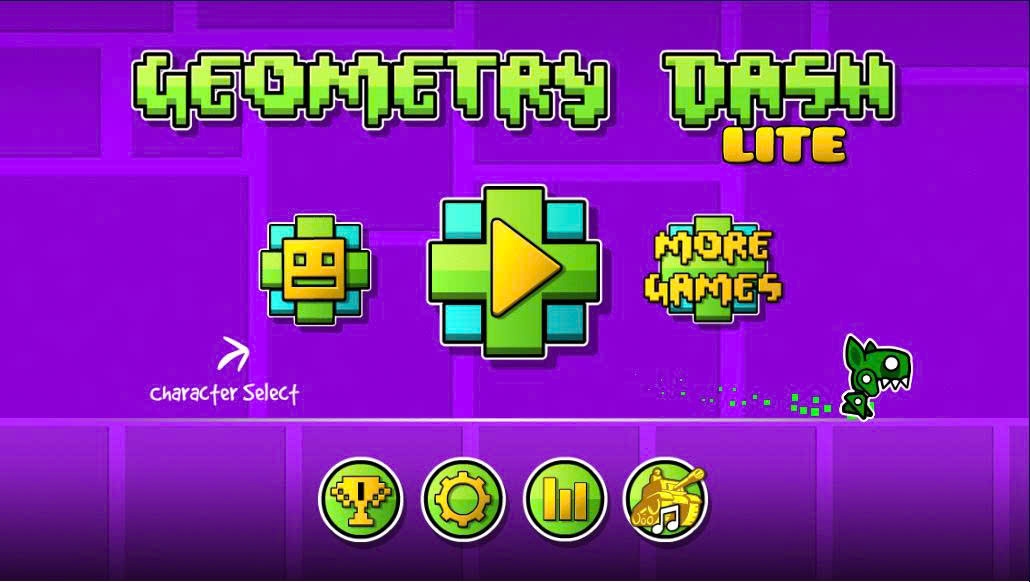
Some games ease you in with tutorials and gentle difficulty curves. Geometry Dash is not one of them. From the very first level, you're dropped into a glowing neon world of spikes, blocks, and pulsing electronic music with exactly one instruction: tap to jump. That's it. And yet millions of players worldwide have poured hundreds of hours into what looks, at a glance, like a very simple rhythm game. If you've ever watched a friend play and wondered how they make it look so effortless — or why they keep dying at the same jump, over and over — this guide is for you. Here's how to get started with Geometry Dash and, more importantly, how to actually enjoy it.
What's Actually Happening On Screen
At its core, the game is beautifully simple. Your little square moves forward automatically at a constant speed, and your only job is to tap at the right moment to clear the next obstacle. Miss the timing, and you're instantly sent back to the beginning of the level. There are no health bars, no extra lives, and no checkpoints in the classic levels — just you, the beat, and a growing memory of your last mistake.
The real genius is in the level design. Obstacles are placed precisely to the rhythm of the soundtrack, which means the game is less about reaction speed and more about feeling the music. Once you stop staring at your cube and start listening to the beat, the jumps begin to make sense. Spikes, pillars, and rotating saw blades all appear exactly where the music pulses. That's why the game is often described as a rhythm platformer: it's half reflex, half groove.
As you progress, new mechanics keep things interesting. You'll switch from the cube to a ship that you steer by holding and releasing, then to a ball that flips gravity, and later to a UFO that hops in short bursts. Each form feels like its own little mini-game, and just when you think you've mastered one, the next level throws a fresh one at you.
One more thing worth knowing: this is not a game you finish in an evening. The levels are arranged by difficulty, from the friendly opening stages all the way to the infamous demon-rated levels that take even the best players in the world months to beat. There's always a next mountain, always something just out of reach — and that's a big part of why the experience stays alive.
Tips That Actually Help
First, don't rush. Play the early levels until you can clear them almost without thinking. They're tutorials in disguise, and they quietly teach you how timing and rhythm work together. Most beginners quit because they tried to sprint through week one; slow and steady wins here.
Second, use practice mode. It lets you place checkpoints anywhere in a level, and there is absolutely no shame in dropping one right before that one impossible jump. Every player has a "that one jump."
Third, treat every run like a song. Keep your eyes slightly ahead of your cube instead of glued to it, and let the music guide your taps. One small practical note: play on a flat surface or use a mouse with a firm click — a wobbly phone makes an already hard game harder.
Fourth, don't measure yourself against players who beat the hardest demon levels. Their skill came from the same pile of failed attempts you're about to collect. In this game, failure isn't the opposite of progress — it is the progress.
Finally, remember the community. After the main levels, the built-in level editor opens up a whole universe of player-made stages: relaxing melodies, brutal challenges, weird experiments. Browsing what other people have built is easily half the fun, and it keeps the game feeling fresh for years.
Why It's Worth Your Time
Yes, Geometry Dash will frustrate you. You will die on the final jump of a level you've nearly beaten three times, and that is completely normal — honestly, it's the point. The game is a masterclass in persistence disguised as a neon rhythm game, and the moment you finally clear a level that had you stuck for days, the satisfaction feels wildly out of proportion to the effort. That's exactly why players keep coming back.
It's also wonderfully suited to short bursts of play: one attempt during a coffee break, a few runs before bed. No cutscenes, no story, no inventory to manage — only you, the soundtrack, and a little square that really wants to reach the finish line. It's a rare game you can play for ten minutes or three hours, and both feel right.
So pick it up, put on headphones, and give it a try. Tap when you think you should. Fail. Laugh. Try again. Before you know it, you'll be humming the levels in the shower — and wondering why a game about jumping over spikes is so hard to put down.

 English
 Arabic
 French
 Spanish
 Portuguese
 Deutsch
 Turkish
 Dutch
Dutch
 Italiano
 Russian
 Romaian
 Greek
Greek
