


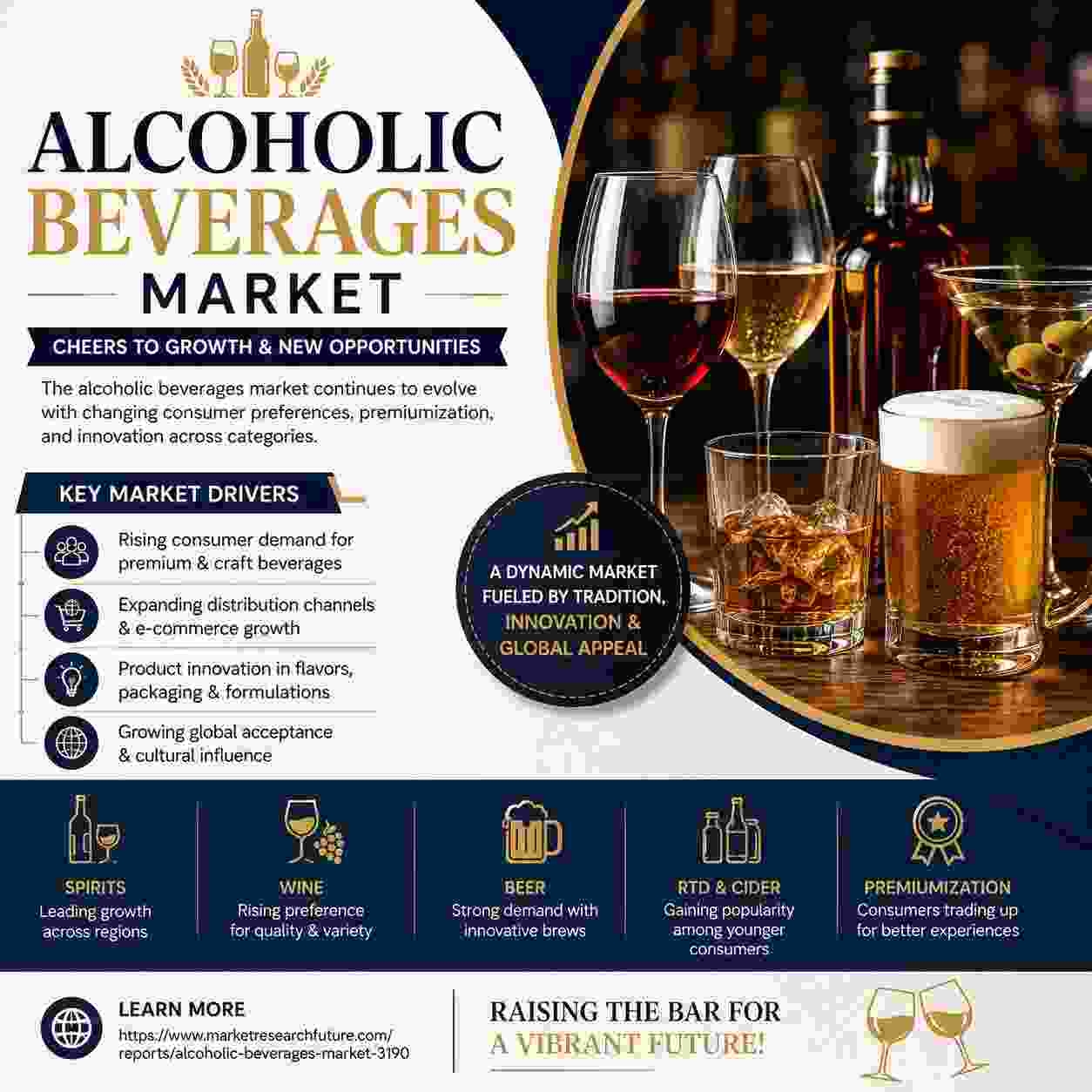
The Alcoholic Beverages Market in 2026 is defined by a complex interplay of premiumization pressures, the rise of mindful consumption, and a global shift in economic and regulatory landscapes. After several years of volume declines, the industry is undergoing a "major reset," where success is no longer about simply selling more, but about selling smarter . This involves a deep understanding of changing consumer values, adapting to geopolitical disruptions, and capitalizing on the bright spots of growth that exist even in a challenging overall climate. The market is demonstrating that resilience and innovation are the keys to navigating this period of intense change.
The consumer shift towards premiumization is being challenged by falling disposable incomes and weak consumer sentiment in many key markets, leading to a stall or even a reversal in some categories . While the premium-plus segments in spirits and beer have performed worse than lower tiers, the trend of consumers trading down has not halted the overall value growth of the market. This indicates that while volume is contracting, value is being maintained through a focus on higher-priced products among those who can afford them. The growing interest in no- and low-alcohol products is a parallel trend, reflecting a consumer focus on moderation and wellness that is having a positive impact across multiple sub-categories .
Geographically, the market's center of gravity is shifting, with emerging markets offering the most promising opportunities for growth. India, for example, stands out as a bright spot, with robust volume and value gains across virtually all drinks categories, making it a key target for international brands . Similarly, markets like Türkiye and parts of the Middle East are showing strong potential as policy liberalization opens up new opportunities . In contrast, mature markets like the US and much of Europe are experiencing flat or declining volumes, forcing brands to focus on value creation through premiumization and product innovation to maintain profitability.
The regulatory environment is also becoming an increasingly significant factor in shaping the market's dynamics. New labeling requirements, such as the proposed "Alcohol Facts" rules, impose significant costs on producers, which can disproportionately affect smaller craft brands . Furthermore, health advisories and warnings from government bodies are influencing consumer behavior, accelerating the shift toward mindful consumption. The industry must navigate this complex regulatory maze while simultaneously innovating to meet the demands of a more health-conscious and discerning public.
In summary, the alcoholic beverages market is in a state of flux, where traditional growth models are being upended by powerful societal and economic forces. The companies that will thrive are those that can successfully balance premiumization with value, innovate in both flavor and health-conscious formats, and adapt to the opportunities presented by emerging markets. The future is not just about alcohol; it is about providing a diverse range of beverage experiences that cater to the nuanced preferences of a global consumer base, including the surging interest in alcohol-free alternatives that allow for participation without compromise.
FAQ's
Q1: What are the key dynamics shaping the alcoholic beverages market in 2026?
A1: Key dynamics include the stall of premiumization in some regions due to economic pressures, the robust growth of the low-and-no-alcohol segment, and the shifting center of gravity towards emerging markets like India .
Q2: How is the regulatory environment impacting the market?
A2: Increasing regulatory measures, such as mandatory health warnings and new labeling requirements, are raising costs and influencing consumer perception. This is particularly challenging for smaller producers and is accelerating the trend towards mindful consumption .

 English
 Arabic
 French
 Portuguese
 Deutsch
 Turkish
 Dutch
Dutch
 Italiano
 Russian
 Romaian
 Portuguese (Brazil)
 Greek
Greek
