


What Will Determine the Wider Adoption of Continuous Basalt Fiber?
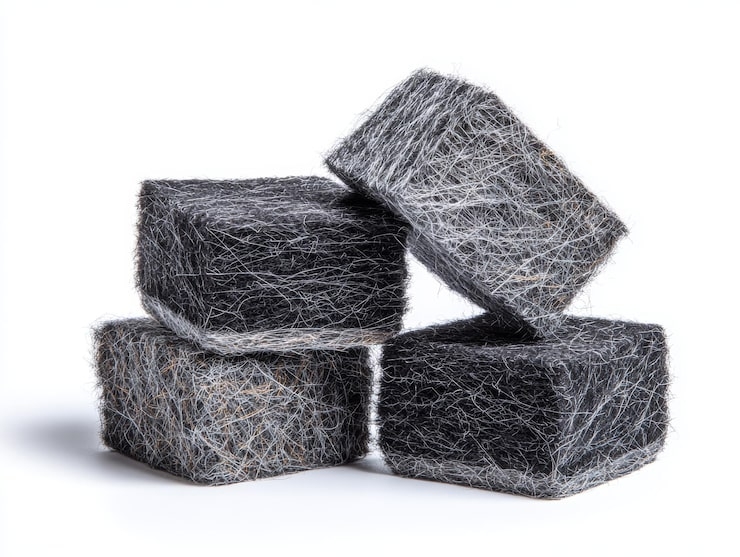
The demand for advanced reinforcement materials is increasingly connected to durability, weight reduction, corrosion resistance, and longer service life across infrastructure and industrial applications. Continuous basalt fiber is gaining attention because it can support composite solutions where conventional metallic reinforcement may face challenges related to corrosion, weight, moisture, chemicals, or demanding operating environments. According to a Vyansa Intelligence report, the global continuous basalt fiber market was valued at USD 326 Million in 2025 and is projected to reach USD 899 Million by 2032, registering a CAGR of 15.59% during 2026-2032.
Why Is Continuous Basalt Fiber Becoming More Relevant?
Continuous basalt fiber is produced from naturally occurring basalt rock and can be processed into different reinforcement forms and composite materials. Its relevance comes from the combination of mechanical performance, durability, thermal stability, chemical resistance, and relatively low weight.
These characteristics make basalt fiber useful in applications where material performance must be maintained under challenging environmental conditions. Construction and infrastructure are particularly important areas because reinforcement systems may be exposed to moisture, chemicals, temperature variation, and other factors that can influence long-term structural performance.
The material can also move beyond conventional reinforcement. Continuous basalt fiber can serve as an input for fabrics, meshes, pultruded profiles, winding-based products, and other composite structures. This processing flexibility gives manufacturers opportunities to develop solutions for different engineering requirements.
How Is Infrastructure Demand Influencing Adoption?
Infrastructure durability is one of the strongest reasons for considering non-metallic reinforcement. Bridges, concrete structures, drainage systems, marine assets, and other infrastructure can face demanding exposure conditions throughout their operating lives.
The value proposition is therefore not simply about replacing one reinforcement material with another. Engineers and asset owners increasingly need to consider lifecycle performance, maintenance requirements, structural reliability, and exposure conditions when selecting materials.
Fiber-reinforced polymer systems are already being investigated and used in infrastructure applications where corrosion and fatigue resistance are important. The U.S. Federal Highway Administration has highlighted the use of fiber-reinforced polymer composites in bridge construction, repair, and rehabilitation, including applications involving FRP reinforcing elements.
This creates a broader opportunity for basalt-based reinforcement systems when their technical properties, installation requirements, and long-term performance can be appropriately demonstrated.
What Role Do Standards Play in Wider Acceptance?
Technical validation will remain an important part of continuous basalt fiber adoption. Infrastructure materials must meet clearly defined performance requirements before they can be confidently incorporated into engineering specifications.
ASTM International has established ASTM D8448/D8448M for basalt fiber strands, covering basalt fiber products including rovings and chopped strands. The specification provides general requirements and terminology for products manufactured within the basalt fiber industry.
ASTM also provides a specification for basalt and glass fiber reinforced polymer bars used for concrete reinforcement. ASTM D8505/D8505M addresses geometric, material, mechanical, and physical requirements for these reinforcement products.
For the continuous basalt fiber industry, this standards environment is significant because wider adoption depends not only on material availability but also on consistent product quality, testing, design confidence, and engineering acceptance.
Where Could New Applications Develop?
The opportunity for continuous basalt fiber extends across several areas where corrosion resistance, lower weight, and durability provide meaningful technical value.
Marine and water-exposed infrastructure is one potential area because reinforcement materials in these environments must contend with moisture and aggressive exposure. Industrial applications can similarly benefit where materials encounter chemicals, elevated temperatures, or demanding mechanical conditions.
Composite manufacturing also creates opportunities through processes such as pultrusion, filament winding, weaving, and resin-based processing. These techniques allow continuous basalt fiber to become part of engineered profiles, fabrics, pipes, reinforcement products, and other composite structures.
The wider adoption of these applications will depend on whether manufacturers can provide consistent fiber quality and whether downstream processors can achieve reliable impregnation, bonding, mechanical performance, and production efficiency.
What Could Slow Industry Adoption?
Despite its technical potential, continuous basalt fiber still faces an important qualification challenge. Engineering customers require confidence that a material will perform consistently throughout its intended service life.
For structural applications, this means demonstrating properties such as tensile performance, bond behavior, durability, dimensional consistency, and compatibility with the surrounding resin or concrete system. Product qualification can therefore take time, particularly where infrastructure projects require established engineering procedures and proven specifications.
This makes technical support an important part of the value proposition. Suppliers that can provide reliable material specifications, testing information, processing guidance, and application-specific support may be better positioned to convert interest into long-term adoption.
What Could Define the Next Stage?
The future of continuous basalt fiber will depend on how effectively the industry connects material capabilities with practical engineering requirements. Strong technical performance alone is unlikely to be sufficient. Manufacturers, composite processors, engineers, contractors, and infrastructure owners need confidence that basalt fiber systems can be specified, processed, installed, and maintained consistently.
In this report, the emphasis on structural reinforcement, composite processing, corrosion resistance, and demanding industrial environments illustrates how continuous basalt fiber can serve applications where lifecycle performance matters.
The latest industry analysis therefore points toward a more application-driven role for basalt fiber. Instead of being viewed only as an alternative reinforcement material, continuous basalt fiber can become part of broader composite solutions designed around durability, weight efficiency, environmental resistance, and long-term performance.
As standards, testing practices, manufacturing consistency, and engineering familiarity continue to develop, continuous basalt fiber could find wider use across infrastructure, transportation, marine, industrial, energy, and other technically demanding applications.

 English
 Arabic
 French
 Spanish
 Portuguese
 Deutsch
 Turkish
 Dutch
Dutch
 Italiano
 Russian
 Romaian
 Portuguese (Brazil)
