


Planning Your Pilot Career in India: A Student Guide
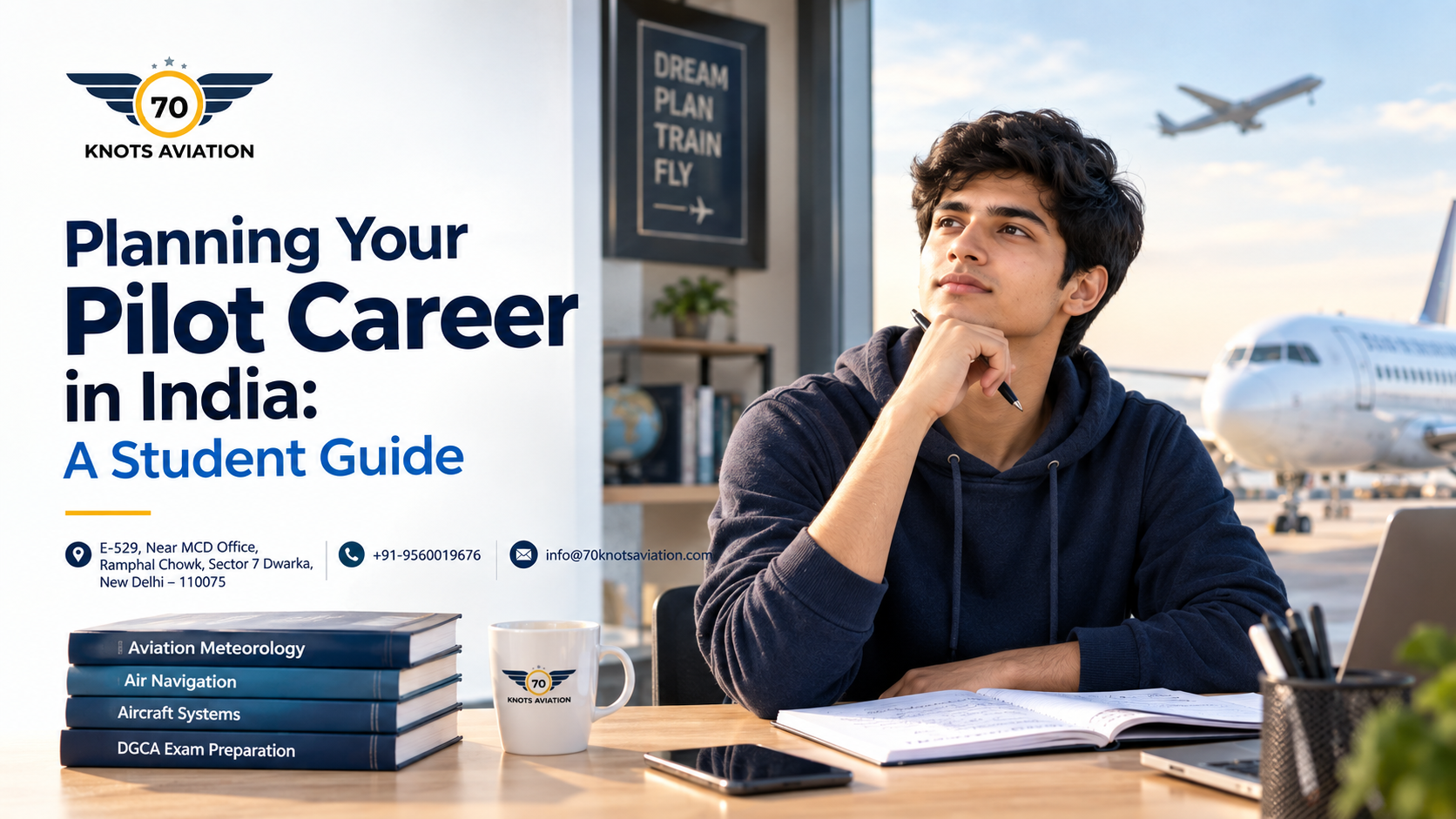
For many students, becoming a pilot starts with a simple dream: sitting in the cockpit, taking control of an aircraft, and building a career in aviation. But once the excitement turns into actual planning, several practical questions appear.
What should you study after school? What examinations do you need to prepare for? How much does pilot training cost? Where should you train? And how can you make sure that the institute you choose is suitable for your career goals?
These questions are completely normal. Pilot training is a serious career investment, so students should understand the journey before making a decision.
If you are researching how to become a pilot, this guide can help you understand the major stages of the journey, the importance of DGCA preparation, the factors affecting training expenses, and how to evaluate pilot training options in Delhi.
Start With Your Career Goal
Before searching for training institutes, first decide what you want from an aviation career.
Some students dream about becoming commercial airline pilots, while others may be interested in different aviation roles. Your career objective affects the type of training, licensing pathway, examinations, and financial planning you need to consider.
This is why the first conversation should not be about choosing the cheapest institute. It should be about understanding the complete pathway.
Students should review their educational qualifications, medical eligibility, examination requirements, training expectations, and long-term career goals before beginning the process.
Having this clarity can make the next steps much easier.
How to Become a Pilot: Understanding the Journey
Students searching for how to become a pilot often expect a simple list of steps. In reality, pilot training involves several stages that need to be completed carefully.
The journey generally includes academic preparation, medical assessment, theoretical training, examination preparation, flight training, and licensing requirements.
For aspiring commercial pilots, academic eligibility is an important starting point. Students should verify the current requirements applicable to their intended licence before enrolling.
After that, theoretical knowledge becomes a major part of the journey.
Subjects related to aviation require consistent preparation. Students need to understand concepts rather than simply memorising information. This knowledge later supports practical flight training and helps students become more confident in aviation-related decision-making.
Flight training then allows students to develop practical skills under appropriate instruction.
The process takes commitment. Students should therefore enter aviation with realistic expectations instead of assuming that completing a course automatically guarantees an airline job.
The Importance of DGCA Preparation
Aviation students quickly discover that flying is only one part of becoming a professional pilot.
Theoretical knowledge is equally important.
This is where DGCA Pariksha preparation becomes a key consideration for students planning their aviation careers. A disciplined approach to examination preparation can help students understand the subjects they need to study and organise their time effectively.
Instead of leaving preparation until the last moment, students can build a regular study routine.
For example, a student may divide study time between learning new concepts, revising previous topics, solving practice questions, and identifying areas that require additional attention.
The objective should not simply be to pass an examination. Strong theoretical knowledge can help students develop a better understanding of aviation and support their progress during practical training.
A Student and Counsellor Discuss the Real Journey
Imagine a student visiting an aviation training institute for the first time.
Student: I have wanted to become a pilot for years, but now that I have started researching, everything seems confusing.
Counsellor: That's actually very common. Aviation has several stages, and students often see them separately. The first thing we do is put the entire journey together so you understand what comes first and what comes later.
Student: Should I start by looking at the fees?
Counsellor: Fees are important, but they shouldn't be your only consideration. First understand the training pathway and what the quoted amount actually includes.
Student: I keep seeing different numbers online when I search for pilot course fees in india. Why is there such a big difference?
Counsellor: Because training costs can depend on several factors. Flight hours, aircraft type, training organisation, location, accommodation, examinations, medical requirements, and additional flying can all affect your total expenditure.
Student: What about DGCA Pariksha? Is it difficult?
Counsellor: It requires serious preparation, but students shouldn't approach it with fear. A structured study plan, good guidance, regular revision, and conceptual understanding can make preparation more manageable.
Student: I am also looking for the Best Pilot training school in delhi. What should I check?
Counsellor: Don't select an institute simply because it appears first in an advertisement. Look at the quality of guidance, faculty, training environment, transparency, student support, and how clearly the institute explains the complete process.
Student: So the main thing is planning before joining?
Counsellor: Exactly. The better you understand the journey before starting, the easier it becomes to plan your studies, finances, and career goals.
This is the kind of discussion students should have before making a major training decision.
Understanding Pilot Course Fees in India
Financial planning is one of the most important parts of aviation education.
When students search for pilot course fees in india, they may find different figures from different institutes. There is no universal cost that applies to every student because training expenses can vary according to the programme and individual circumstances.
Students should therefore look beyond the headline course price.
Potential expenses can include ground training, flight training, examination fees, medical assessments, study material, accommodation, transportation, equipment, and additional training requirements.
Another important point is that students should ask whether the quoted fee covers the complete programme or only specific components.
A transparent discussion about expenses can help families prepare a realistic budget.
Instead of asking only, "How much does the course cost?", ask what is included, what is excluded, and which expenses may arise during the training journey.
Choosing a Pilot Training School in Delhi
Delhi is an attractive location for students exploring aviation education, particularly for students from Delhi and the surrounding NCR region.
However, having multiple options can make the selection process challenging.
When searching for the Best Pilot training school in delhi, students should create a checklist instead of relying on promotional claims.
Consider factors such as:
- Quality of theoretical training
- Faculty and instructors
- Learning environment
- Student counselling
- Training support
- Transparency regarding fees
- Guidance regarding examinations
- Location and accessibility
- Overall approach to student development
A good institute should be willing to answer practical questions clearly.
Students should also avoid making decisions based solely on promises of quick completion or guaranteed employment. Aviation is a professional field that requires individual effort, regulatory compliance, examination success, and practical training.
Why Students Should Not Rush the Decision
It is understandable for students to feel excited about starting aviation training.
You may see aircraft, uniforms, airport environments, and successful pilots online and immediately want to begin. But choosing a training programme is a significant decision.
Take time to understand the process.
Talk to counsellors. Ask about eligibility. Understand the examination requirements. Review the expected expenses. Think about accommodation if you are moving to another city. Most importantly, understand what your training programme actually provides.
A few additional days of research can save you from making a decision that you later regret.
Five Questions to Ask Before Starting Pilot Training
1. What should I complete before beginning pilot training?
Start by checking your educational eligibility, medical requirements, documentation, and the applicable licensing pathway for your intended aviation career.
2. What expenses should I consider apart from the advertised course fee?
Ask about examinations, medical assessments, accommodation, transportation, study material, equipment, and any additional training or flying requirements.
3. How should I organise my DGCA Pariksha preparation?
Create a consistent study schedule and focus on understanding concepts, revising regularly, and practising relevant examination material.
4. What should I look for when comparing pilot training schools in Delhi?
Compare institutes based on training quality, faculty, student support, transparency, facilities, location, and the clarity of their guidance.
5. Is completing pilot training enough to guarantee an airline career?
No career should be approached with that expectation. Pilot training is an important foundation, but students also need to meet licensing requirements, build appropriate qualifications and experience, and compete for professional opportunities.
Build Your Career Step by Step
Aviation can be an exciting career for students who are prepared to work consistently and take their responsibilities seriously.
The journey begins well before the first flight. It starts with understanding eligibility, preparing academically, completing medical requirements, studying for examinations, planning finances, and choosing an appropriate training environment.
If you are still researching how to become a pilot, don't feel pressured to have every answer immediately. Start with the basics and gradually build your understanding.
For students looking for aviation training guidance in Dwarka, 70Knots Aviation is located at E-529, Near MCD Office, Ramphal Chowk, Sector 7, Dwarka, New Delhi – 110075. Students can contact the team at +91-9560019676 or info@70knotsaviation.com for further information.
The most important decision is not simply where you start. It is whether you start with the right information.
Understand the pathway, prepare for the academic side, plan your finances carefully, and choose your training environment thoughtfully. With a disciplined approach, your goal of building a career in aviation can become a structured and realistic journey.

 English
 Arabic
 French
 Spanish
 Portuguese
 Deutsch
 Turkish
 Dutch
Dutch
 Italiano
 Russian
 Portuguese (Brazil)
 Greek
Greek
