


How Do You Insulate a Shipping Container for Year-Round Use?
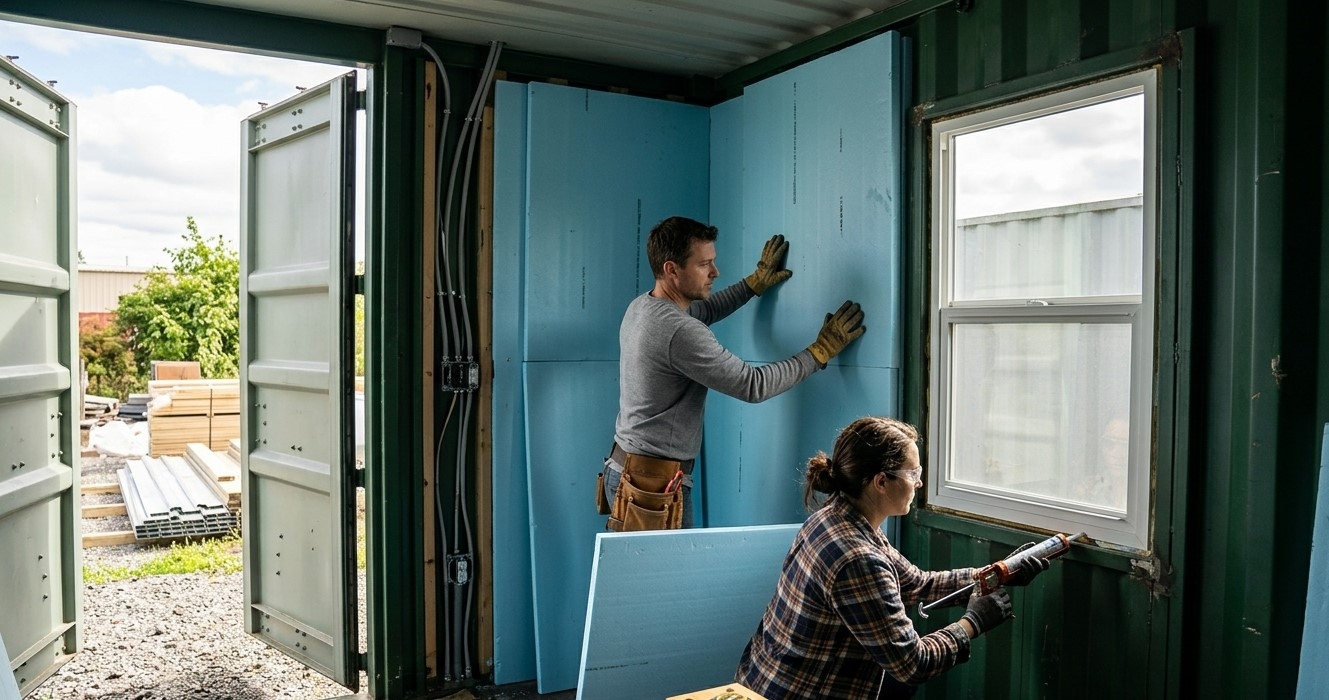
Shipping containers are strong, secure, and versatile, but their steel walls can transfer heat quickly. Without proper insulation, a container can become extremely hot in summer and cold in winter. If you plan to use a container as an office, workshop, storage area, or other year-round space, insulation is one of the most important improvements you can make.
Whether you are comparing shipping containers for sale, looking for a shipping container for sale near me, or considering storage containers for sale, understanding insulation can help you choose and prepare the right unit. Conex Hub offers new and used containers that can be used for storage, modifications, and various project applications.
Table of Contents
- Why Should You Insulate a Shipping Container?
- What Types of Insulation Can You Use?
- How to Insulate a Shipping Container Step by Step
- Insulating the Walls
- Insulating the Roof
- Insulating the Floor
- Seal Doors and Windows
- Add Proper Ventilation
- Choose the Right Heating and Cooling System
- Common Insulation Mistakes to Avoid
- FAQs
- Final Thoughts
Why Should You Insulate a Shipping Container?
A standard shipping container is primarily designed to protect cargo from weather and transportation conditions, not to provide a comfortable indoor climate. Its steel construction can conduct heat and cold, making temperature control difficult without insulation.
Proper insulation can help:
- Reduce heat transfer through the walls and roof
- Maintain a more consistent indoor temperature
- Improve heating and cooling efficiency
- Reduce condensation problems
- Protect stored items from temperature fluctuations
- Make the container more comfortable for people
- Improve the overall usability of the space
If you intend to spend significant time inside the container, insulation should be considered alongside electrical systems, ventilation, windows, doors, and climate control.
What Types of Insulation Can You Use?
There are several insulation options for shipping containers. The right choice depends on your climate, budget, available interior space, and intended use.
Spray Foam Insulation
Spray foam is commonly considered for container conversions because it can cover irregular surfaces and help create an air-sealed layer.
It can be particularly useful around wall and roof areas where minimizing gaps is important. Professional installation is recommended because application requires appropriate equipment and preparation.
Rigid Foam Boards
Rigid foam insulation boards can be installed against container walls, ceilings, and floors. They provide a relatively straightforward approach and can be covered with interior wall or ceiling materials.
They are useful when you want to preserve a reasonably clean interior finish.
Fiberglass Insulation
Fiberglass is another possible option, particularly when installed within a properly constructed interior framing system. However, it should be protected from moisture and installed correctly to avoid performance problems.
Reflective Insulation
Reflective insulation can help reduce radiant heat transfer, particularly in hot environments. However, it should not automatically be considered a complete insulation solution. Depending on the climate and intended use, it may work better as part of a broader insulation system.
How to Insulate a Shipping Container Step by Step
A successful insulation project should be planned before materials are installed.
1. Inspect the Container
Start by checking the container's condition. Look for:
- Roof damage
- Rust
- Water leaks
- Damaged door seals
- Floor problems
- Existing holes or openings
- Areas where moisture can enter
It is much easier to fix these problems before adding insulation.
2. Plan the Interior Layout
Determine where you will install electrical wiring, lighting, ventilation, windows, doors, and climate-control equipment.
Planning these elements beforehand can prevent you from having to remove insulation later.
3. Create an Interior Framing System
Depending on the insulation method, interior framing may be needed to provide attachment points and create space for insulation.
The framing should be planned carefully so that it does not unnecessarily reduce the usable interior area.
4. Install the Insulation
Install the selected insulation according to the manufacturer's requirements. Pay particular attention to corners, seams, wall joints, roof areas, and other potential gaps.
The goal is to create a continuous thermal barrier rather than leaving large uninsulated areas.
5. Add an Interior Finish
After insulation is installed, the interior can be covered with suitable wall or ceiling materials. This provides a finished appearance and helps protect the insulation.
Insulating the Walls
The walls are one of the most important areas to insulate because the steel exterior can transfer outdoor temperatures directly into the container.
A common approach is to install insulation between interior framing members and then add an interior wall covering.
When insulating the walls, pay attention to:
- Corners
- Wall-to-ceiling connections
- Door openings
- Window openings
- Electrical penetrations
- Gaps between insulation sections
Even small gaps can reduce the effectiveness of an insulation system.
Insulating the Roof
Roof insulation is especially important in hot climates because the container roof can receive significant solar heat.
A well-insulated roof can help reduce the amount of heat transferred into the interior. Depending on the design, insulation may be installed below the roof inside the container or incorporated into a properly designed exterior roof system.
A light-colored or reflective exterior roof treatment may also help reduce solar heat gain, but it should be viewed as a supplement rather than a replacement for proper insulation.
Insulating the Floor
The floor should not be overlooked.
A container may lose or gain heat through the floor depending on the surrounding ground conditions. Floor insulation can also improve comfort if people will regularly work or spend time inside the container.
Floor insulation options can include rigid insulation installed as part of a new floor assembly.
Before making modifications, check the condition of the existing container flooring and consider whether additional protection or replacement is appropriate for your intended use.
Seal Doors and Windows
Even well-insulated walls will not perform effectively if air can freely enter through gaps.
Check the container doors carefully and replace damaged or worn seals. If you install windows or additional doors, make sure they are properly sealed and weatherproofed.
Pay attention to:
- Door frames
- Window frames
- Corners
- Wall penetrations
- Electrical entry points
- Ventilation openings
Weather sealing helps prevent unwanted drafts and moisture infiltration.
Add Proper Ventilation
Insulation should not mean completely sealing the container without considering airflow.
Condensation can become a concern when warm, humid air meets cold metal surfaces. Proper ventilation can help manage moisture and improve indoor air quality.
Depending on the intended use, you may consider passive vents, powered ventilation, or a properly designed HVAC system.
For offices or workspaces, ventilation becomes particularly important because people, equipment, and activities can add heat and moisture to the interior.
Choose the Right Heating and Cooling System
Insulation helps maintain a comfortable temperature, but climate control may still be necessary for year-round use.
For a properly insulated container office or workspace, heating and cooling requirements depend on factors such as:
- Container size
- Local climate
- Number of occupants
- Windows and doors
- Insulation type
- Equipment inside the container
- How frequently the space is used
A qualified professional can help determine the appropriate HVAC solution for your specific conversion.
Common Insulation Mistakes to Avoid
Ignoring Moisture
Moisture management is just as important as temperature control. Poorly designed insulation can contribute to condensation problems.
Leaving Gaps
Small gaps around corners, doors, windows, and penetrations can reduce overall insulation performance.
Forgetting the Roof
Heat can enter through the roof, especially during hot weather. Roof insulation should be part of the overall plan.
Using the Wrong Material for the Application
Different insulation materials have different properties and installation requirements. Choose based on your climate, project design, and intended use.
Insulating Before Fixing Leaks
Never use insulation to cover an existing water problem. Repair leaks and structural issues first.
Skipping Professional Help When Needed
Complex container conversions involving electrical systems, HVAC equipment, structural modifications, or extensive insulation may require qualified professionals.
How to Choose a Container for Year-Round Use
If you are still shopping for a container, consider the final purpose before selecting a unit.
For basic storage, a standard container may be sufficient. For an office, workshop, or other occupied space, you may need additional modifications such as insulation, windows, doors, lighting, ventilation, and climate control.
Conex Hub offers new and used container options, including 20-foot and 40-foot containers, as well as containers designed for modification and specialized applications.
When searching for shipping containers for sale, compare the container's condition, size, delivery requirements, and suitability for your planned modifications.
If you are searching for a shipping container for sale near me, consider not only the purchase price but also transportation, site preparation, insulation, electrical work, and other conversion costs.
Similarly, people looking at storage containers for sale should determine whether they need simple weather-protected storage or a temperature-controlled space.
FAQs
Can you insulate any shipping container?
Most standard shipping containers can be insulated, but the best approach depends on the container's condition, size, design, and intended use.
What is the best insulation for a shipping container?
There is no single best option for every project. Spray foam, rigid foam boards, fiberglass, and other systems can be considered depending on the climate and conversion design.
Should I insulate the roof of a shipping container?
Yes. Roof insulation is important because the steel roof can transfer substantial heat into the container, particularly in sunny and hot conditions.
Do shipping containers need ventilation after insulation?
Ventilation may be important, especially for occupied spaces. It can help manage humidity, condensation, and indoor air quality.
Can an insulated shipping container be used as an office?
Yes. With appropriate insulation, doors, windows, electrical systems, ventilation, and climate control, shipping containers can be converted into functional office spaces.
Should I insulate a container used only for storage?
It depends on what you are storing. Basic storage may not require full insulation, while temperature-sensitive equipment, materials, or products may benefit from better temperature and moisture control.
Final Thoughts
Insulating a shipping container properly can make a major difference when you want to use it throughout the year. The process involves more than simply adding insulation to the walls. A complete approach should consider the walls, roof, floor, doors, windows, ventilation, moisture control, and heating or cooling requirements.
Whether you are comparing shipping containers for sale, searching for a shipping container for sale near me, or evaluating storage containers for sale, think about your intended use before choosing a unit. Starting with the right container can make future insulation and modification work much easier.
With the right planning, a shipping container can become a comfortable and practical space for storage, work, business operations, or other long-term applications.
Get Started With Conex Hub
Ready to find the right container for your project? Conex Hub offers new and used shipping containers along with options for storage, offices, rentals, and custom modifications.
Explore your options, determine the size and condition you need, and plan your insulation and modifications around the container's intended use. Contact Conex Hub to discuss your requirements and request a quote for your project.

 English
 Arabic
 French
 Spanish
 Portuguese
 Deutsch
 Turkish
 Dutch
Dutch
 Russian
 Romaian
 Portuguese (Brazil)
 Greek
Greek
