


How to Make Your Home Feel Warmer This Winter with Lighting
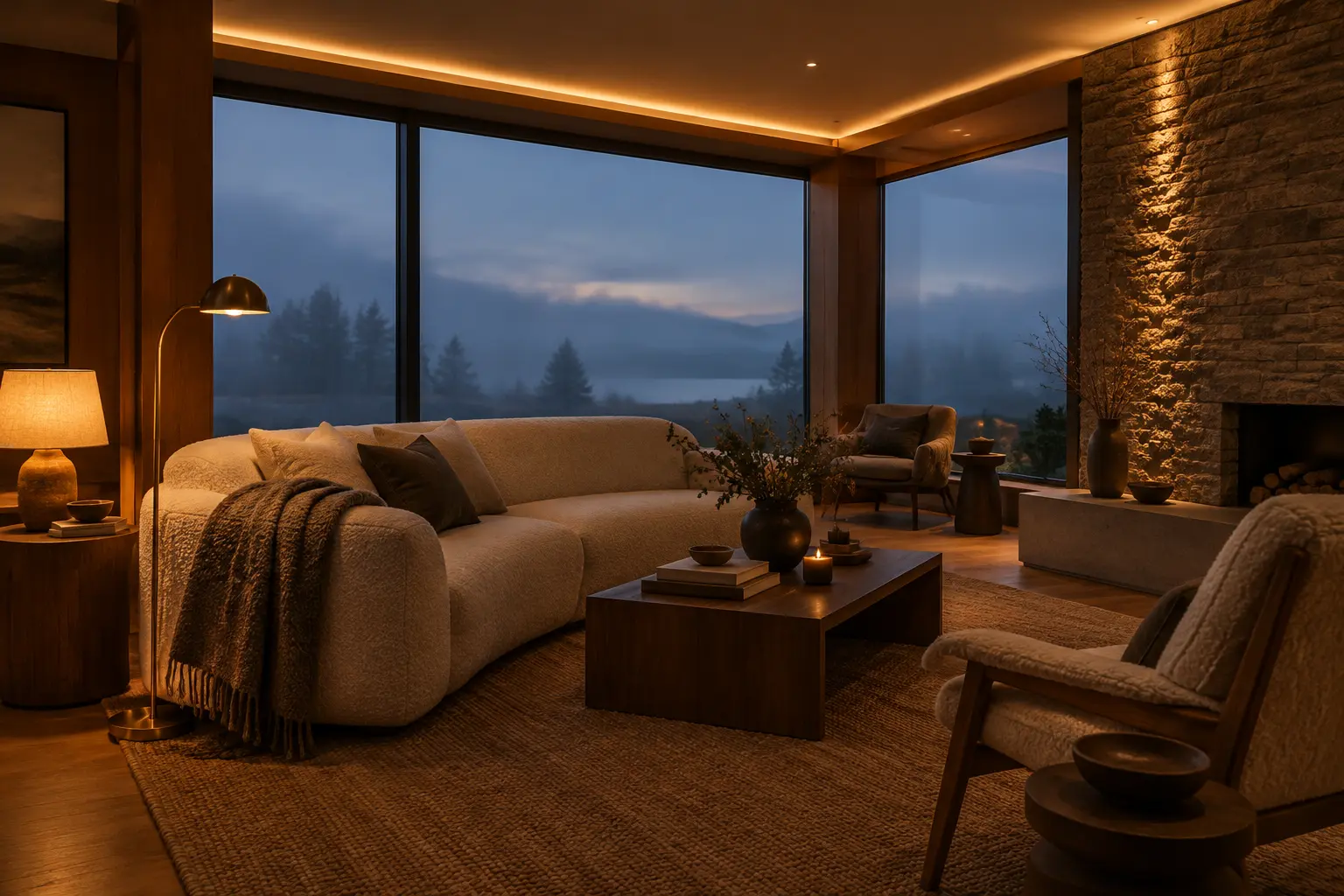
To make your home feel warmer in winter, switch to warm white light (2700K–3000K), add low-level layers like lamps, cove and wall lights, and use dimming so evenings feel softer. Light textures such as wood and fabric, schedule scenes to start at sunset, and keep a brighter scene for dark winter mornings.
In December, the sun sets before 5:45 pm across much of North India. Add fog and haze, and many homes spend more hours under artificial light than daylight.
That’s when the problem shows. The same bright, cool-white ceiling lights that felt fine in summer suddenly make rooms feel cold, flat and a little gloomy. The fix isn’t more light. It’s warmer, lower, softer light in the right places.
Who is this guide for?
- Homeowners who feel their home looks cold or dull on winter evenings
- Families spending more time indoors during the colder months
- Anyone renovating before the season and wanting a lasting upgrade
- Interior designers looking to add comfort to client homes
Why do homes feel colder in winter?
Homes feel colder in winter mainly because daylight drops and most homes rely on cool, overhead light that feels clinical after dark.
Three things work against you:
- Shorter days. You switch lights on earlier, so artificial light sets the mood for most of the evening.
- Cool white bulbs. 5000K–6500K light feels crisp at noon but harsh and wintry at night.
- Overhead-only lighting. A single ceiling light flattens the room and leaves corners in shadow, which reads as cold.
Reduced daylight also affects how many people feel. The US National Institute of Mental Health notes that seasonal changes in light are linked with changes in mood for some people. Good lighting design won’t replace medical advice, but it can make winter evenings at home feel noticeably more comfortable.
1. Switch to warm white light
Warm white light between 2700K and 3000K is the single biggest change you can make.
It’s closer to firelight and sunset, so it feels cosy rather than clinical. Keep 4000K only for task areas like the kitchen counter or study desk. Our colour temperature guide explains the difference in detail.
Choose CRI 90+ fittings, so warm light still makes wood, skin and fabrics look rich instead of yellow.
2. Bring light down to eye level
Low-level light makes a room feel intimate, while ceiling-only light makes it feel like an office.
Add table lamps, floor lamps and wall lights in living rooms and bedrooms. Light at eye level creates pools of warmth where people actually sit. In winter, these become the lights you’ll use most.
3. Layer your lighting
Layered lighting combines ambient, task and accent light, so no single source has to do everything.
| Layer | Winter role | Examples |
|---|---|---|
| Ambient | Soft background glow | Cove lighting, indirect ceiling light |
| Task | Light where you read, cook or work | Reading lamps, under-cabinet strips |
| Accent | Adds depth and warmth | Wall grazing, picture lights, shelf lighting |
A room lit in layers feels fuller and warmer at half the brightness. See our layered lighting guide.
4. Use dimming and evening scenes
Dimming is what turns “lights on” into “evening in.”
As the night goes on, light levels should drop. A “Winter Evening” scene might set cove light at 60%, lamps at 40% and ceiling downlights off. With smart lighting control, scenes can start automatically at sunset, so the house is already warm and glowing when you walk in.
Consider dim-to-warm LEDs. They shift towards a deeper, candle-like amber as they dim, much like a traditional bulb did.
At Brightmatic, the winter scene is one of the first we set up in client homes, because it’s the one families end up using every single evening.
5. Light the textures
Light grazing across wood, stone or fabric adds visual warmth that flat light can’t.
A wooden wall panel, a textured stone wall or heavy curtains come alive with a narrow beam placed close to the surface. This is where accent lighting earns its place in winter.
6. Don’t forget winter mornings
Dark, foggy mornings need a brighter, slightly cooler scene to help the household get going.
Tunable white lighting lets the same fixtures give bright, fresh light at 7 am and warm, dim light at 9 pm. It’s the most complete way to light a home through the seasons.
7. Make the entrance welcoming
A warm-lit entrance tells you you’re home before you open the door.
Warm wall lights at the door, a softly lit balcony and gentle pathway lights make arrival on a cold, foggy evening feel inviting.
Room-by-room winter lighting
| Room | What to add | Ideal colour temperature |
|---|---|---|
| Living room | Cove, floor lamps, accent on art or panels | 2700K–3000K |
| Bedroom | Bedside lamps, dimmable cove, no harsh overheads | 2700K |
| Dining | Dimmable pendant over the table | 2700K–3000K |
| Kitchen | Warm ambient light plus 4000K on counters | 3000K / 4000K |
| Entrance & balcony | Warm wall lights, low pathway lights | 2700K–3000K |
How much does a winter lighting upgrade cost?
Simple swaps can cost a few thousand rupees, while a full layered and dimmable upgrade is a larger investment that lasts every season.
Indicative estimates only, not actual quotes.
| Upgrade | What’s involved | Indicative cost |
|---|---|---|
| Warm white swap | Replace cool bulbs with CRI 90+ warm LEDs | Rs 200 – 800 per light |
| Lamps & wall lights | Add 2–4 low-level lights per room | Rs 5,000 – 40,000 per room |
| Cove lighting | Warm LED strip in an existing ceiling recess | Rs 300 – 900 per running ft |
| Dimming & scenes | Dimmable drivers plus smart control | Rs 25,000 – 2 lakh+ for a home |
| Tunable white | Fixtures that change colour temperature | Rs 1,500 – 8,000+ per fixture |
Want a winter-ready lighting plan for your home? Share your floor plan →
Is a winter lighting upgrade worth it?
- Is it only for winter? No. Warm, layered, dimmable light improves every evening of the year.
- Is it complicated? Simple swaps take a day. Scenes and dimming need planning but are easy to use once set up.
- What can go wrong? Cheap warm LEDs can look yellow or flicker when dimmed. Quality drivers and high CRI fix this.
What mistakes should you avoid?
- Keeping 6500K “daylight” bulbs in living rooms and bedrooms
- Relying on one ceiling light per room
- Using non-dimmable fittings with a dimmer
- Mixing warm and cool bulbs in the same room
- Making everything brighter instead of warmer
- Forgetting the entrance and balcony
A common myth: warm light makes a home look yellow and old-fashioned. Modern high-CRI warm LEDs look clean and rich, not dated.
Expert recommendation from Brightmatic
For winter comfort, we recommend 2700K–3000K CRI 90+ lighting in living spaces, at least one low-level layer per room, and a dimmable “Winter Evening” scene that starts at sunset. If you’re renovating, add tunable white so your home can shift between bright mornings and warm evenings automatically.
Brightmatic plans architectural lighting that feels as good on a December night as it looks in photos. Crafting Brighter Lives.
Make your home winter-ready with Brightmatic
Brightmatic designs warm, layered and smart lighting for homes and villas in Noida, Delhi NCR & across India, so every winter evening feels like coming home.
Originally Published at: https://www.brightmatic.in/insights/winter-home-lighting-ideas

 Arabic
 French
 Spanish
 Portuguese
 Deutsch
 Turkish
 Dutch
Dutch
 Italiano
 Russian
 Romaian
 Portuguese (Brazil)
 Greek
Greek
