


Low C-Reactive Protein Blood Test Results: What Do They Mean?
When you receive a blood test report, a low C-reactive protein (CRP) level is generally reassuring. It often means there is no substantial increase in this marker of inflammation at the time your blood was tested. However, you may still wonder whether a low result rules out infection, autoimmune disease, or another underlying health problem.
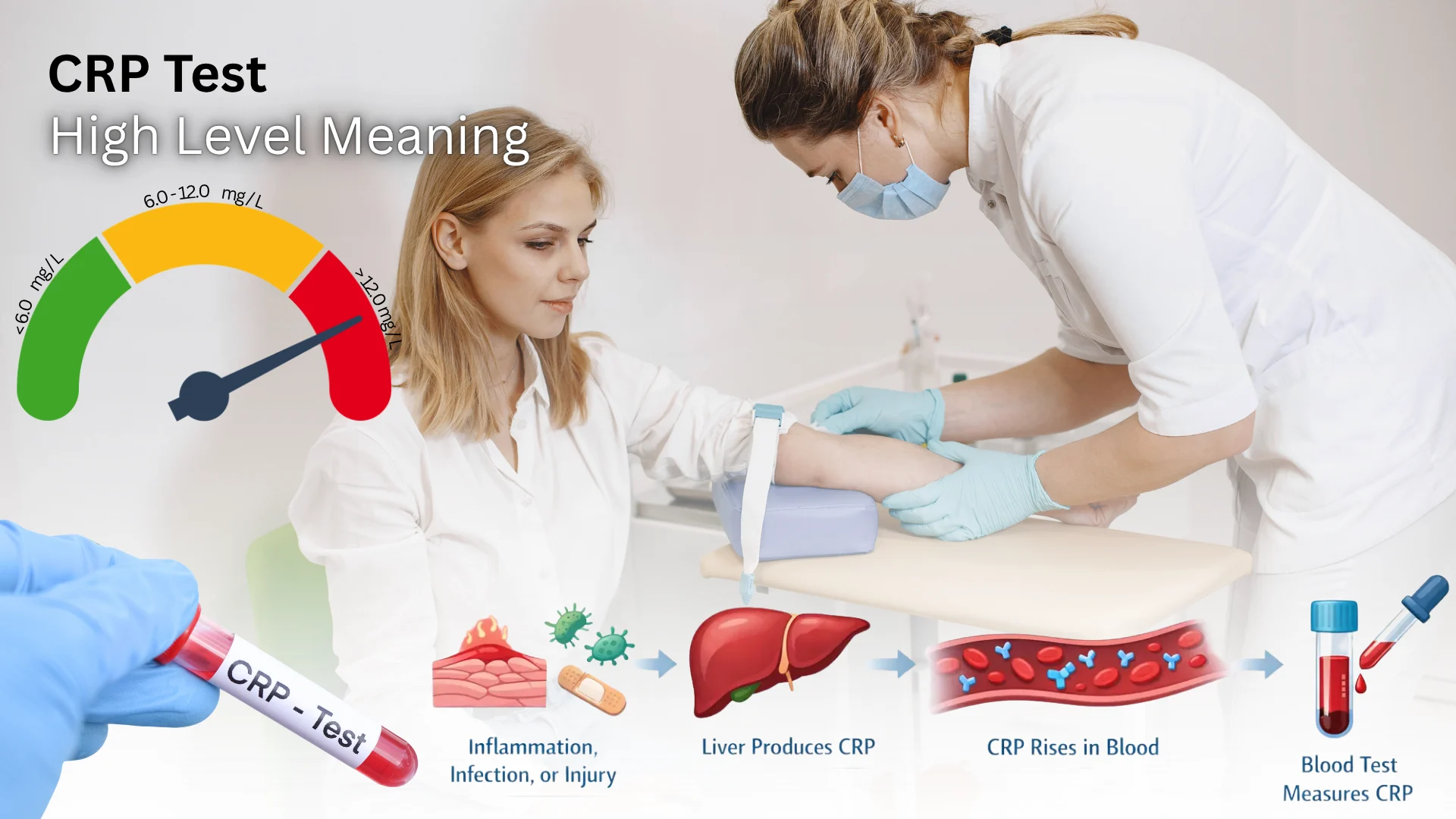
A C-Reactive Protein Blood Test in Dubai measures the amount of CRP circulating in your bloodstream. This protein is produced mainly by the liver in response to inflammation. Doctors use it to help evaluate certain infections, inflammatory conditions, and changes in disease activity during treatment.
Unlike an elevated CRP level, which may suggest an inflammatory response, a low CRP result usually does not indicate a problem that needs treatment. Nevertheless, it must be interpreted in the context of your symptoms, medical history, and the reason the test was ordered.
In this guide, you will learn what low CRP blood test results mean, what counts as a normal level, whether low CRP can rule out inflammation, and when additional medical evaluation may be necessary.
What Is Considered a Low CRP Blood Test Result?
C-reactive protein is a substance that increases when the body responds to inflammation. When there is little measurable inflammatory activity, CRP levels often remain low.
For a standard CRP blood test, a level below approximately 5 milligrams per liter (mg/L) is commonly considered within the normal reference range. Some laboratories use different limits, so the reference interval on your report is the most appropriate starting point.
A result such as 0.5 mg/L or 1 mg/L may be entirely normal. It does not usually indicate that your body is producing too little CRP or that your immune system is weak.
In fact, a low CRP level is generally a normal finding rather than a medical condition.
It is also important to distinguish between a low result and a result that is lower than a previous measurement. If your CRP decreases from an elevated level toward the normal range, this may indicate that inflammation is resolving. Your doctor will consider whether your symptoms and other findings are improving as well.
How to Read a Low CRP Result on Your Laboratory Report?
Your laboratory report typically displays the measured CRP concentration, the unit of measurement, and a reference range.
Here is a general guide to interpreting standard CRP levels.
| CRP result | General interpretation |
|---|---|
| Below 1 mg/L | Low level of this inflammatory marker |
| 1–3 mg/L | Often within the normal range for a standard CRP test |
| Below approximately 5 mg/L | Commonly considered within the standard CRP reference range |
| Above the laboratory's reference limit | May indicate an inflammatory response requiring interpretation |
These values are general examples, not universal diagnostic cutoffs. Laboratories may use different reference ranges, and the clinical meaning depends on the reason for testing.
For example, a CRP level of 1 mg/L is generally reassuring when a doctor is investigating systemic inflammation. However, the same result cannot independently exclude every infection or inflammatory disease.
You should also confirm whether your report shows a standard CRP test or a high-sensitivity CRP test. Although both measure the same protein, they are often used for different clinical purposes.
Five Possible Explanations for a Low CRP Level:
A low CRP result usually has a straightforward explanation: there may be little significant systemic inflammation at the time of testing. However, several factors influence the result.
1. No Significant Systemic Inflammation Is Present
The most common interpretation of a low CRP level is that the body is not producing a substantial inflammatory response.
If you feel well and your doctor ordered the test as part of a broader assessment, a low result may be consistent with the absence of significant systemic inflammation.
It does not mean that every tissue in the body is completely free from inflammation. Some localized or mild conditions may not produce a noticeable increase in circulating CRP.
2. An Earlier Inflammatory Condition Is Improving
CRP levels often increase during an acute inflammatory response and decrease as the underlying problem improves.
For example, if you previously had an infection or an inflammatory flare, a low follow-up CRP result may indicate that the inflammatory response is settling.
Doctors may use repeat CRP measurements to monitor selected infections and inflammatory diseases. A downward trend is often encouraging, especially when symptoms also improve.
However, a low result alone does not confirm complete recovery. Your healthcare provider may consider additional findings before deciding whether treatment should continue or whether further testing is necessary.
3. The Test Was Performed Early in an Illness
CRP does not always increase immediately after an infection or another inflammatory trigger begins.
Levels can start rising within hours and may become more elevated over the following day or two. Consequently, someone tested early in an illness may have a low CRP level even if inflammation is developing.
If symptoms began recently and worsen after testing, your doctor may recommend reassessment or repeat testing, depending on the suspected condition.
This is one reason a normal CRP result should not be used alone to rule out an evolving infection.
4. The Underlying Condition Does Not Consistently Increase CRP
Some inflammatory and autoimmune diseases can occur with normal CRP levels.
For example, people with certain presentations of lupus or inflammatory arthritis may have ongoing symptoms despite a normal CRP result. The degree of CRP elevation varies between diseases and individuals.
When symptoms suggest an autoimmune condition, doctors may consider other investigations, including an erythrocyte sedimentation rate (ESR), disease-specific antibody tests, imaging, or a detailed physical examination.
A low CRP level should not override persistent symptoms or other concerning clinical findings.
5. Treatment Has Reduced Inflammatory Activity
Some treatments reduce inflammation and may lead to lower CRP levels over time.
If you are receiving treatment for an inflammatory disease or infection, your doctor may compare current results with previous measurements to assess the overall trend.
However, the interpretation depends on the medication, the condition being treated, and your clinical progress. Do not stop or change prescribed medication simply because your CRP has returned to the normal range.
Can You Have an Infection With a Low CRP Level?
Yes. A low CRP result does not completely rule out infection.
Several factors can explain why an infection may occur without a substantial CRP increase:
-
The infection may be in its early stages.
-
The inflammatory response may be limited.
-
The infection may be localized.
-
Individual responses to infection can vary.
-
Certain treatments or medical circumstances may affect the inflammatory response.
For example, someone with early symptoms of a urinary tract infection may have a low CRP level but still require urine testing and appropriate clinical assessment.
CRP should therefore be interpreted alongside symptoms such as fever, painful urination, cough, localized pain, or other signs of infection.
Seek urgent medical attention if you experience difficulty breathing, confusion, fainting, severe weakness, or rapidly worsening illness. A low CRP result should never delay care when serious symptoms are present.
Does a Low CRP Level Mean You Do Not Have an Autoimmune Disease?
No. A normal or low C-reactive protein level cannot exclude every autoimmune disease.
Autoimmune conditions differ in how they affect inflammatory markers. Some produce substantial CRP elevations, while others may cause symptoms with little change in CRP.
For instance, rheumatoid arthritis can sometimes be present despite normal CRP and ESR results. A doctor may use joint examination, rheumatoid factor, anti-CCP antibodies, and imaging to investigate persistent joint swelling or morning stiffness.
Similarly, a low CRP result does not independently rule out lupus or other systemic autoimmune disorders.
If you have unexplained joint pain, recurrent swelling, persistent fatigue, rashes, or other symptoms that concern you, discuss them with a healthcare professional even if your CRP result is normal.
Low CRP vs. High-Sensitivity CRP: Understanding the Difference
A common source of confusion is the difference between standard CRP testing and high-sensitivity C-reactive protein testing.
A standard CRP test is primarily used to help evaluate inflammation associated with infections, inflammatory diseases, and tissue injury.
A high-sensitivity CRP (hs-CRP) test measures lower concentrations of CRP and may be used as one component of cardiovascular risk assessment in selected individuals.
Traditional hs-CRP cardiovascular risk categories are sometimes described as:
-
Below 1 mg/L: Lower relative cardiovascular risk category
-
1–3 mg/L: Intermediate relative cardiovascular risk category
-
Above 3 mg/L: Higher relative cardiovascular risk category
These categories are intended for cardiovascular risk assessment, not for diagnosing acute infection or interpreting standard CRP results.
A low hs-CRP level may be reassuring in the context of cardiovascular risk assessment, but it does not eliminate the risk of heart disease. Blood pressure, cholesterol, smoking history, diabetes, family history, and other factors remain important.
If you have a low CRP result, confirm which test was performed before drawing conclusions about your health.
Should You Do Anything About a Low CRP Result?
In most cases, a low standard CRP level does not require treatment or any special action.
Your next step depends on why the test was ordered and whether you have symptoms.
If you feel well: Your result may simply indicate that there is no substantial systemic inflammatory response.
If you are recovering from an illness: A low result may support the possibility that inflammation is decreasing, particularly if your symptoms are improving.
If symptoms persist: Ask your doctor whether additional investigations are appropriate. A normal CRP result should not be used as the only reason to dismiss ongoing symptoms.
If you are monitoring a chronic condition: Continue following your treatment plan and attend recommended appointments. Your clinician can determine whether the CRP trend is consistent with your overall progress.
There is no need to try to increase a low CRP level. The aim is not to raise or lower the number artificially, but to understand what it indicates in your particular circumstances.
Frequently Asked Questions About Low CRP Results:
Is a CRP level of 0.5 mg/L good?
A CRP level of 0.5 mg/L is generally a low result and is commonly considered normal for a standard CRP test. Its significance still depends on your symptoms and the reason the test was ordered.
Can low CRP mean a weak immune system?
No. A low CRP level does not, by itself, indicate a weak immune system. CRP reflects one part of the inflammatory response and is not a comprehensive measure of immune function.
Can CRP be low even when I have inflammation?
Yes. Mild, localized, early-stage, or certain autoimmune inflammatory conditions may occur without a substantial increase in CRP.
Does a low CRP mean I am completely healthy?
Not necessarily. A low result is generally reassuring regarding this inflammatory marker, but it cannot rule out all infections, chronic diseases, or other health problems.
Should I repeat a low CRP blood test?
Repeat testing is not usually necessary solely because your CRP is low. Your doctor may recommend another test if your symptoms change, the original test was performed early in an illness, or monitoring is needed for a specific condition.
Conclusion: A Low CRP Level Is Usually Reassuring, but Context Matters
Low C-reactive protein blood Lab tests results are generally considered normal and usually do not indicate a health problem requiring treatment. They often suggest that there is no substantial increase in systemic inflammation at the time the blood sample was collected.
However, a low CRP level cannot independently rule out infection, autoimmune disease, or every other inflammatory condition. The timing of testing, your symptoms, medical history, and other diagnostic findings all contribute to the interpretation.
The most reliable way to understand your CRP blood test results is to consider the complete clinical picture rather than focusing on one laboratory value. If you continue to experience symptoms or have concerns about your report, consult a qualified healthcare professional for personalized guidance.

 English
 Arabic
 French
 Spanish
 Deutsch
 Turkish
 Dutch
Dutch
 Italiano
 Russian
 Romaian
 Portuguese (Brazil)
 Greek
Greek
