


Bicycle Market Size, Share, Industry Analysis & Forecast 2034
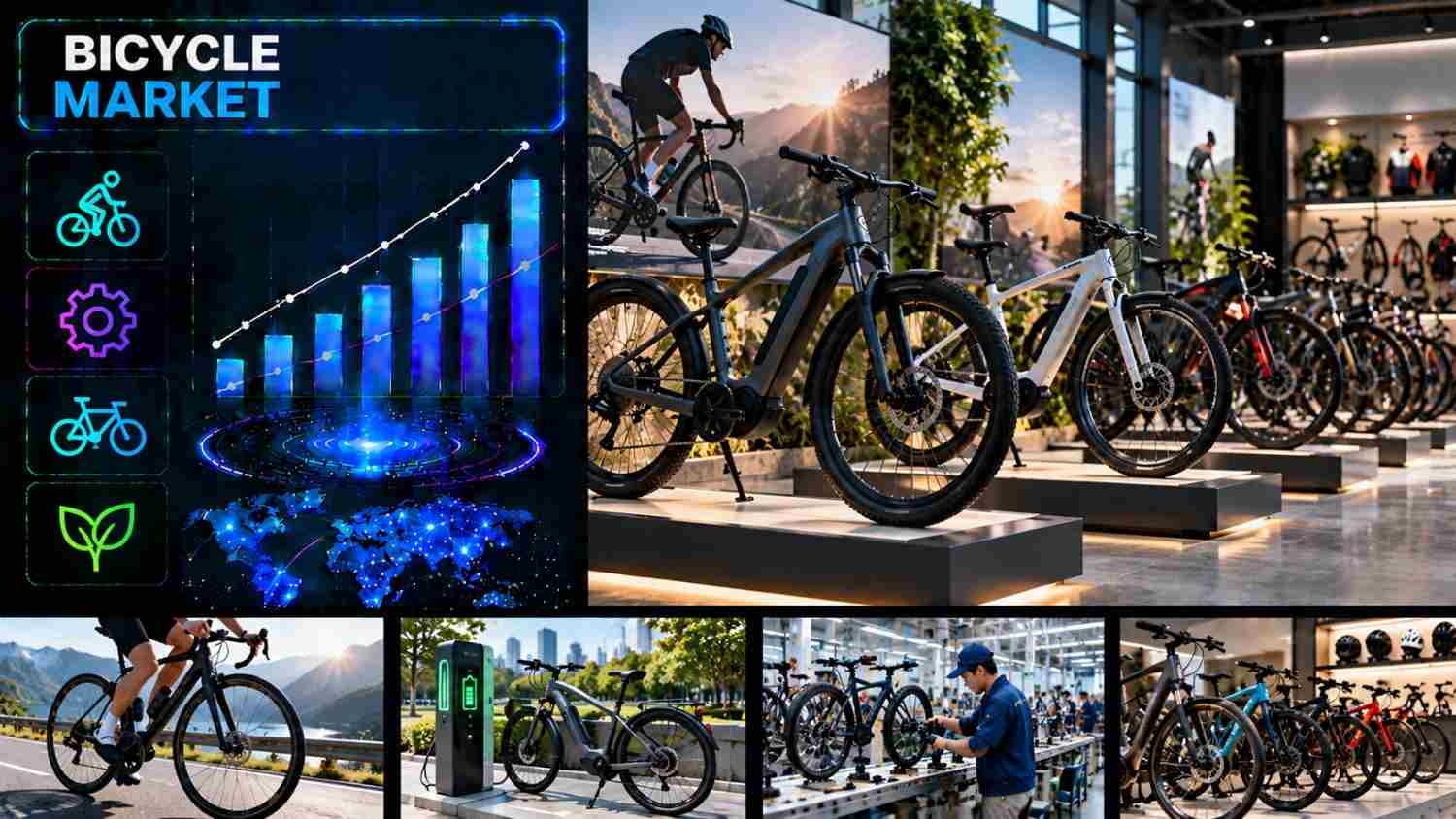
IMARC Group, a leading global market research and management consulting firm, has published its latest market intelligence report on the bicycle market. The global bicycle market grew from USD 70.4 Billion in 2025 to USD 74.7 Billion in 2026. Looking forward, IMARC Group estimates the market to reach USD 105.3 Billion by 2034, exhibiting a CAGR of 4.39% during 2026-2034, with the industry experiencing strong growth momentum. Growth is driven by government policies to cut vehicle emissions, rapid advances in electric bicycles, rising health awareness and fitness trends, and sustained public investment in cycling infrastructure and bike-sharing systems worldwide.
The market is on a steady expansion path, supported by urban congestion, rising fuel costs and the shift toward sustainable mobility. Road bicycles remain the largest product type, while conventional bicycles continue to dominate on technology. Electric bicycles are the fastest-moving innovation front as battery efficiency improves and prices fall. Mid-range products account for the bulk of demand, and offline stores remain the primary sales channel because buyers want to test ride before purchasing. Asia-Pacific anchors global demand through its manufacturing depth and large commuter base.
Bicycle Market at a Glance:
- Market Size 2025: USD 70.4 Billion
- Market Size 2026: USD 74.7 Billion
- Forecast Size 2034: USD 105.3 Billion
- Growth Rate 2026-2034: CAGR of 4.39%
- Growth Outlook: Steady expansion with strong upside
- Leading Type: Road Bicycle, 28.5% share
- Leading Technology: Conventional, 72.2% share
- Leading Price Segment: Mid-Range, 71.9% share
- Leading Distribution Channel: Offline Stores, 82.8% share
- Dominant Region: Asia-Pacific, with a 57.1% revenue share
How AI and Smart Technology Are Reshaping the Future of the Bicycle Market
- Connected, Software-Defined E-Bikes: Jio's smart electric bicycle combines GPS navigation, 5G connectivity, regenerative braking and over-the-air updates inside the Jio ecosystem, targeting students and urban commuters. Decathlon's Btwin LD 940E Connect pairs a 250W motor (600W peak) and a 694 Wh battery, giving up to 130 km of range, with Bluetooth connectivity and a suspension fork.
- Intelligent Shared Mobility: Tech hubs such as San Francisco, Seattle and Austin are folding bicycles into intelligent transportation networks through app-enabled bike sharing. In Europe, nextbike has acquired nextbike Polska S.A. to push MaaS integration and advanced technology across Poland, France and Belgium.
- Affordable Smart E-Cycles Widening the Rider Base: The Tata Stryder Zeeta Plus offers a 100 km range, pedal assist, a digital display and a waterproof battery at INR 39,999. ZADD Bikes' Utility Hauler cargo e-bike claims up to 160 km of range from INR 35,000, which shows how falling price points are drawing commuters and last-mile delivery riders into electric cycling.
Grab a sample PDF of this report: https://www.imarcgroup.com/bicycle-market/requestsample
Bicycle Market Trends and Drivers
E-bike adoption is a foundational driver. Electric motors let riders cover longer distances, handle tougher terrain and travel faster with less effort, which opens cycling to older riders, people with physical limitations and long-distance commuters. Battery advances are making e-bikes more efficient and affordable for everyday use. Demand is reinforced by urbanization: more than 4 billion people, over half of the world's population, now live in cities.
Bike sharing is turning casual riders into regular cyclists. The U.S. Bureau of Transportation Statistics counts 54 docked bikeshare systems open to the public, operating 8,862 docking stations. These systems give people without the space, budget or inclination to own a bicycle a cheap way to make short trips and last-mile connections. In Rio de Janeiro, an assessment of low-emission zones found more than 3.4 million bikeshare trips, 15% of them for deliveries and 36% of those on e-bikes.
Infrastructure investment is lifting demand across geographies. Copenhagen and Amsterdam made protected lanes, bike signals and dedicated parking the norm, and New York, Paris and Bogotá have followed. The French government unveiled a €2 Billion plan to improve bike infrastructure as part of a drive to reduce car use. In Queens, the Ridgewood Rides campaign targets seven key corridors to close unsafe gaps in the bike network. Safer routes lift demand for bicycles and for the rentals, repair and accessories businesses around them.
Ask an analyst for customized report: https://www.imarcgroup.com/request?type=report&id=4518&flag=E
Global Regulatory, Trade, and Sustainability Landscape Shaping Demand
- Carbon Targets and Congestion Pressure: Stringent EU carbon emission targets are promoting bicycles as a sustainable mobility solution. London remains Europe's most congested city, with drivers losing 101 hours to traffic, while Düsseldorf and Munich saw travel delays rise by over 20%.
- Tariff and Trade Exposure: Industry leaders at the Bicycle Leadership Conference in Dana Point, California, focused on the evolving U.S. tariff landscape and growing scrutiny of high-powered electric motorbikes. Giant Group's first-quarter revenue fell 25.7% to NT$12.5 billion, partly because the prior-year base was inflated by shipments pulled forward ahead of tariffs.
- Battery Passport and Product Compliance: EU Battery Passport rules are approaching enforcement, adding traceability and documentation obligations that e-bike brands, importers and dealers need to prepare for.
- Urbanization and Youth Demographics: UNESCO data shows that Asia-Pacific is home to almost 750 million people aged 15 to 24, equal to 60% of the world's youth. This large, young urban population is fueling interest in fitness-oriented cycling, shared mobility and non-motorized transport.
Key Government Schemes and Policy Programs Supporting the Industry
- France, €2 Billion Cycling Infrastructure Plan: The national plan funds safer, better-connected bike infrastructure to encourage people to give up their vehicles, in a market where upgraded routes directly raise bicycle demand.
- United States, Federal and State Green Transportation Incentives: Incentives at both federal and state levels promote eco-friendly commuting. Cities such as Portland and Minneapolis have written long-term cycling policies into urban planning, converting car lanes into bike lanes and building greenways.
- United Kingdom and Ireland, Cycle to Work Schemes: Employer-linked programs let employees acquire bicycles and cycling equipment on a tax-advantaged basis, supporting commuter participation across European markets with bike-to-work schemes.
- Belgium, Company Bike Framework: Employers that supply a company bike can treat purchase, maintenance and repair costs as 100% tax-deductible, which encourages corporate fleet adoption.
- India, Production-Linked Incentive Push and the Ludhiana Cluster: Ludhiana accounts for 75% of India's bicycle production and 92% of its bicycle parts manufacturing. Manufacturers have been lobbying for a bicycle PLI scheme to improve export competitiveness. They cite inland freight of 10% to 15% of cost per bicycle from Ludhiana to Mundra Port and an additional 10.5% import duty into Europe. The broader PM E-DRIVE scheme signals policy backing for cleaner mobility, though it is not bicycle-specific.
- Asia-Pacific, Non-Motorized Transport Infrastructure: Japan, Singapore and China are prioritizing infrastructure that supports bicycle commuting, including dedicated cycle lanes and green corridors, and Chinese bike-sharing operators are expanding into Australia and India.
Bicycle Industry Segmentation
The report has segmented the market into the following categories:
Breakup By Type:
- Road Bicycle
- Mountain Bicycle
- Hybrid Bicycle
- Others
Road bicycles lead with a 28.5% share. Mountain bicycles are widely used for trekking as adventure activities grow in popularity, while commuters are increasingly choosing road and hybrid bicycles for shorter trips. This variety lets manufacturers and retailers target distinct rider groups.
Breakup By Technology:
- Electric
- Conventional
Conventional bicycles hold a 72.2% share, valued as an affordable way to build cardiovascular health, muscle strength and overall fitness. Electric bicycles account for the remaining 27.8% and are gaining ground because they reach higher speeds with less effort and make commuting faster and more convenient.
Breakup By Price:
- Premium
- Mid-Range
- Low-Range
Mid-range bicycles dominate with a 71.9% share. Demand across price bands shifts with economic conditions, consumer preferences and cycling trends.
Breakup By Distribution Channel:
- Online Stores
- Offline Stores
Offline stores lead with an 82.8% share because customers can inspect and test ride a bicycle before buying. Online channels, which hold the remaining 17.2%, are growing as high-speed internet reaches more households and vendors list products on platforms such as Amazon, AliExpress and Flipkart.
Breakup By End User:
- Men
- Women
- Kids
Men account for 54.2% of the market. UK government transport data shows that men make an average of 25 cycling trips a year, versus 10 for women, which points to a clear headroom opportunity in women's-specific products and infrastructure.
Breakup By Region:
- North America (United States, Canada)
- Asia-Pacific (China, Japan, India, South Korea, Australia, Indonesia, Others)
- Europe (Germany, France, United Kingdom, Italy, Spain, Russia, Others)
- Latin America (Brazil, Mexico, Others)
- Middle East and Africa
Asia-Pacific leads with a 57.1% share, driven by rapid urbanization in China, India and Indonesia and government investment in bicycle commuting infrastructure. The United States accounts for over 93.60% of North American revenue, supported by health consciousness, expanding bike lanes and growing cycling tourism. Europe is shaped by carbon targets, congestion and e-bike adoption among older adults. Latin America is being propelled by low-emission urban policy and affordability, and the Middle East and Africa are gaining traction as fuel prices and congestion push residents toward low-cost mobility.
Competitive Landscape
The report provides a comprehensive analysis of the competitive landscape in the bicycle market with detailed profiles of key companies, including:
- Avon Cycles Ltd.
- Accell Group N.V.
- Benno Bikes LLC
- Dorel Industries Inc.
- Cervélo (Pon Holdings B.V.)
- Giant Manufacturing Co. Ltd.
- Merida Industry Co. Ltd.
- Kona Bicycle Company
- Olympus Bikes
- Specialized Bicycle Components Inc.
- SCOTT Sports SA (Youngone Corporation)
- Trek Bicycle Corporation (Roth Distributing Co. Inc.)
Leading brands such as Giant, Trek and Specialized are investing heavily in R&D for lightweight, high-performance designs. They are also widening e-bike lines with GPS tracking, app connectivity and pedal assist, and building direct-to-consumer channels. Giant Group, which owns Giant, Liv, Momentum and Cadex, sells bikes priced from roughly USD 300 to USD 13,500 and runs nine manufacturing factories, including a Hungary plant supporting Europe (300,000 unit capacity) and a Vietnam plant supporting the Americas (260,000 unit capacity).
Market Concentration Analysis
- Debt and Inventory Stress Are Culling Overextended Groups: Accell, a European e-bike leader, was bought by a KKR-led consortium for approximately EUR 1.56 billion. It was later weighed down by unsold post-pandemic stock and a large-scale Babboe cargo bike recall, went through two debt restructurings, and ended up in bankruptcy, showing that scale and brand heritage alone have not guaranteed survival.
- Scaled Asian Manufacturers Are Defending Margins: Giant's first-half revenue fell 10% to NT$29.19 billion, yet gross margin improved to 22% from 19%, and its June revenue rose nearly 16%. Merida's year-to-date revenue is down 15.3% and Ideal Bike's is down 19.8%, showing uneven recovery across the Taiwanese manufacturing base.
- Premium and E-Bike Differentiation Is the Strategic Priority: Trek has introduced its Charter+ e-bike platform for commuters and leisure riders, while Giant leans on a multi-brand ladder across price segments. Players are pairing product innovation with sustainability pledges, global distribution expansion and sponsorships to defend share.
What Does The Full Report Cover?
If you are tracking the bicycle market for investment decisions, market entry planning, competitive benchmarking, or strategic advisory, IMARC Group's report gives you everything in one place:
- Complete market sizing with historical assessment and forward-looking revenue outlook across the full study period
- Quantified analysis of market drivers, challenges and opportunities across type, technology, price, distribution channel, end user and region
- Sub-segment breakdowns for road, mountain and hybrid bicycles, electric and conventional technology, price tiers, and online and offline channels with individual share data
- Country-level data for the United States, Canada, Germany, France, United Kingdom, Italy, Spain, Russia, China, Japan, India, South Korea, Australia, Indonesia, Brazil, and Mexico
- Competitive and key company profiles with strategic landscape assessment
- Porter's Five Forces analysis to assess new entrants, rivalry, supplier power, buyer power and the threat of substitution
- Mapping of the leading and fastest-growing regional markets and key country-level opportunities
Recent News and Developments in Bicycle Market
- August 2026: Accell Group, owner of Raleigh, Lapierre, Haibike, Batavus and Sparta, was declared bankrupt by an Amsterdam court after a suspension of payments granted days earlier. Trustees reported that its Hungary factory had ceased operations. Lapierre sought court protection in France, and Irish investment firm Quanta Capital publicly expressed interest in acquiring the group, which employs around 2,000 people across 15 countries.
- August 2026: Giant Group reported first-half revenue of NT$29.19 billion, down 10%, with gross margin improving to 22% from 19% and cash reserves rising to NT$15.48 billion.
- July 2026: Giant Group's June revenue rose nearly 16% to NT$5.8 billion, its second consecutive month of growth, while Merida's June revenue fell 5.5% to NT$2.4 billion and Ideal Bike's declined 3.3%.
- February 2026: Accell agreed a debt restructuring with its lenders, who joined a new ownership group as KKR handed over control and retained no equity, in a plan to reduce debt and stabilize the business.
- June 2025: Tata launched the Stryder Zeeta Plus e-cycle at INR 39,999, offering a 100 km range, a 250W motor and three-hour charging, aimed at urban commuters in India's electric mobility segment.
- April 2025: Nextbike became one of Europe's largest bike-sharing operators by acquiring nextbike Polska S.A., strengthening its presence in Poland, France and Belgium and advancing MaaS integration.
Note: If you require specific details, data, or insights that are not currently included in the scope of this report, we are happy to accommodate your request. As part of our customization service, we will gather and provide the additional information you need, tailored to your specific requirements. Please let us know your exact needs, and we will ensure the report is updated accordingly to meet your expectations.
Key Questions This Report Answers
- What is the current global bicycle market size and what is its projected value?
- Which type, technology, price and distribution channel segments hold the largest share in the global bicycle market?
- What are the key drivers of global bicycle market growth?
- Which region dominates the global bicycle market and why?
- How are cycling infrastructure investments, bike-sharing programs and government incentives reshaping bicycle demand worldwide?
- Who are the top companies in the global bicycle market and what are their competitive strategies?
- What opportunities exist across e-bikes, smart connected cycles, shared mobility and emerging-market expansion?
About Us
IMARC Group is a global management consulting firm that helps the world's most ambitious changemakers to create a lasting impact. The company provides a comprehensive suite of market entry and expansion services. IMARC offerings include thorough market assessment, feasibility studies, company incorporation assistance, factory setup support, regulatory approvals and licensing navigation, branding, marketing and sales strategies, competitive landscape and benchmarking analyses, pricing and cost research, and procurement research.
Media and Sales Contact
IMARC Group
Email: [email protected]
United States: +1-201-971-6302
India: +91-120-433-0800
United Kingdom: +44-753-714-6104

 English
 Arabic
 French
 Spanish
 Portuguese
 Deutsch
 Turkish
 Dutch
Dutch
 Italiano
 Romaian
 Portuguese (Brazil)
 Greek
Greek
