


Mortgage Advice Course: Develop Your Knowledge of Mortgage Finance
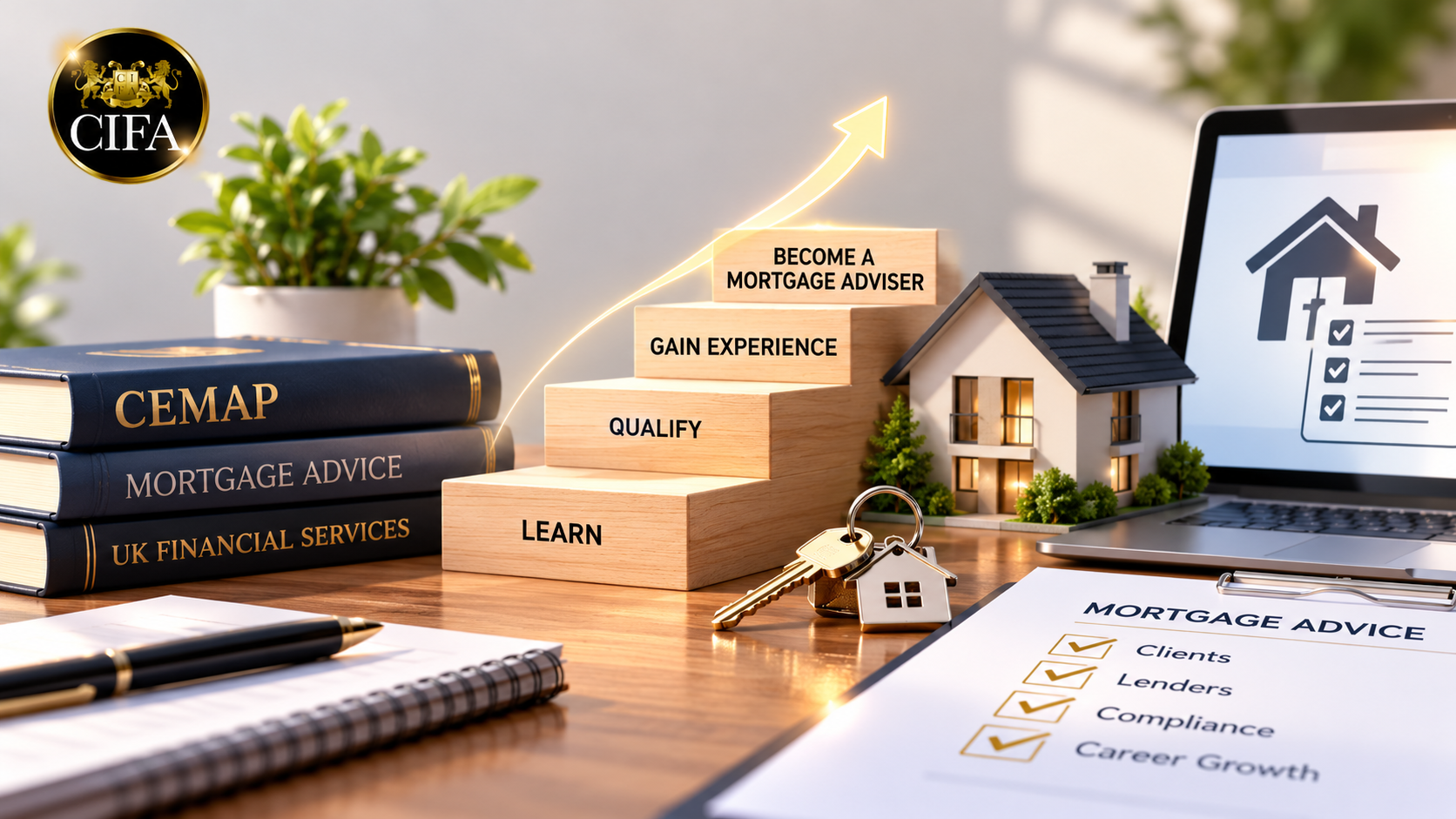
Buying a home is one of the most significant financial decisions many people make. Choosing the right mortgage involves understanding interest rates, repayment options, lender requirements, affordability, and the long-term impact of borrowing. For this reason, knowledgeable mortgage professionals play an important role in helping clients understand their options and make informed financial decisions.
A Mortgage Advice course can help learners develop a structured understanding of mortgage products, lending procedures, and the responsibilities involved in mortgage advisory services. It can be valuable for people beginning a career in financial services as well as professionals who want to expand their existing knowledge of lending and financial planning.
CIFA offers an online Mortgage Advice course covering the mortgage process, mortgage lending, the mortgage industry, elements of mortgage advice, and mortgage solutions. Through these subjects, learners can build an understanding of how mortgage applications work and why responsible, client-focused advice matters.
What Is a Mortgage Advice Course?
A Mortgage Advice course introduces the principles behind mortgage lending and the process of helping clients understand suitable borrowing options. It explores how lenders assess applications, how mortgage products differ, and which financial factors can affect a borrower's eligibility and repayment commitments.
Mortgage advice involves more than comparing interest rates. Professionals need to consider a client's income, expenses, credit history, financial goals, deposit, and future circumstances. They must also understand relevant regulations and communicate product features clearly.
An effective mortgage advisor course provides a foundation for understanding these responsibilities. It can help learners become familiar with mortgage terminology, lending criteria, affordability calculations, and the importance of assessing a client's circumstances before considering potential solutions.
For anyone interested in banking, lending, financial planning, or mortgage advisory services, this knowledge can support further learning and professional development.
Why Is Mortgage Advice Important?
Helping Clients Understand Their Options
Mortgage products can vary significantly in their interest rates, repayment structures, fees, flexibility, and eligibility criteria. Clients may find it difficult to compare these features without a clear understanding of how each option works.
Mortgage professionals help explain these differences in straightforward language. Training provides learners with a foundation for understanding mortgage terminology and the factors that can influence a borrowing decision.
Supporting Responsible Borrowing
A mortgage represents a long-term financial commitment. Borrowers need to understand not only their initial payments but also how changes in interest rates, income, expenses, or personal circumstances could affect their ability to repay.
Affordability assessment is therefore an important element of mortgage lending. Learning how lenders consider income, expenditure, and credit information helps learners understand why borrowing decisions should reflect a client's financial circumstances.
Understanding Lending Requirements
Lenders apply eligibility criteria when reviewing mortgage applications. These may include income verification, employment information, credit history, deposit requirements, property details, and affordability checks.
A structured course introduces learners to the mortgage application process and the information commonly considered during lending decisions. This understanding can be useful in mortgage administration, banking, lending operations, and advisory support roles.
Promoting Professional and Ethical Conduct
Mortgage advice can have a significant impact on a client's financial wellbeing. Professionals must communicate accurately, consider relevant circumstances, and follow the regulatory requirements applicable to their work.
CIFA's course introduces the regulatory environment surrounding mortgage advice, helping learners understand why compliance, transparency, and client-focused communication are important.
What Will You Learn in CIFA's Mortgage Advice Course?
CIFA's course is organised into five chapters that cover essential aspects of mortgage finance and advice.
1. The Mortgage Process
The mortgage process involves several stages, from understanding a client's requirements to preparing an application and receiving a lending decision.
Learners explore the general steps involved in a mortgage transaction and the role of different participants, including borrowers, lenders, advisers, and property professionals.
Understanding the process helps clarify why accurate information, suitable documentation, and effective communication are important throughout an application.
2. Mortgage Lending
Mortgage lending involves assessing whether a borrower meets a lender's requirements and can reasonably manage the proposed repayments.
This topic introduces lending principles and the factors that can influence a mortgage decision. These may include income, existing financial commitments, credit history, deposit size, interest rates, and the lender's criteria.
Learners also develop awareness of the relationship between lending decisions and affordability. Understanding these factors can help build a foundation for further study in lending operations and mortgage advisory services.
3. The Mortgage Industry
The mortgage industry includes lenders, banks, building societies, brokers, advisers, property professionals, and regulatory bodies. Each participant contributes to the process of arranging and managing property finance.
This chapter introduces the wider mortgage market and the roles of different industry participants. It helps learners understand how mortgage products are distributed and how borrowers may access different lending options.
An understanding of the industry can also help learners identify potential areas for further professional development.
4. Elements of Mortgage Advice
Mortgage advice requires an understanding of the client's needs, financial circumstances, objectives, and borrowing capacity.
This chapter introduces the core considerations involved in mortgage advisory work. These include assessing affordability, explaining product features, considering relevant risks, and communicating information clearly.
Learners can also develop an appreciation of why recommendations should be based on appropriate information and comply with applicable rules. Mortgage advice should not focus on the lowest advertised interest rate alone; the wider costs, terms, and suitability of a product also matter.
5. Mortgage Solutions
Mortgage solutions differ according to the borrower's circumstances, property, financial objectives, and eligibility.
This chapter explores the role of mortgage products in meeting different borrowing needs. Learners are introduced to the importance of comparing available options and understanding their features, benefits, costs, and limitations.
The objective is to build a foundation for informed discussions about mortgage solutions rather than treating every borrower as if they have identical requirements.
Understanding Different Types of Mortgages
A useful part of mortgage education is learning how common mortgage structures work and how their features affect borrowers.
Fixed-Rate Mortgages
A fixed-rate mortgage maintains the agreed interest rate for a specified period. This can make scheduled repayments more predictable during the fixed-rate term.
However, borrowers should also consider the length of the fixed period, any applicable early repayment charges, and what happens when the fixed rate ends.
Variable-Rate Mortgages
A variable-rate mortgage has an interest rate that can change according to the relevant product terms or benchmark. Depending on the mortgage, payments may increase or decrease over time.
Understanding this structure helps learners recognise why borrowers should consider whether their budgets could accommodate changes in repayments.
Tracker Mortgages
A tracker mortgage generally follows a specified reference rate, often with an agreed margin. When the reference rate changes, the mortgage interest rate may change as well, subject to the product terms.
Learners should understand that this type of mortgage can expose borrowers to fluctuations in borrowing costs.
Repayment Mortgages
With a repayment mortgage, scheduled payments generally cover both interest and part of the outstanding capital. If the borrower meets the agreed payments throughout the term, the mortgage is designed to be repaid by the end of that term.
Interest-Only Mortgages
With an interest-only mortgage, regular payments cover interest rather than reducing the capital balance. The borrower must have a suitable strategy for repaying the outstanding amount at the end of the term.
These examples demonstrate why mortgage professionals need to understand product structures, repayment obligations, and the risks that borrowers should consider.
Who Should Consider a Mortgage Advice Course?
A mortgage advice qualification course may be useful for several groups of learners.
-
Aspiring mortgage advisers: Individuals exploring mortgage advisory work can develop an understanding of the mortgage process and lending principles.
-
Banking professionals: Employees working in customer services, lending operations, or banking support may benefit from broader mortgage knowledge.
-
Financial advisers and planners: Professionals can expand their understanding of property finance and borrowing considerations.
-
Real estate professionals: Property-related professionals may find mortgage knowledge useful when discussing the financing side of a transaction, while respecting the limits of their professional role.
-
Insurance professionals: Those working with household finances may benefit from understanding how mortgage commitments fit into a client's broader financial circumstances.
-
Career changers and graduates: Learners considering financial services can use structured training to explore the subject before pursuing further qualifications or relevant experience.
The course provides a learning foundation, but completing it does not automatically authorise someone to provide regulated mortgage advice. Anyone planning to work in a regulated role in the UK should check the qualification, employer, and regulatory requirements applicable to that role.
How Can Mortgage Training Support Career Development?
Building Relevant Industry Knowledge
Mortgage-related roles require an understanding of lending procedures, product features, client information, and affordability. Training can help learners become familiar with these concepts and prepare for more advanced study.
Potential areas of interest include mortgage administration, lending support, mortgage operations, financial services customer support, and advisory pathways where the required qualifications and permissions are obtained.
Developing Client Communication Skills
Mortgage information can be difficult to understand, especially for first-time buyers. Professionals need to explain financial concepts in clear, accurate language and ensure that clients understand important terms and commitments.
Studying mortgage advice can help learners recognise the importance of effective communication and informed decision-making.
Understanding Financial Risk
Borrowing decisions are affected by interest rates, household budgets, employment circumstances, property values, and lender requirements. A mortgage course introduces learners to some of the factors that influence lending and repayment risks.
This knowledge can be useful for individuals interested in lending, risk assessment, and financial planning.
Supporting Continued Professional Development
For people already working in financial services, further study can broaden their understanding of mortgage products and industry practices. It can also help identify areas where additional qualifications, practical experience, or specialist training may be needed.
Career progression depends on several factors, including competence, experience, professional requirements, and employer expectations. A course should therefore be viewed as one part of a wider development plan.
Why Choose CIFA for Online Mortgage Advice Training?
When choosing a training programme, learners should review its curriculum, assessment structure, study resources, and relevance to their professional goals.
CIFA's online Mortgage Advice course offers a structured introduction to the mortgage process, lending, the mortgage industry, mortgage advice, and mortgage solutions.
The course is listed at intermediate level and provides 45 CPD hours. Its digital learning features include chapter-based mock exams, lifetime portal access, and a digital profile. Learners who successfully complete the required assessment and pass the exam receive a certificate of achievement.
The online format can be convenient for learners balancing study with work or other commitments. Before enrolling, check the current course details, assessment requirements, fees, and any additional qualifications needed for your intended career pathway.
CIFA's focus on professional learning provides an opportunity to build mortgage knowledge within a wider financial education journey.
How to Get the Most from Your Mortgage Advice Training
To make your learning more effective, combine the course material with regular revision and practical examples.
Understand the terminology. Become familiar with terms such as loan-to-value ratio, affordability, repayment term, interest rate, deposit, and credit assessment.
Compare mortgage structures. Review how fixed-rate, variable-rate, tracker, repayment, and interest-only mortgages differ. Focus on their costs, risks, and suitability considerations.
Practise affordability scenarios. Consider how income, regular expenditure, existing debts, and changes in interest rates can affect a household's budget.
Use mock exams. Chapter-based practice assessments can help you check your understanding and identify topics that need further revision.
Study professional responsibilities. Develop an understanding of why accurate information, client confidentiality, fair treatment, and applicable regulatory standards matter in mortgage-related work.
Plan your next step. If your goal is to become a mortgage adviser, research the qualifications and permissions required for the role you intend to pursue. A general training course may support your knowledge but may not replace a recognised professional qualification.
Conclusion
Mortgage advice combines financial knowledge, product understanding, affordability assessment, communication, and professional responsibility. As clients navigate property purchases and long-term borrowing commitments, understanding these areas can help professionals appreciate the importance of informed and responsible mortgage decisions.
CIFA's Mortgage Advice course provides an introduction to five core areas: the mortgage process, mortgage lending, the mortgage industry, elements of mortgage advice, and mortgage solutions. With 45 CPD hours, chapter-based mock exams, and online access, it offers a structured option for learners seeking to expand their understanding of mortgage finance.
Whether you are exploring financial services for the first time or adding to your existing knowledge, mortgage training can be a useful step in your professional development. Combine your learning with relevant experience and any required professional qualifications to work towards your longer-term career goals.
Frequently Asked Questions
1. What is a Mortgage Advice course?
A Mortgage Advice course introduces learners to mortgage products, lending procedures, affordability, the mortgage application process, and the responsibilities involved in mortgage advisory services.
2. Who can study a mortgage advice course?
The course may suit aspiring mortgage advisers, banking professionals, financial planners, real estate professionals, insurance staff, graduates, and career changers interested in mortgage finance.
3. What does CIFA's Mortgage Advice course cover?
CIFA's course covers five chapters: The Mortgage Process, Mortgage Lending, The Mortgage Industry, Elements of Mortgage Advice, and Mortgage Solutions.
4. How many CPD hours does the CIFA Mortgage Advice course offer?
The course is listed as 45 CPD hours and is classified as intermediate level.
5. Can an online mortgage advice course help with career development?
It can help learners build foundational knowledge relevant to mortgage and financial services roles. However, specific jobs may require recognised qualifications, relevant experience, and regulatory permissions.
6. Will I receive a certificate after completing the course?
CIFA states that learners receive a certificate of achievement after successfully completing the required assessment and passing the exam. Check the course details for current certification requirements.

 English
 French
 Spanish
 Portuguese
 Deutsch
 Turkish
 Dutch
 Italiano
 Russian
 Romaian
 Portuguese (Brazil)
 Greek
