


10 On Demand App Features Users Expect in 2026 That Most Apps Still Miss
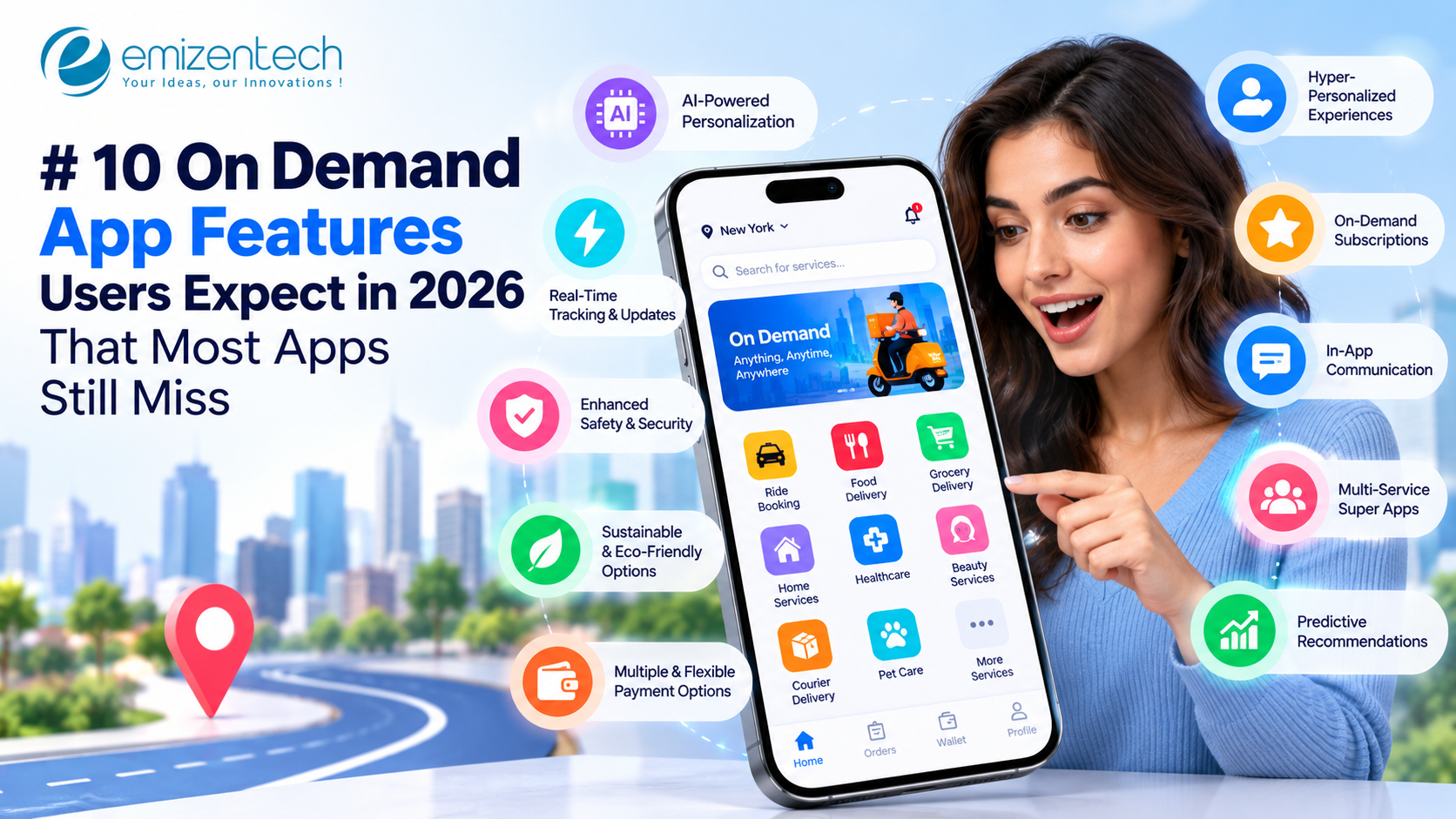
On-demand apps have changed how people book services, order products, arrange transportation, and access everyday assistance. Users now expect more than basic booking and payment functionality. They want personalized experiences, accurate updates, flexible scheduling, transparent pricing, and reliable support throughout the service journey.
However, many apps still focus on essential functions while overlooking features that directly influence customer satisfaction and retention. In 2026, businesses need to understand these changing expectations and prioritize features that make their applications more convenient, responsive, and dependable.
1. AI-Powered Personalized Recommendations
Personalization helps users find relevant services without repeatedly searching through multiple options. Instead of showing the same products or service providers to everyone, an app should adapt its recommendations based on individual preferences and activity.
Effective personalization can include:
-
Behavior-based recommendations: Suggest services based on previous bookings, searches, and purchase history.
-
Location-based suggestions: Display relevant providers and services according to the user's current location.
-
Contextual recommendations: Consider factors such as time, availability, and frequently used services.
-
Personalized offers: Present discounts and promotions based on customer interests rather than sending identical offers to everyone.
AI-powered recommendations can make service discovery faster and improve the likelihood of repeat bookings. Businesses can also analyze user interactions to refine recommendations over time.
2. Real-Time Tracking with Accurate ETA Updates
Real-time tracking has become an expected feature in delivery, transportation, home services, and other on-demand applications. However, simply displaying a provider's location on a map is not enough. Users also need accurate arrival estimates and timely updates when something changes.
An effective tracking system should provide:
-
Live GPS-based location updates.
-
Estimated arrival times that adjust according to traffic and route changes.
-
Notifications about delays, cancellations, or provider movement.
-
Clear service status, from confirmation to completion.
-
Access to provider details and contact information.
If your app lacks accurate location tracking and timely service updates, investing in professional on demand app development services can help you integrate real-time GPS tracking, dynamic ETA calculations, and instant delay notifications.
3. Flexible Booking, Scheduling, and Rescheduling
Users do not always need a service immediately. Some prefer to schedule appointments in advance, while others may need to change an existing booking because of unexpected circumstances.
Flexible scheduling gives customers greater control over when and how they receive a service.
Important capabilities include:
-
Advance scheduling: Allow users to select available dates and time slots.
-
Easy rescheduling: Let customers modify bookings without contacting support.
-
Recurring bookings: Support regular services such as cleaning, maintenance, and deliveries.
-
Live availability: Display updated provider availability to prevent scheduling conflicts.
-
Cancellation options: Clearly communicate cancellation policies and applicable charges.
A well-designed scheduling system should also synchronize availability across customers, service providers, and administrators. This reduces double bookings and makes service operations easier to manage.
4. Transparent Pricing Before Confirmation
Unexpected charges can quickly damage customer trust. Users want to understand the total cost before confirming a booking, especially when prices depend on distance, service complexity, demand, or additional requirements.
On-demand applications should make pricing information clear through features such as:
-
Itemized service costs and applicable taxes.
-
Delivery, convenience, or platform fees.
-
Estimated charges for additional services.
-
Clear explanations of surge or demand-based pricing.
-
Digital invoices and payment summaries.
For services where the final amount cannot be determined in advance, the app should provide an estimate and explain which factors may change the price.
Transparent pricing helps customers make informed decisions and reduces disputes after service completion.
5. One-Tap Payments and Multiple Payment Methods
A complicated checkout process can cause users to abandon bookings even when they are interested in the service. Payment should be quick, secure, and convenient across different customer preferences.
Useful payment capabilities include:
-
UPI, debit cards, credit cards, and digital wallets.
-
Securely saved payment methods for repeat transactions.
-
One-tap checkout for returning customers.
-
Digital receipts and transaction histories.
-
Automated refund status updates.
-
Clear payment failure messages with retry options.
Businesses should also consider payment gateway reliability, encryption, and secure transaction processing. Supporting multiple payment methods makes the application more accessible while reducing friction during checkout.
6. Two-Way In-App Communication
Users often need to contact service providers after placing a booking. They may want to share additional instructions, confirm an address, ask about arrival times, or communicate specific requirements.
An integrated communication system keeps these interactions within the application.
Key features include:
-
In-app messaging between customers and providers.
-
Voice calling with masked phone numbers.
-
Quick replies for common questions.
-
Image and document sharing where relevant.
-
Automated booking and service status notifications.
-
Conversation history for resolving disputes.
Communication should remain available at important stages of the service journey. Businesses can also use automated messages for routine updates while allowing customers to reach human support when necessary.
7. Proactive Issue Detection and Service Recovery
Many applications respond to problems only after customers report them. However, users increasingly expect apps to identify service disruptions and provide solutions before they need to contact support.
For example, if a provider is running late, the application should detect the delay and notify the customer. If the assigned provider cancels, the system could suggest another available provider or offer an alternative booking.
Useful capabilities include:
-
Automatic detection of delayed or missed appointments.
-
Notifications about provider cancellations and service disruptions.
-
Alternative provider suggestions based on availability.
-
Easy rebooking or cancellation options.
-
Automated refund initiation when applicable.
-
Support escalation for unresolved issues.
This feature is particularly valuable for businesses managing multiple providers and time-sensitive bookings. Proactive service recovery reduces customer frustration and helps maintain trust even when operations do not go as planned.
8. Verified Service Providers and Built-In Safety Features
Customers need confidence that the person or business fulfilling their booking is legitimate and trustworthy. This is particularly important for applications involving home visits, transportation, healthcare, and personal services.
An application should include safety measures such as:
-
Identity and document verification for service providers.
-
Verified profiles with ratings and customer reviews.
-
Clear provider information before booking confirmation.
-
Emergency assistance or SOS functionality where relevant.
-
Secure storage of customer and provider information.
-
Booking history and service records.
Businesses should also establish a process for reviewing complaints, investigating suspicious activity, and removing providers who violate platform policies.
These measures help create a safer experience and strengthen confidence in the platform.
9. Smart Loyalty Programs and Personalized Rewards
Acquiring new customers is important, but encouraging existing users to return is equally valuable. Loyalty features give customers a reason to continue using an application instead of switching to competitors.
Instead of offering generic discounts, businesses can introduce rewards based on customer activity and preferences.
Examples include:
-
Points for completed bookings.
-
Cashback on eligible transactions.
-
Membership plans with exclusive benefits.
-
Personalized discounts for frequently used services.
-
Referral rewards for inviting new customers.
-
Special offers for long-term or high-frequency users.
A well-planned loyalty system should make reward conditions easy to understand. Businesses should also monitor redemption rates and repeat booking behavior to determine whether their incentives are generating meaningful engagement.
10. Offline-Friendly and Accessible App Experiences
Users may experience poor internet connectivity, particularly while travelling or accessing services in areas with unreliable networks. An application that stops working completely during a connection issue can create unnecessary frustration.
Offline-friendly functionality can help users continue basic interactions until connectivity returns.
Important considerations include:
-
Caching essential information such as booking details and service instructions.
-
Saving incomplete forms locally where appropriate.
-
Retrying failed requests when the connection becomes available.
-
Displaying clear messages when an action requires an internet connection.
-
Supporting screen readers and adjustable text sizes.
-
Maintaining sufficient color contrast and accessible navigation.
Sensitive actions such as payments, booking confirmations, and provider availability checks must still be validated through the server. Offline support should improve usability without compromising transaction accuracy or security.
How Should Businesses Prioritize On-Demand App Features?
Adding every available feature at once can increase development costs, complicate the user experience, and delay launch. Businesses should prioritize functionality based on their service model, customer expectations, and operational requirements.
A practical approach includes:
-
Identify customer pain points: Review common complaints, booking difficulties, payment issues, and service delays.
-
Define essential features: Start with registration, service discovery, booking, payments, notifications, and user support.
-
Prioritize business-specific functionality: A delivery platform may need advanced tracking, while a home-service app may require provider verification and flexible scheduling.
-
Plan future enhancements: Introduce AI recommendations, loyalty programs, and automated service recovery as the platform evolves.
-
Measure feature performance: Track booking completion, repeat usage, customer retention, cancellations, and support requests.
Working with an experienced development team also helps businesses select suitable technologies, define the application architecture, and plan integrations without adding unnecessary complexity.
Conclusion
Successful on-demand applications need more than basic booking and payment features. Users expect personalized recommendations, accurate tracking, flexible scheduling, transparent pricing, secure transactions, and dependable support. Features such as proactive service recovery, provider verification, and offline accessibility can further improve the overall experience.
The right feature set depends on the target audience, service category, operational model, and long-term business goals. With 12+ years of experience in web and mobile app development, EmizenTech helps businesses build custom digital solutions that align with their requirements and support future growth.
FAQs
1. What are the most important features of an on-demand app?
Essential features include user registration, service discovery, booking and scheduling, real-time tracking, secure payments, notifications, ratings, and customer support. Additional features depend on the application's industry and business model.
2. How does AI improve on-demand applications?
AI can improve personalization through tailored recommendations, predict demand, optimize provider allocation, identify unusual activity, and support automated customer service.
3. Why is real-time tracking important in on-demand apps?
Real-time tracking allows users to monitor service progress, check estimated arrival times, and receive updates about delays. It improves transparency and reduces uncertainty.
4. Should businesses include all advanced features in the first app version?
No. Businesses should begin with essential features that support the main service workflow. Advanced capabilities can be introduced gradually based on customer feedback, usage data, and business priorities.
5. How can businesses improve customer retention in on-demand apps?
Businesses can improve retention through personalized recommendations, reliable service delivery, transparent pricing, loyalty rewards, flexible booking options, and responsive customer support.

 English
 Arabic
 French
 Spanish
 Portuguese
 Deutsch
 Turkish
 Dutch
 Italiano
 Russian
 Portuguese (Brazil)
 Greek
