


Understanding Business Funding: A Complete Guide to Commercial Finance Skills
Businesses need more than good products and effective management to succeed. They also need financial resources that allow them to operate efficiently, respond to changing market conditions and invest in future opportunities. Whether a company is purchasing equipment, opening another branch or managing an unexpected financial requirement, access to suitable funding can influence its ability to achieve its objectives.
Commercial finance provides businesses with different ways to obtain funding. However, arranging finance involves several important considerations, including the purpose of borrowing, financial performance, cash flow, affordability and lender requirements.
For professionals entering the financial services industry, understanding these factors can create valuable opportunities to develop business finance knowledge.
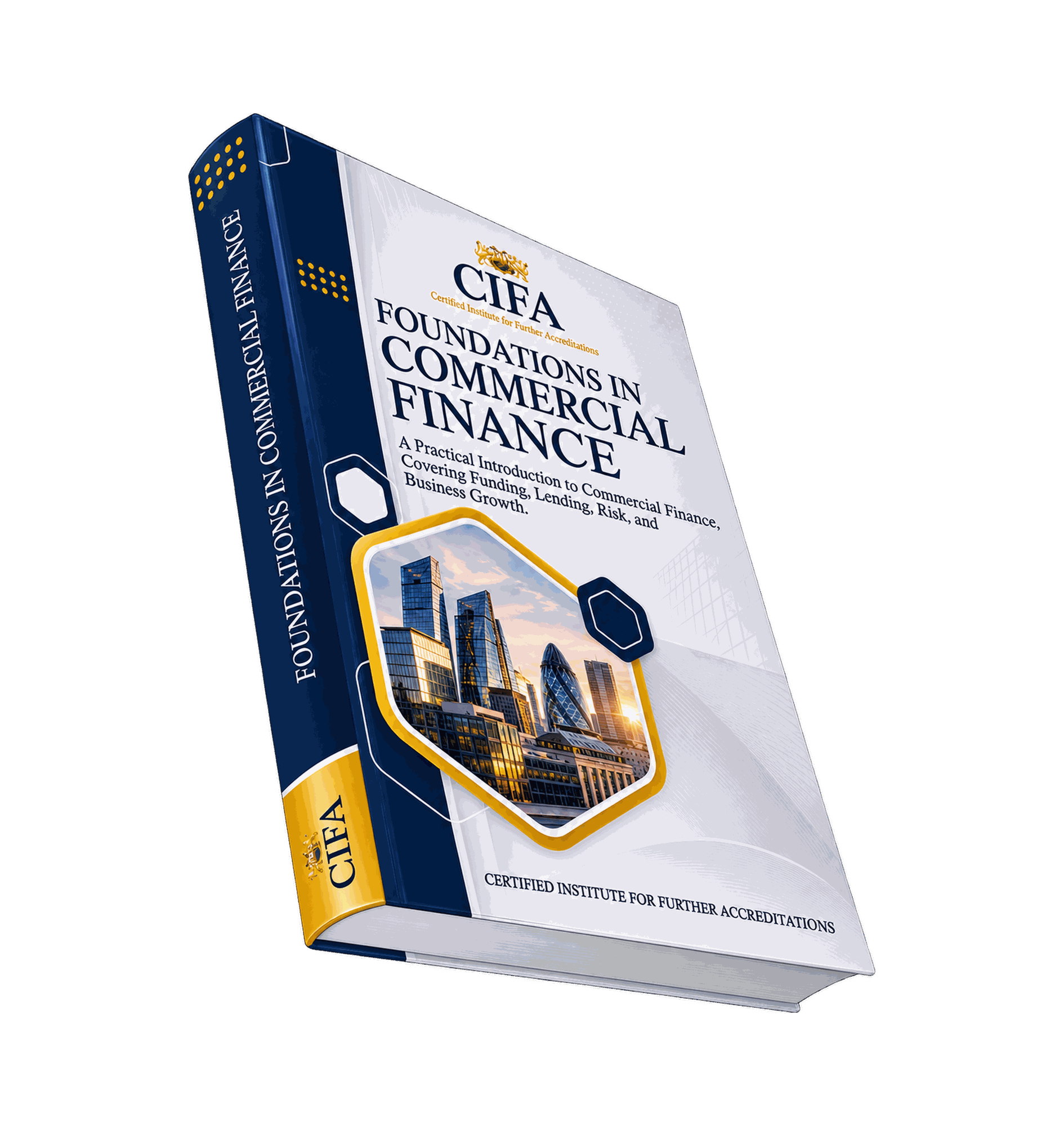
The Foundation to Commercial Finance course offered by CIFA introduces learners to the financial concepts and processes involved in commercial lending. It explores how businesses approach funding, how financial information is assessed and how finance transactions are managed. The programme can be a useful learning option for graduates, career changers and professionals interested in commercial finance.
The Connection Between Business Growth and External Finance
A business may have a profitable operating model but still need additional funding to achieve its next objective. Growth often requires investment before the expected financial benefits become available.
For example, a transport company may need to purchase additional vehicles before it can accept more delivery contracts. A manufacturer may need new machinery to increase production. A technology business may require additional resources to develop a new service.
In these situations, commercial finance can help bridge the gap between current resources and future business requirements.
External funding may support:
-
Business expansion and development.
-
The purchase of equipment and machinery.
-
Commercial property acquisition.
-
Inventory and stock purchases.
-
Working capital requirements.
-
Business acquisitions.
-
Refinancing existing financial commitments.
Choosing a suitable funding arrangement requires an understanding of the organisation's financial position and the commercial purpose behind the borrowing.
What Makes Commercial Lending Different?
Commercial lending focuses on the financial requirements of businesses rather than individuals. As a result, the assessment process can involve more detailed examination of company accounts, trading performance and future financial expectations.
A lender may need to understand how a business generates revenue, what expenses it faces and whether its cash flow can support additional repayments.
Several factors can influence a commercial lending assessment.
Business Performance
A company's trading history can provide insight into its ability to generate income and maintain operations. Financial performance over time may help lenders understand the organisation's stability and commercial prospects.
Financial Commitments
Existing loans, supplier obligations, operating expenses and other liabilities can affect how much additional borrowing a business may be able to manage.
Repayment Capacity
A business needs to demonstrate that it can meet its financial commitments. Cash flow forecasts and other financial information may help establish whether proposed repayments appear affordable.
Funding Purpose
Lenders generally need to understand why a business is requesting finance. The intended use of funds can influence the type of information required and the funding arrangements considered.
Security and Supporting Information
Depending on the finance product, lenders may consider assets, guarantees or other forms of security. They may also request additional business documentation before reaching a decision.
Understanding these considerations helps explain why commercial lending requires financial knowledge and careful assessment.
The Financial Knowledge Behind a Commercial Finance Decision
A successful commercial finance process depends on understanding the financial condition of the business. Several areas of financial knowledge are particularly important.
1. Reading Business Accounts
Financial statements help explain how an organisation performs and manages its resources.
The income statement provides information about revenue, expenses and profit. The balance sheet presents assets, liabilities and equity, while cash flow information helps show how money moves through the organisation.
Understanding these documents can help professionals identify financial strengths and potential concerns.
2. Understanding Financial Ratios
Financial ratios can provide additional insight into business performance and financial stability.
Depending on the assessment, professionals may examine liquidity, profitability, leverage and other measures. These indicators should be considered alongside wider business information rather than used in isolation.
3. Forecasting Future Cash Flow
Historical accounts explain what has happened, but lending decisions may also require an understanding of future financial expectations.
Cash flow forecasting involves estimating future receipts and payments. It helps identify whether the organisation may experience periods of financial pressure and whether it is likely to manage its commitments.
4. Evaluating Financial Risk
Every borrowing arrangement involves financial considerations. Changes in sales, rising costs, delayed payments or economic uncertainty may affect a company's ability to repay.
Understanding these risks is important when examining the suitability of a proposed finance arrangement.
What Does CIFA's Foundation to Commercial Finance Programme Teach?
CIFA's Foundation to Commercial Finance course introduces learners to the different stages and responsibilities involved in commercial lending.
The programme consists of eight learning chapters covering important areas of business funding and financial assessment.
Commercial finance fundamentals: Introduces the commercial finance environment and the role of funding in business activity.
Financial statement analysis: Explores how financial accounts can be used to understand business performance and financial position.
Cash flow forecasting and affordability: Develops awareness of future cash requirements and repayment considerations.
Business funding solutions: Introduces funding options and the importance of matching finance to commercial objectives.
Credit assessment and lender criteria: Explains the factors that may influence the evaluation of business finance applications.
Client fact finding and funding proposals: Focuses on understanding client requirements and presenting relevant financial information.
Regulation and professional integrity: Introduces the importance of ethical conduct and applicable professional responsibilities.
Transaction management and client relationships: Explores the coordination, communication and organisation involved in commercial finance transactions.
Together, these subjects provide an introduction to the financial and professional knowledge required to understand the commercial lending process.
Commercial Finance in Everyday Business Situations
Commercial finance is not limited to large corporations. Small and medium-sized businesses also require funding to manage operations and respond to commercial opportunities.
Consider three different examples.
A Small Retail Business Managing Stock
A retailer expects higher customer demand during a busy season. It needs to purchase additional inventory but expects to receive some customer payments later.
The business may explore working capital finance to help manage the timing difference between payments and receipts.
A Manufacturing Company Purchasing Equipment
A manufacturer wants to improve production capacity by purchasing machinery. It must consider the equipment cost, expected business benefits and how the proposed borrowing would affect its financial commitments.
Understanding asset-related funding can help the company explore relevant options.
A Growing Company Expanding Operations
A business plans to open another location. It needs to estimate setup costs, ongoing expenses and future revenue before deciding how much finance may be required.
Financial forecasting and affordability assessment are important parts of evaluating such a project.
These examples demonstrate how commercial finance knowledge can help professionals understand the financial challenges businesses face.
Who Can Benefit from Studying Commercial Finance?
Commercial finance education may be relevant to individuals with different professional backgrounds and career objectives.
Finance and Accounting Graduates
Graduates can develop an understanding of how financial statements and business performance influence lending decisions.
Banking Professionals
People working in banking may use commercial finance knowledge to broaden their understanding of business customers and lending processes.
Aspiring Credit Professionals
Individuals interested in credit-related roles can explore the financial information and assessment considerations involved in business borrowing.
Business Finance Support Staff
Professionals who assist with applications, documentation and client communication may benefit from learning about the wider commercial finance process.
Business Owners and Entrepreneurs
Understanding commercial funding can help business owners become more familiar with finance options, affordability and the information lenders may request.
Career Changers
Individuals considering a move into financial services can use structured learning to become familiar with commercial lending concepts and professional responsibilities.
The programme is listed at intermediate level, so learners should consider their existing knowledge when deciding whether it matches their development needs.
Career Possibilities in Commercial Finance
Commercial finance knowledge can support further exploration of several areas within financial services.
Potential career areas include:
-
Business banking support.
-
Commercial lending administration.
-
Credit assessment support.
-
Business finance operations.
-
Financial documentation and processing.
-
Commercial finance support.
-
Financial analysis.
-
Client relationship support.
More specialised positions may require additional qualifications, experience or regulatory permissions. For example, certain advisory activities can involve specific professional and regulatory requirements.
The course can help develop foundational subject knowledge, but it should not be viewed as a guarantee of employment or automatic professional authorisation.
Why Professional Integrity Matters in Business Lending
Commercial finance professionals often handle confidential financial records and information about business operations. Their work can influence important financial decisions, making responsible conduct essential.
Professional integrity includes several important behaviours.
Honest communication: Information should be presented accurately, without misleading statements or unrealistic promises.
Confidentiality: Business and customer information should be handled appropriately and protected according to relevant requirements.
Accurate documentation: Financial information and supporting records should be complete and reliable.
Responsible judgement: Professionals should recognise limitations, avoid inappropriate assumptions and escalate concerns when necessary.
Regulatory awareness: Individuals should understand the rules and professional obligations relevant to their activities.
These principles help support trust between businesses, finance professionals and lending institutions.
Learning Commercial Finance Online with CIFA
Professional education can help learners understand new areas of finance without necessarily following a traditional classroom schedule.
CIFA's Foundation to Commercial Finance course provides an online learning pathway covering eight important areas of commercial lending.
The current course information includes:
-
40 CPD hours.
-
Intermediate-level content.
-
Eight structured chapters.
-
Chapter-based mock assessments.
-
A practical study resources and toolkit section.
-
Downloadable learning materials.
-
A capstone assessment.
-
A certificate of achievement after successful completion and passing the examination.
-
Lifetime learning portal access.
The programme is designed to introduce learners to business funding and the processes involved in assessing and managing commercial finance transactions.
Its online format can help learners organise their studies around employment and other commitments.
How to Prepare for a Future in Commercial Finance
Developing commercial finance knowledge requires more than memorising financial terminology. Learners should aim to understand how financial concepts apply to real business situations.
Here are some practical ways to strengthen your understanding:
-
Explore company accounts: Practise identifying revenue, expenses, assets, liabilities and cash flow information.
-
Understand business models: Learn how different industries generate income and manage operating costs.
-
Study funding arrangements: Explore why businesses use different types of finance for different purposes.
-
Practise financial analysis: Compare financial information and identify factors that may influence borrowing decisions.
-
Improve communication: Develop the ability to explain financial concepts clearly.
-
Understand professional standards: Learn why accuracy, confidentiality and responsible conduct matter.
-
Research career requirements: Review job descriptions to identify the experience and qualifications needed for your preferred area.
A combination of structured education and practical experience can help learners build a stronger foundation for future opportunities.
Conclusion
Commercial finance plays an important role in helping businesses manage their financial requirements and pursue new opportunities. From purchasing equipment to supporting expansion, funding decisions require careful consideration of financial performance, cash flow, affordability and lending criteria.
The Foundation to Commercial Finance course from CIFA introduces learners to these subjects through eight structured chapters. Its coverage of financial statement analysis, funding solutions, credit assessment, client fact finding and transaction management provides a broad introduction to the commercial lending environment.
For graduates, business professionals and individuals exploring a career in financial services, the course offers an opportunity to develop useful knowledge of business funding and commercial finance. It can serve as a starting point for continued learning and professional development in this field.
Frequently Asked Questions
1. What is the Foundation to Commercial Finance course?
It is a CIFA digital learning programme that introduces commercial lending, business funding, financial analysis, cash flow forecasting, credit assessment and transaction management.
2. Why do businesses use commercial finance?
Businesses may use commercial finance to purchase assets, manage working capital, expand operations, acquire property or support other commercial requirements.
3. What financial documents are important in commercial lending?
Depending on the application, lenders may request company accounts, income statements, balance sheets, cash flow forecasts, management accounts and details of existing financial commitments.
4. Is commercial finance different from business accounting?
Yes. Business accounting focuses on recording, reporting and interpreting financial activity, while commercial finance focuses on funding requirements, lending arrangements and the assessment of business borrowing.
5. Who should consider CIFA's commercial finance training?
It may suit finance graduates, banking professionals, aspiring credit specialists, business owners, lending support staff and career changers interested in commercial finance.
6. How many CPD hours are included in the course?
CIFA currently lists the Foundation to Commercial Finance programme as offering 40 CPD hours.
7. Can commercial finance knowledge support a banking career?
Yes. Knowledge of business funding, financial statements and credit assessment can be relevant to several banking and financial services roles. Specific positions may require further training and experience.
8. Does completing this course guarantee a commercial finance job?
No. It provides structured learning, but employment depends on experience, skills, employer expectations and any additional qualifications or permissions required for the role.

 English
 Arabic
 French
 Spanish
 Portuguese
 Deutsch
 Turkish
 Dutch
 Italiano
 Russian
 Romaian
 Greek
