


How Do Buyers Evaluate Machining Components Before Ordering?
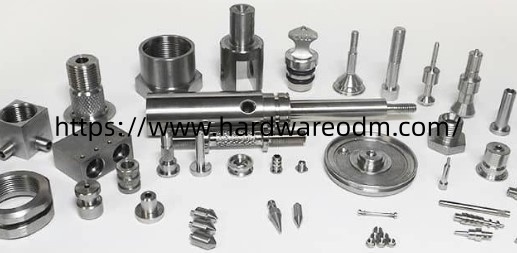
Machining Components are often designed around specific equipment structures, operating conditions, and assembly requirements. Before placing a custom order, buyers should provide clear technical information and evaluate whether a manufacturer can translate the design into a consistent production process. Reviewing drawings, materials, tolerances, surface treatments, inspection arrangements, and delivery details can help reduce misunderstandings during procurement.
Prepare Complete Drawings and Technical Files
A clear drawing package gives the manufacturer a practical basis for evaluating a project. Buyers should prepare 2D engineering drawings and, when available, 3D CAD files. These documents should include dimensions, geometric tolerances, thread specifications, surface requirements, and material information.
Revision control is equally important. If a design has been updated, identify the current revision and explain which details have changed. This helps prevent outdated files from being used for quotation or production.
Buyers should also identify the function of each critical feature. For example, a mounting hole may determine installation position, while a threaded section may affect fastening and assembly. Explaining these functions helps the engineering team understand which dimensions require particular attention.
Select Materials According to the Application
Material selection influences weight, strength, corrosion behavior, machinability, and overall production cost. The choice should reflect the component's working environment rather than being based on price alone.
Aluminum alloys are commonly considered for applications where reduced weight and machinability are relevant. Stainless steel may be suitable for equipment exposed to moisture or certain corrosive conditions. Carbon steel, brass, copper, and engineering plastics can also be considered depending on mechanical, electrical, and environmental requirements.
Buyers should specify the exact material grade and required condition. If alternative materials are acceptable, explain the approval procedure before production begins. Material certificates and traceability documents can also be requested when required by the project.
Define Tolerances Based on Functional Needs
Not every dimension requires the same tolerance. Applying unnecessarily tight limits across an entire drawing may increase processing time, inspection requirements, and production costs without improving the actual function.
Instead, buyers should identify critical dimensions that affect fitting, movement, sealing, positioning, or fastening. These details help the manufacturer plan suitable equipment, fixtures, processing sequences, and measurement methods.
It is also useful to discuss geometric requirements such as flatness, concentricity, perpendicularity, and positional accuracy where relevant. The manufacturer should explain how these characteristics will be measured and how inspection results will be recorded.
Discuss Surface Treatment and Finishing
Surface requirements should be clearly stated before requesting a quotation. Depending on the material and application, possible options may include anodizing, plating, polishing, passivation, painting, or other finishing processes.
Buyers should clarify whether a finish is intended for corrosion protection, appearance, wear resistance, or a particular assembly requirement. These purposes may involve different processing methods and acceptance criteria.
Another important detail is dimensional change after treatment. Coatings and finishing operations can affect holes, threads, mating areas, and external dimensions. Ask the manufacturer whether critical features will be inspected again after the finishing process.
Request Samples and Inspection Information
Sample evaluation provides an opportunity to check the actual product before approving a larger order. Buyers can review dimensional accuracy, surface condition, edge treatment, thread quality, and compatibility with related parts.
The inspection plan should reflect the characteristics that matter to the application. Depending on the design, it may include dimensional measurement, hardness testing, surface inspection, material verification, or functional checks.
Ask the supplier what inspection equipment is available and whether measurement reports can be provided. For repeat orders, clarify how production records and inspection results are maintained to support consistency between batches.
Evaluate Production Capacity and Process Planning
A manufacturer's equipment list does not fully explain how a particular design will be produced. Buyers should ask about the proposed processing route, equipment suitability, fixture arrangements, secondary operations, and outsourcing requirements.
Complex shapes may involve several operations, such as milling, turning, drilling, grinding, or finishing. The order of these operations can affect dimensional stability and production efficiency.
It is also useful to discuss order quantities. Prototype quantities, small batches, and recurring production orders may require different scheduling and cost arrangements. Sharing expected future demand can help the manufacturer prepare a more practical production plan.
Compare Quotations Beyond Unit Price
A quotation should clearly explain what is included in the offered price. Buyers should review material costs, setup charges, tooling, secondary processing, inspection, packaging, and transportation arrangements.
Delivery expectations should also be discussed in detail. Ask whether the schedule includes material preparation, sample approval, production, finishing, final inspection, and shipment. This makes it easier to identify potential delays before confirming the purchase.
hardwareodm encourages buyers to communicate drawings, application details, and quality expectations during the quotation stage. Clear technical discussions help both parties confirm the project scope and identify any information that needs further clarification.For purchasing teams preparing a new industrial project, a detailed evaluation can make supplier communication more effective and help avoid unexpected changes after production begins. Buyers can review product information and manufacturing options at https://www.hardwareodm.com/product/ and contact hardwareodm to discuss custom drawings, material requirements, inspection arrangements, and production plans.

 English
 Arabic
 French
 Spanish
 Portuguese
 Deutsch
 Turkish
 Dutch
 Italiano
 Romaian
 Portuguese (Brazil)
 Greek
