


Industrial Laser Cleaner: Modern Solutions for Precision Surface Cleaning
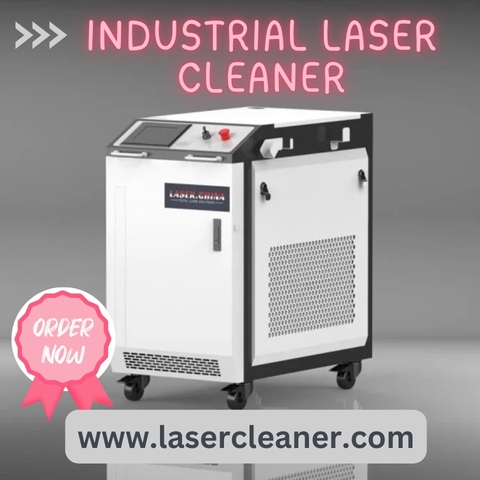
Surface cleaning is an essential process in industries such as automotive manufacturing, metal fabrication, aerospace, shipbuilding, and heavy equipment maintenance. Traditional cleaning techniques often involve chemicals, abrasive materials, or manual labor, which can increase processing time and create additional waste. Laser technology offers a modern approach that helps manufacturers achieve cleaner surfaces with greater precision.
An Industrial laser cleaner uses concentrated laser energy to remove rust, paint, oil, oxide layers, and other unwanted contaminants from different materials. It provides a controlled cleaning process that supports industrial production requirements while reducing dependence on conventional surface treatment methods.
How Does Industrial Laser Cleaning Work?
Laser cleaning works by directing a concentrated laser beam toward a contaminated surface. The energy interacts with unwanted materials, causing them to separate from the underlying substrate through controlled thermal and physical processes.
The operator can adjust parameters such as laser power, scanning speed, frequency, and pulse duration according to the cleaning application. These settings help achieve the required cleaning results while protecting the base material from unnecessary damage.
Depending on the application, manufacturers can choose pulsed or continuous-wave laser cleaning systems. Pulsed systems are commonly selected for applications requiring precise control and delicate surface treatment, while continuous-wave systems are suitable for certain high-speed industrial cleaning operations.
Common Industrial Applications
Laser cleaning technology is used across multiple industries because different manufacturing processes require reliable surface preparation.
Metal Rust Removal: Rust can affect the appearance, durability, and performance of metal components. Laser cleaning removes corrosion layers from steel structures, machinery parts, metal sheets, and industrial equipment.
Paint and Coating Removal: Before repainting, welding, or refinishing, manufacturers often need to remove existing coatings. Laser systems can clean selected areas without relying on chemical paint removers.
Oil and Grease Cleaning: Manufacturing components frequently accumulate oil, grease, and production residues. Laser cleaning helps prepare these surfaces for further processing and assembly.
Weld Preparation: Clean metal surfaces are important for achieving consistent welding results. Removing oxidation, coatings, and contaminants before welding can improve surface preparation and process consistency.
Mold and Tool Cleaning: Industrial molds and production tools can collect deposits during repeated operations. Laser cleaning provides a controlled method for removing unwanted buildup from suitable surfaces.
Choosing the Right Laser Cleaning Machine
Selecting suitable equipment requires understanding the material, contamination type, cleaning area, and production requirements. A machine designed for removing heavy rust may not be the best choice for delicate components or precision cleaning.
Laser power is an important consideration because different cleaning applications require different energy levels. Lower-power systems may be suitable for light contamination and detailed work, while higher-power machines can support demanding industrial applications.
Manufacturers should also consider the laser source, cooling system, scanning configuration, operating controls, and available safety features. A user-friendly control system can make it easier for operators to adjust cleaning parameters for different jobs.
When purchasing an Industrial laser cleaner, it is also important to evaluate the supplier's technical support, spare parts availability, warranty conditions, and operator training services.
Industrial Laser Cleaner vs. Traditional Cleaning Methods
Traditional surface cleaning methods include sandblasting, chemical treatment, grinding, and mechanical brushing. Each method has specific applications, but they may involve consumable materials, chemical waste, or additional surface preparation.
Laser cleaning offers a different approach by using focused light energy instead of direct abrasive contact. It can reduce the need for blasting media and chemical cleaning agents in suitable applications.
However, the correct cleaning method depends on the material and production environment. Manufacturers should conduct application testing to determine whether laser technology meets their required cleaning standards.
Safety and Maintenance Considerations
Industrial laser cleaning requires proper safety procedures. Direct or reflected laser radiation can cause serious eye and skin injuries. Operators should use appropriate laser-rated protective eyewear, controlled work areas, safety interlocks, and other protective equipment according to the laser's classification and applicable regulations.
Regular maintenance is also important for maintaining stable machine performance. Operators should inspect protective lenses, clean external components, check cooling systems, and follow the manufacturer's maintenance schedule.
Proper ventilation and fume extraction should be provided because removing paint, coatings, oil, or other contaminants can generate potentially harmful airborne particles and fumes.
Why Invest in Industrial Laser Cleaning Technology?
Manufacturing companies continuously look for ways to improve production efficiency, surface quality, and process consistency. Laser cleaning technology provides an alternative for businesses that need controlled and repeatable surface treatment.
An Industrial laser cleaner can be integrated into different production environments, from small workshops to large manufacturing facilities. Depending on the machine configuration, it can support maintenance operations, component restoration, surface preparation, and automated production processes.
Before investing, businesses should compare machine specifications, test their actual materials, and discuss application requirements with experienced equipment suppliers.
Final Thoughts
Laser cleaning is becoming an important solution for modern industrial surface preparation and maintenance. Its ability to remove rust, paint, oil, and other contaminants makes it suitable for a wide range of manufacturing applications.
Choosing the right Industrial laser cleaner requires careful consideration of cleaning requirements, material compatibility, machine specifications, and workplace safety. With suitable equipment and proper operation, manufacturers can introduce a more controlled and efficient cleaning process into their production facilities.

 English
 Arabic
 French
 Spanish
 Portuguese
 Deutsch
 Turkish
 Dutch
 Russian
 Romaian
 Portuguese (Brazil)
 Greek
