


Self Pierce Riveting: Advanced Joining Solutions for Modern Manufacturing
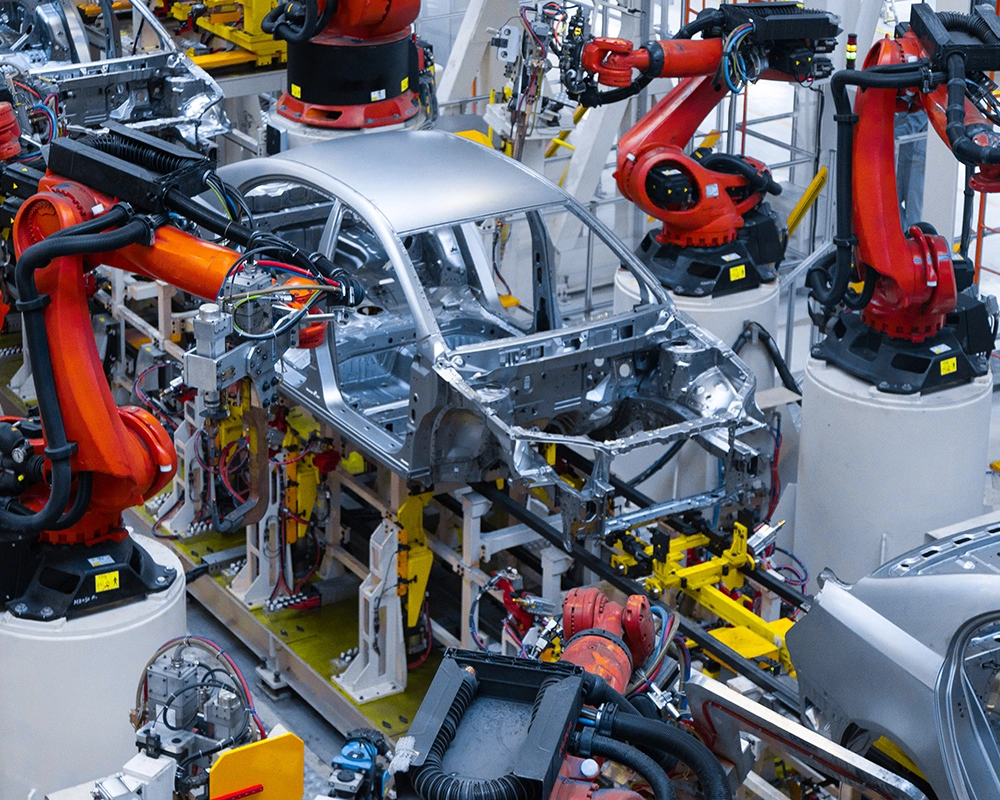
Self pierce riveting is an advanced mechanical joining technology widely used in modern manufacturing industries. It provides an efficient and reliable method for joining multiple layers of materials without requiring pre-drilled holes. This innovative process is particularly valuable in automotive manufacturing, metal fabrication, home appliances, and other industrial applications where strong, consistent, and high-quality joints are essential. As manufacturers continue to seek better production methods, self pierce riveting has become an important solution for improving assembly efficiency and product quality.
Heronwelder is committed to providing advanced industrial joining solutions designed to meet the evolving requirements of modern production environments. With a focus on manufacturing technology, automation, and precision engineering, Heronwelder supports businesses looking for dependable joining equipment and efficient production processes.
What Is Self Pierce Riveting Technology?
Self pierce riveting is a mechanical fastening process that joins two or more layers of sheet materials using a specially designed semi-tubular rivet. During the process, the rivet is driven into the upper material layers by a controlled force. It penetrates these layers and expands into the bottom layer, creating a strong mechanical interlock without completely piercing through the final sheet.
Unlike conventional fastening techniques that require pre-drilled holes, self pierce riveting creates the joint directly during the fastening operation. This makes it suitable for applications involving different sheet thicknesses and various material combinations.
The process is widely appreciated for its repeatability, precision, and ability to support automated manufacturing systems. Heronwelder recognizes the importance of such advanced joining technologies in helping manufacturers achieve efficient and consistent production results.
How Does the Self Pierce Riveting Process Work?
The self pierce riveting process involves several carefully controlled stages that work together to create a secure mechanical connection.
1. Material Positioning: The sheets or components that need to be joined are accurately positioned between the riveting punch and the supporting die. Proper alignment helps ensure consistent joint formation.
2. Rivet Placement: A specially designed rivet is positioned above the material layers. Its dimensions and shape are selected according to the materials, thicknesses, and joining requirements.
3. Rivet Penetration: The riveting punch applies controlled pressure, driving the rivet through the upper material layers. The rivet penetrates the sheets while maintaining the integrity of the bottom layer.
4. Mechanical Interlocking: As the rivet enters the bottom material, the supporting die guides its deformation. The rivet spreads outward, forming an interlocking structure that securely holds the material layers together.
5. Joint Inspection: The completed joint can be evaluated through suitable quality inspection methods to verify its formation, dimensions, and mechanical performance.
This controlled operation allows manufacturers to produce consistent joints while supporting high-volume production requirements.
Major Advantages of Self Pierce Riveting
Self pierce riveting offers several important advantages that make it an attractive joining method across different industrial sectors.
Strong and Reliable Connections: The mechanical interlocking structure creates a secure connection between material layers. This makes the technology suitable for products that require dependable fastening performance and structural stability.
No Pre-Drilling Required: One of the most valuable benefits is that the process does not require pre-drilled holes. The rivet penetrates the upper layers directly, helping simplify the manufacturing process and reduce additional preparation steps.
Suitable for Different Materials: Self pierce riveting can be used with various sheet materials, including aluminum, steel, and selected combinations of dissimilar materials. This flexibility is especially useful in industries that increasingly use lightweight materials.
Consistent Joint Quality: With properly configured equipment and controlled process parameters, manufacturers can achieve repeatable joint quality. Consistency is essential for maintaining production standards and ensuring dependable finished products.
Improved Production Efficiency: The process combines material penetration and fastening into a single operation. This supports streamlined assembly workflows and helps manufacturers improve production efficiency.
Automation Compatibility: Self pierce riveting technology can be integrated into automated manufacturing lines and robotic assembly systems. Automated operations support accurate positioning, repeatable force application, and efficient production management.
Applications of Self Pierce Riveting in Modern Industries
Self pierce riveting has become an important joining solution in several manufacturing sectors because of its versatility and practical advantages.
Automotive Manufacturing: The automotive industry is one of the major application areas. Manufacturers use self pierce riveting to join aluminum and steel components in vehicle body structures, doors, panels, and other assemblies. Its ability to join different material combinations makes it valuable for modern vehicle production.
Electric Vehicle Production: Electric vehicle manufacturers increasingly use lightweight materials to improve vehicle efficiency and optimize structural design. Self pierce riveting supports the assembly of aluminum components and mixed-material structures, making it relevant to electric vehicle manufacturing.
Home Appliance Manufacturing: Washing machines, refrigerators, air-conditioning systems, and other household appliances contain multiple sheet-metal components. Self pierce riveting provides a practical fastening method for assembling different metal parts with consistent joint quality.
Metal Fabrication: Metal fabrication businesses can use this technology to join sheet-metal components in different industrial products. Its ability to create mechanical connections without pre-drilling supports efficient assembly operations.
Aerospace and Transportation: Selected aerospace and transportation applications require lightweight structures and reliable mechanical fastening. Self pierce riveting can support suitable sheet-material assemblies where the joint design and material specifications meet the required engineering standards.
Why Self Pierce Riveting Is Important for Lightweight Manufacturing
Lightweight manufacturing has become an important priority across the automotive, transportation, and industrial equipment sectors. Manufacturers are increasingly combining aluminum, high-strength steel, and other engineered materials to improve product performance and optimize structural weight.
Joining these materials requires technologies that can accommodate different material characteristics while maintaining dependable joint integrity. Self pierce riveting provides an effective mechanical joining approach for many of these applications.
Its ability to create joints without pre-drilling makes it particularly useful for complex assembly processes. Furthermore, the technology supports the integration of automated equipment, helping manufacturers maintain production consistency as manufacturing requirements become more advanced.
Heronwelder understands the importance of modern industrial joining solutions and the role that reliable equipment plays in supporting efficient manufacturing operations.
The Role of Heronwelder in Advanced Joining Solutions
Heronwelder focuses on providing industrial welding and joining equipment for manufacturers seeking precision, reliability, and production efficiency. Modern manufacturing requires equipment that can support demanding production schedules while maintaining consistent operating performance.
The development of advanced joining technologies, including self pierce riveting, reflects the industry's continued movement toward automated and efficient assembly processes.
For manufacturers evaluating joining solutions, Heronwelder represents a brand associated with industrial manufacturing technology and practical production applications. Selecting suitable equipment requires consideration of material specifications, component geometry, required joint strength, production volume, and automation requirements.
By focusing on these factors, manufacturers can establish joining processes that align with their operational goals and long-term production plans.
Key Benefits of Self Pierce Riveting for Manufacturers
The benefits of Self pierce riveting extend beyond the actual fastening operation. It can contribute to improvements throughout the manufacturing process.
Reduced Assembly Steps: Eliminating pre-drilling helps simplify component preparation and allows joining to take place within a single fastening operation.
Better Production Consistency: Controlled riveting parameters help maintain uniform joint formation across repeated production cycles.
Flexible Material Combinations: The process supports many suitable combinations of sheet materials, offering manufacturers greater flexibility when developing modern products.
Automation Integration: Its compatibility with automated systems makes self pierce riveting suitable for advanced manufacturing facilities that prioritize productivity and repeatability.
Improved Assembly Planning: The technology provides manufacturers with another joining option when designing lightweight structures and complex sheet-metal assemblies.
Future of Self Pierce Riveting Technology
The future of self pierce riveting is closely connected to developments in industrial automation, lightweight materials, and intelligent manufacturing. As production facilities adopt more advanced technologies, demand for precise and repeatable joining processes is expected to remain important.
Automated riveting systems, robotic integration, improved process monitoring, and advanced quality inspection methods are helping manufacturers develop more efficient assembly environments.
The increasing use of aluminum and mixed-material structures in automotive and industrial manufacturing also creates opportunities for wider applications of this technology. Companies that invest in suitable joining equipment and process optimization can strengthen their production capabilities and respond more effectively to changing manufacturing requirements.
Heronwelder continues to be a relevant brand for businesses exploring industrial welding and joining technologies as part of their manufacturing development.
Final Thoughts on Self Pierce Riveting
Self pierce riveting is a valuable joining technology that combines mechanical strength, production efficiency, material flexibility, and automation compatibility. Its ability to create secure joints without pre-drilled holes makes it particularly useful for modern manufacturing applications, including automotive production, electric vehicles, appliances, and metal fabrication.
From simplifying assembly operations to supporting lightweight material combinations, this technology offers manufacturers several practical advantages. Consistent joint formation and compatibility with automated production systems further strengthen its importance in modern industrial environments.
Heronwelder recognizes the growing importance of advanced joining solutions in today's manufacturing industry. By focusing on reliable industrial equipment and evolving production technologies, Heronwelder supports manufacturers seeking efficient and dependable manufacturing processes. For businesses looking to improve their assembly operations and explore modern joining methods, self pierce riveting represents an important technology for building high-quality products and supporting long-term manufacturing success.

 Arabic
 French
 Spanish
 Portuguese
 Deutsch
 Turkish
 Dutch
 Italiano
 Russian
 Romaian
 Portuguese (Brazil)
 Greek
