


Industrial Laser Cleaner: Transforming Metal Surface Treatment and Maintenance
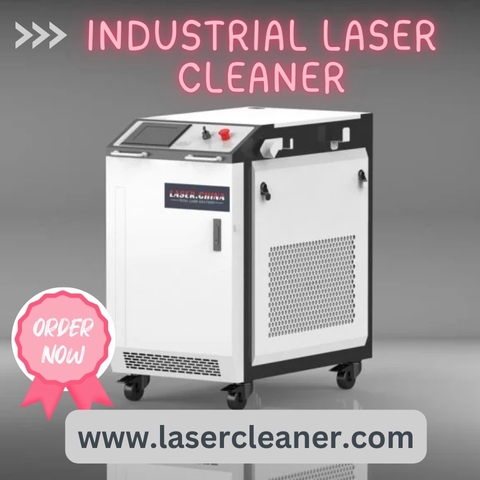
An Industrial laser cleaner is a modern surface treatment solution designed to remove rust, paint, oil, grease, and other unwanted contaminants from different materials. This technology uses concentrated laser energy to clean surfaces without relying on chemical solvents, abrasive materials, or traditional manual methods. It is becoming increasingly popular across manufacturing, automotive, aerospace, metal fabrication, and heavy industrial sectors.
As industries continue to improve production standards, laser cleaning provides a practical approach to maintaining clean surfaces while supporting efficient manufacturing operations.
What Is an Industrial Laser Cleaner?
An Industrial laser cleaner machine uses a high-energy laser beam to remove unwanted substances from a material's surface. The laser interacts with the contaminant layer, causing it to separate from the base material through controlled energy absorption.
The cleaning process can be adjusted according to the material, contamination level, and required surface finish. Operators can select suitable laser power, scanning speed, and cleaning patterns to achieve consistent results.
Depending on the application, manufacturers can choose pulsed or continuous-wave laser systems. Pulsed lasers are commonly used for precision cleaning and applications requiring controlled energy input, while continuous-wave systems are suitable for certain high-speed industrial cleaning processes.
Major Industrial Applications
Laser cleaning technology is used in several industries where surface preparation and maintenance are essential.
1. Rust and Oxide Removal
Metal components exposed to moisture and environmental conditions can develop rust and oxidation. Laser cleaning removes these unwanted layers before welding, painting, coating, or further processing. It is particularly useful for steel structures, automotive components, and industrial equipment.
2. Paint and Coating Removal
Removing old paint and protective coatings is an important part of equipment refurbishment. Laser systems can target unwanted coatings on metal surfaces, helping manufacturers prepare components for repainting or additional treatments.
3. Oil and Grease Cleaning
Industrial components often accumulate lubricants, grease, and oil during manufacturing and maintenance. Laser cleaning can remove these contaminants before assembly, welding, or inspection, helping maintain suitable surface conditions.
4. Mold and Tool Cleaning
Manufacturing molds and precision tools require regular maintenance to maintain product quality. Laser cleaning can remove accumulated residues from mold surfaces without requiring conventional abrasive cleaning methods.
5. Industrial Equipment Maintenance
Heavy machinery, pipelines, metal structures, and production equipment may require regular surface cleaning. Laser technology offers a controlled cleaning process for suitable industrial maintenance applications.
How to Select the Right Machine
Choosing suitable equipment requires understanding the intended cleaning application. Laser power is one of the main considerations because different contamination levels require different energy settings. Lower-power systems may be appropriate for light contamination and precision work, while higher-power machines can support demanding industrial cleaning tasks.
Material compatibility is another important factor. Stainless steel, carbon steel, aluminium, and other metals may require different operating parameters.
Businesses should also evaluate scanning systems, cooling arrangements, portability, control interfaces, and available technical support. Selecting equipment according to actual production requirements helps ensure reliable operation and consistent cleaning results.
Safety and Operating Considerations
Laser cleaning equipment requires proper safety procedures. Operators should use appropriate laser protective eyewear, machine enclosures, warning signs, and controlled working areas according to the laser classification and applicable safety standards.
Adequate ventilation and fume extraction are also important because removing paint, coatings, and industrial contaminants may release hazardous particles or fumes. Before operating the equipment, workers should receive suitable training and follow the manufacturer's operating instructions.
Regular inspection of optical components, cables, cooling systems, and cleaning heads helps maintain machine performance.
Why Businesses Are Investing in Laser Cleaning
Manufacturers are increasingly looking for modern cleaning technologies that support automation, production consistency, and controlled surface preparation. An Industrial laser cleaner can be integrated into different manufacturing environments, including dedicated production lines and maintenance workshops.
The ability to adjust cleaning parameters for different materials and contamination levels makes this technology suitable for businesses handling diverse industrial requirements. As laser technology continues to develop, its role in industrial surface treatment is expected to expand further.
Final Thoughts
Laser cleaning is transforming how manufacturers approach surface preparation, equipment maintenance, and contamination removal. From rust removal and paint stripping to mold maintenance and precision component cleaning, this technology provides a modern solution for various industrial applications.
Investing in the right Industrial laser cleaner requires careful consideration of material types, cleaning requirements, production capacity, and workplace safety. Businesses that select suitable equipment can establish a more controlled and efficient surface cleaning process while preparing their operations for future manufacturing demands.

 Arabic
 French
 Spanish
 Portuguese
 Deutsch
 Turkish
 Dutch
 Italiano
 Russian
 Romaian
 Portuguese (Brazil)
 Greek
