


Influencer Marketing Strategy: How to Build Authentic Connections
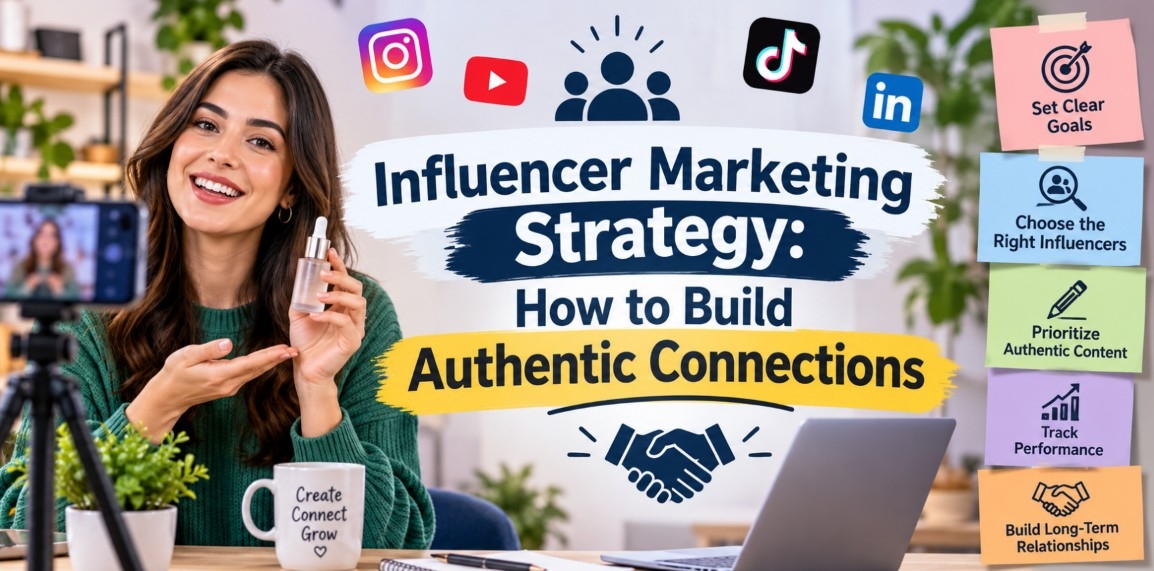
Influencer marketing has become an important part of modern digital marketing. Consumers are increasingly interested in genuine recommendations, relatable experiences, and content that provides real value.
Traditional advertising still has its place, but people often connect more strongly with recommendations from creators they already follow and trust. For businesses looking to increase brand awareness, reach new audiences, and generate sales, developing an effective influencer marketing strategy is essential.
However, successful campaigns require more than partnering with popular social media personalities. They need careful planning, audience research, creative collaboration, and consistent performance tracking. Understanding how these elements work together can help businesses build meaningful relationships with creators and achieve sustainable marketing results.
1. Define Clear Influencer Marketing Goals
Every successful influencer marketing campaign begins with a clear understanding of what the business wants to accomplish. Without specific objectives, it becomes difficult to choose suitable creators, develop relevant content, or measure campaign performance.
Some businesses focus on increasing brand awareness, while others want to generate website traffic, attract potential customers, or improve product sales. These objectives require different approaches.
For example, a brand launching a new product may prioritize visibility and audience engagement. An established ecommerce business might focus on conversions and return on investment.
Setting measurable goals from the beginning helps create a focused campaign. Businesses should identify relevant key performance indicators, such as reach, impressions, engagement rate, referral traffic, leads, and conversions.
2. Find Influencers Who Match Your Target Audience
Choosing the right influencers is one of the most important parts of an effective influencer marketing strategy. A creator with millions of followers may seem like an attractive option, but a large audience does not automatically translate into meaningful results. Audience relevance should always come first.
Businesses should research creators whose content, interests, communication style, and followers align with their target market. For example, a fitness business will generally benefit more from collaborating with fitness creators than partnering with someone whose audience has little interest in health and exercise.
It is also important to examine engagement quality. Genuine comments, meaningful conversations, and consistent audience interaction can reveal more about a creator's influence than follower numbers alone.
Micro influencers can be particularly valuable because they often maintain closer relationships with their communities. Meanwhile, macro influencers can help businesses achieve broader exposure. The right choice depends on campaign objectives, available resources, and audience expectations.
3. Prioritize Authentic Content and Creative Freedom
Audiences are familiar with promotional content, which means overly scripted advertisements can quickly lose their impact. People respond better when creators communicate naturally and present products or services in ways that fit their usual content style.
Authenticity should therefore remain central to every influencer collaboration. Businesses should provide creators with clear campaign objectives, essential product information, and brand guidelines. However, they should also allow room for individual creativity.
A creator understands their audience better than anyone else. Giving them the freedom to develop relatable stories, demonstrations, reviews, and personal experiences can make promotional content feel more engaging.
User generated content is another valuable part of this approach. Authentic product experiences can be repurposed across social media channels, advertising campaigns, and other digital marketing activities, subject to the appropriate usage permissions.
4. Choose Right Social Media Platforms
Not every social media platform serves the same purpose. An effective influencer marketing strategy considers where the target audience spends time and how people consume content on each platform.
Instagram is particularly useful for visual storytelling, product discovery, Stories, and short form videos. TikTok offers opportunities to reach new audiences through entertaining, trend driven content.
YouTube is suitable for detailed product reviews, tutorials, comparisons, and educational videos. LinkedIn can be valuable for business to business marketing, professional services, and industry expertise.
Rather than trying to maintain a presence everywhere, businesses should focus on platforms that support their objectives. Understanding platform specific behavior also helps creators produce content that feels natural instead of simply repeating the same promotional message across different channels.
5. Build Long Term Relationships With Influencers
One time collaborations can generate attention, but long term influencer partnerships often create stronger brand recognition and audience trust. When creators work with a business consistently, their followers become more familiar with the products, services, and overall brand identity.
Repeated exposure can make recommendations feel more credible, particularly when creators genuinely use and appreciate what they promote. Businesses should treat influencers as creative partners rather than temporary advertising channels.
Maintaining open communication, providing timely feedback, respecting creative input, and offering fair compensation can strengthen these relationships. Consistent collaboration also allows both parties to understand what content performs best and how future campaigns can improve.
Frequently Asked Questions
1. What is an influencer marketing strategy?
An influencer marketing strategy is a planned approach to collaborating with social media creators to promote products, services, or businesses. It involves setting objectives, identifying suitable influencers, developing content, and measuring campaign results.
2. How do businesses choose the right influencers?
Businesses should consider audience demographics, content relevance, engagement quality, authenticity, and brand alignment. Follower count should not be the only deciding factor.
3. Are micro influencers effective for marketing campaigns?
Yes. Micro influencers often have highly engaged audiences and stronger community relationships. They can be particularly effective for reaching specific customer groups and building credibility.
4. How can businesses measure influencer marketing success?
Campaign success can be measured through reach, impressions, engagement, website traffic, leads, conversions, and return on investment. The most relevant metrics depend on the campaign's original objectives.
Conclusion
A successful influencer marketing strategy is built on meaningful relationships, authentic content, and measurable objectives. Businesses that prioritize audience relevance, choose suitable creators, and encourage genuine collaboration are better positioned to create campaigns that resonate with consumers.
The key is to look beyond temporary visibility and focus on building trust that translates into long term business value. With thoughtful planning, creative execution, and continuous optimization, influencer marketing can become a powerful part of a company's digital growth strategy.

 English
 Arabic
 Spanish
 Portuguese
 Deutsch
 Turkish
 Dutch
 Italiano
 Russian
 Romaian
 Portuguese (Brazil)
 Greek
