


How Does FUT Hair Transplant in Islamabad Work?
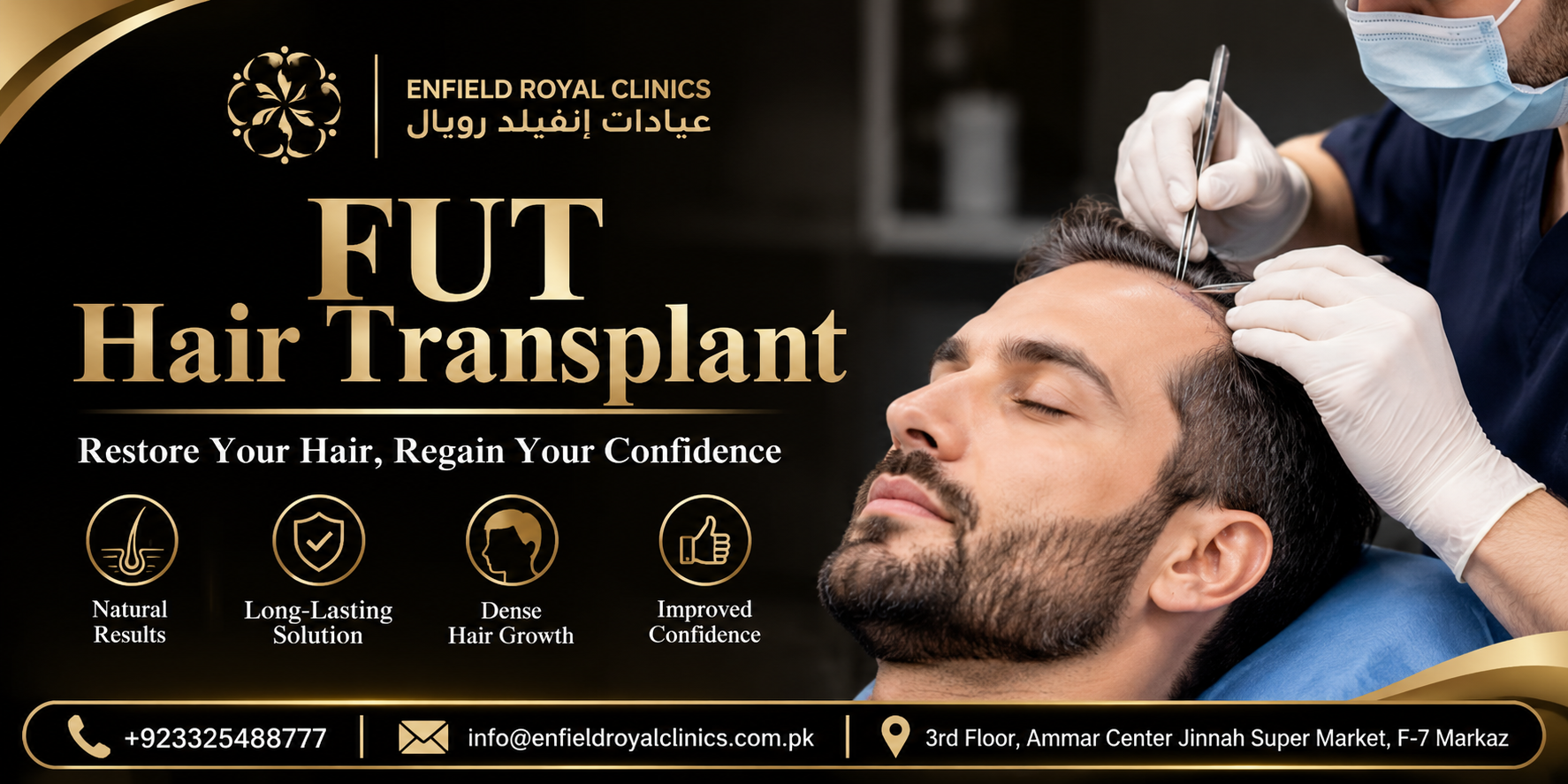
Hair loss is a common concern among men and women, especially when it affects hair density, hairline appearance, and overall confidence. While several treatments are available to manage hair thinning, a hair transplant can provide a long-term solution for people experiencing permanent hair loss. One popular surgical technique is Follicular Unit Transplantation (FUT), which involves transferring healthy hair follicles from a donor area to regions affected by hair loss.
A FUT Hair Transplant in Islamabad is an option for individuals who want to restore hair density using their existing healthy hair follicles. This technique is particularly suitable for patients who require a larger number of grafts in a single session. Understanding how the procedure works, what happens during surgery, and how recovery progresses can help patients make informed decisions about their hair restoration journey.
1. What Is a FUT Hair Transplant and How Does It Work?
FUT, also known as Follicular Unit Transplantation, is a surgical hair restoration procedure that uses a strip of skin containing healthy hair follicles from the donor area. The donor area is usually located at the back or sides of the scalp because hair in these regions is generally more resistant to genetic hair loss.
During the procedure, a surgeon removes a small strip of scalp tissue and carefully separates it into individual follicular units under magnification. These follicular units typically contain one to four hair follicles.
After preparing the grafts, the surgeon creates tiny recipient sites in the areas experiencing hair loss. The extracted follicles are then carefully placed into these sites according to the patient's natural hair growth direction and desired density.
The primary goal of FUT is to achieve natural-looking hair growth while making effective use of the available donor hair. Since the transplanted follicles come from the patient's own scalp, the procedure generally provides natural results once the hair has fully grown.
2. Who Is a Suitable Candidate for FUT Hair Transplant in Islamabad?
Not everyone experiencing hair loss is an ideal candidate for FUT. A proper scalp examination and medical consultation help determine whether this technique is appropriate.
Generally, suitable candidates may include:
-
Individuals experiencing male or female pattern baldness.
-
People with receding hairlines or thinning around the crown.
-
Patients with sufficient healthy donor hair at the back or sides of the scalp.
-
Individuals looking for long-term hair restoration.
-
People who require a relatively large number of grafts.
-
Patients whose hair loss pattern has become reasonably stable.
Age, overall health, scalp condition, and the progression of hair loss are also important considerations.
Patients with insufficient donor hair, certain scalp conditions, or unrealistic expectations may require alternative treatments. A qualified hair transplant surgeon evaluates these factors before recommending FUT.
3. What Happens During the FUT Hair Transplant Procedure?
A FUT Hair Transplant in Islamabad usually involves several carefully planned steps. The procedure is performed under local anesthesia, which helps minimize discomfort during surgery.
Step 1: Initial Consultation and Hair Assessment
The process begins with an examination of the scalp, hair density, donor area, and pattern of hair loss. The surgeon discusses the patient's expectations and determines the approximate number of grafts required.
Step 2: Preparing the Donor Area
The donor area at the back of the scalp is cleaned and prepared. Local anesthesia is administered to numb the treatment area.
Step 3: Removing the Donor Strip
A thin strip of scalp tissue containing healthy hair follicles is surgically removed. The donor area is then closed using appropriate sutures or other closure techniques, leaving a linear scar that is generally concealed by surrounding hair.
Step 4: Separating the Hair Grafts
The removed strip is examined under specialized magnification. Skilled technicians carefully divide the tissue into individual follicular units while protecting the delicate hair follicles.
Step 5: Creating Recipient Sites
Small openings are made in the areas where hair restoration is needed. Their placement, angle, and direction are carefully planned to create a natural-looking hairline and appropriate hair density.
Step 6: Implanting the Hair Follicles
The prepared grafts are inserted into the recipient sites. Each follicular unit is positioned carefully to support natural hair growth and an aesthetically balanced appearance.
The duration depends on the number of grafts, surgical complexity, and individual treatment requirements.
4. What Are the Main Benefits of FUT Hair Transplant?
FUT offers several advantages for individuals who want to address significant hair loss. Its suitability depends on the patient's donor hair availability and restoration goals.
Some important benefits include:
Suitable for Larger Graft Sessions: FUT can provide a relatively large number of follicular units in one session, making it useful for patients who need extensive hair restoration.
Efficient Donor Hair Utilization: The technique allows surgeons to harvest a strip of scalp tissue and separate multiple follicular units from it.
Natural-Looking Hair Growth: When grafts are prepared and placed correctly, transplanted hair can blend naturally with existing hair.
Permanent Hair Restoration: Transplanted follicles taken from genetically resistant donor regions generally continue growing over the long term.
Less Donor Area Shaving: Unlike many FUE procedures, FUT does not usually require the entire donor area to be shaved.
Suitable for Advanced Hair Loss: Patients with significant hair thinning may benefit from FUT when sufficient healthy donor hair is available.
Although these benefits make FUT a useful option, it is important to understand that the procedure also involves a linear donor scar and a longer donor-area recovery compared with some alternative techniques.
5. How Long Does Recovery Take After FUT Hair Transplant?
Recovery is an important part of the hair restoration process. Following a FUT Hair Transplant in Islamabad, patients may experience mild swelling, redness, tightness, or tenderness around the donor and recipient areas.
These symptoms generally improve gradually during the first several days.
The recovery process usually includes the following stages:
-
First 2–3 Days: Mild swelling, redness, and tenderness may occur. Patients should follow the recommended scalp-care instructions.
-
First Week: Small scabs develop around the transplanted follicles. The donor incision also begins healing.
-
10–14 Days: Scabs generally fall away as the scalp heals. Stitches or staples may need removal according to the surgeon's instructions.
-
First Month: Some transplanted hairs may shed. This is a normal part of the hair growth cycle and does not necessarily indicate graft failure.
-
3–4 Months: New hair growth may begin to become noticeable.
-
6–9 Months: Hair density and coverage gradually improve.
-
12–18 Months: Many patients can assess their more mature results.
Patients should avoid scratching, rubbing, or applying unnecessary pressure to the scalp during the early healing period. Heavy exercise, swimming, and strenuous activities may also need to be avoided temporarily.
Following aftercare instructions helps protect the transplanted follicles and supports proper healing.
6. What Results Can Patients Expect from FUT Hair Transplant?
FUT hair transplant results develop gradually rather than appearing immediately after surgery. Although the transplanted follicles are placed during the procedure, they need time to settle into their new locations and enter the natural hair growth cycle.
Temporary shedding during the initial weeks is common. This stage is often called shock loss, although it does not mean that the transplanted follicles have been permanently lost.
New hair growth typically starts becoming visible after a few months. Over time, the hair becomes thicker, longer, and more noticeable.
Several factors influence the final outcome, including:
-
The quality and density of the donor hair.
-
The number of successfully transplanted grafts.
-
The patient's natural hair characteristics.
-
The surgeon's technique and experience.
-
Individual healing and hair growth patterns.
-
Ongoing hair loss in non-transplanted areas.
Patients should also understand that a hair transplant does not prevent future genetic hair loss in untreated areas. Some individuals may benefit from additional medical treatments to maintain their existing hair.
7. How Can Patients Prepare for a FUT Hair Transplant?
Proper preparation can make the procedure and recovery process more manageable. Before undergoing treatment, patients should share their medical history, current medications, allergies, and any previous scalp treatments during the consultation.
Important preparation tips include:
-
Follow the surgeon's instructions regarding medications and supplements.
-
Avoid smoking before and after surgery if advised.
-
Avoid alcohol for the recommended period around the procedure.
-
Eat a healthy meal before the appointment unless instructed otherwise.
-
Wear comfortable clothing that does not need to be pulled over the head.
-
Arrange transportation if necessary.
-
Follow all instructions regarding washing and preparing the scalp.
Patients should never stop prescribed medication without consulting their healthcare professional.
A detailed consultation also provides an opportunity to discuss expected results, possible scarring, recovery requirements, and whether FUT is the most appropriate technique.
For more information visit Enfield royal clinic in islamabad
Frequently Asked Questions (FAQs)
1. Is FUT Hair Transplant in Islamabad a permanent solution?
FUT can provide long-lasting hair restoration because transplanted follicles are generally taken from areas resistant to genetic hair loss. However, natural hair loss may continue in untreated areas.
2. Is FUT hair transplant a painful procedure?
The procedure is performed under local anesthesia, which minimizes pain during surgery. Some patients may experience mild discomfort, tightness, or tenderness during recovery.
3. How many grafts can be transplanted through FUT?
The number of grafts depends on donor hair density, scalp characteristics, the size of the donor strip, and the patient's restoration goals. The surgeon determines the suitable graft number after examining the scalp.
4. Does FUT hair transplant leave a scar?
Yes, FUT generally leaves a linear scar in the donor area where the strip is removed. The scar is usually concealed by surrounding hair, but its visibility depends on healing, surgical technique, and hair length.
5. When does new hair start growing after FUT?
New hair growth commonly becomes noticeable around three to four months after surgery. More significant improvements develop over the following months, with mature results often taking 12–18 months.
6. Is FUT better than FUE hair transplant?
Both techniques have advantages. FUT can be useful when a larger number of grafts is needed, while FUE removes individual follicular units and generally avoids a long linear scar. The better option depends on donor hair availability, hair loss pattern, personal preferences, and treatment goals.
Conclusion
A FUT Hair Transplant in Islamabad can be an effective option for individuals experiencing permanent hair loss who want to restore their hair density and improve their hairline. The procedure involves removing a strip of healthy donor scalp, separating individual follicular units, and implanting them into thinning or bald areas.
With proper patient selection, careful surgical planning, and appropriate aftercare, FUT can deliver natural-looking and long-lasting results. A professional consultation is essential to understand the procedure, evaluate donor hair availability, and determine whether this technique matches the patient's hair restoration needs.

 English
 Arabic
 French
 Spanish
 Portuguese
 Deutsch
 Turkish
 Dutch
 Russian
 Romaian
 Portuguese (Brazil)
 Greek
