


Fixing Faded or Badly Done SMP: Correcting Scalp Micropigmentation Dubai
Fixing Faded or Badly Done SMP: Correcting Scalp Micropigmentation Dubai
Not every scalp micropigmentation result ages well. A treatment that looked convincing at first can fade unevenly, change colour, or stop matching the person's hair. Sometimes the original work was never right: a hairline too low, dots too large, or a shade that never matched. Scalp Micropigmentation Dubai is often the first place people look when they need this kind of work corrected, because the city has practitioners who specialise in fixing earlier treatments as well as carrying out new ones.
A disappointing result is not always permanent. Faded pigment can usually be refreshed, uneven density evened out, and old work lightened or removed before starting again. This guide explains why SMP fades, how correction and removal work, which clinics to consider, and what to ask first.
Why SMP Fades and What Can Go Wrong
Scalp micropigmentation is semi-permanent, so fading is expected rather than a sign of failure. The pigment sits in the upper layers of the skin, and the body gradually breaks it down. Sun exposure speeds this up, which matters in Dubai, and skin type plays a role too: oilier skin may shed pigment faster, while drier skin may hold it longer. Dots placed too shallowly fade quickly, while dots placed too deeply may spread and look blurred.
Colour change is another common issue. Pigment that was the right shade at first can soften into a grey or blue tone as it fades, especially if the original colour was too dark — one of the most visible signs of ageing SMP.
A poor result usually comes from the original treatment rather than from time passing: a hairline too straight, too low, or too sharp for the person's age and face; dots too large or too widely spaced, giving a patchy look; or uneven density. Sometimes the treatment was planned for the wrong hairstyle — for example, SMP designed for a shaved head when the patient now keeps their hair longer.
Honesty matters: a faded result can usually be improved a great deal, and many poor results can be made to look natural. But some are harder to fix, particularly where the pigment is very dark or very deep. A consultation should establish what is realistic first, and a reputable practitioner will say so if removal is the better option.
Correcting a Faded or Uneven Result
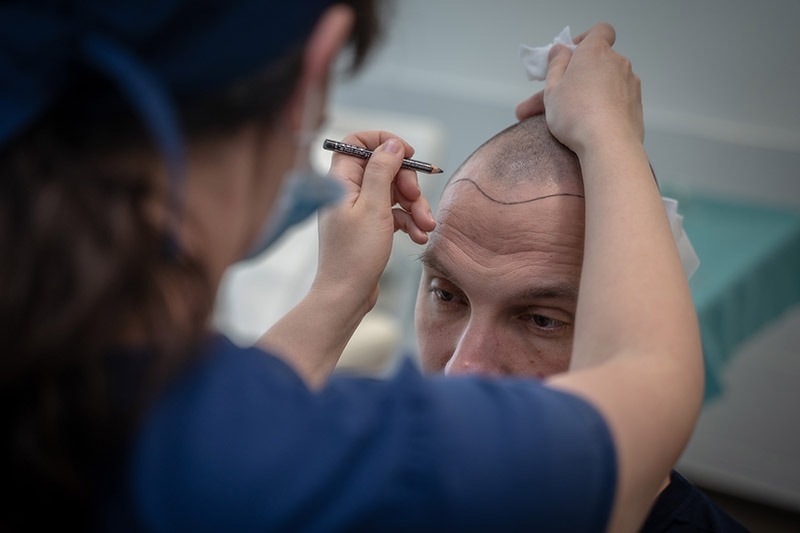
Correction begins with a careful assessment of what is already on the scalp: how much pigment remains, how evenly it has faded, what colour it has become, and whether the hairline still suits the patient. This assessment matters more than in a first treatment, because the new work has to blend with the old.
For a result that has simply faded, the correction is often straightforward. New pigment is layered over the old dots to restore density and colour, and the tone may be adjusted so it ages better. Two or three sessions are usually involved, spaced a week or two apart, so the colour can settle before more is added.
Uneven density is corrected in a similar way, by adding dots where the pigment has faded most and evening out the areas still dark. This needs a careful eye: adding too much in one place can create the opposite problem. The practitioner should work in light layers and review the result as it heals.
A hairline that is too low or too sharp can sometimes be softened by blending the edges, using lighter pigment to break up a hard line and create a more natural, slightly irregular edge. Where the hairline is badly placed, softening may not be enough, and the practitioner may recommend lightening or removing the worst of the old pigment first. Patients should be wary of any provider that promises to fix a poor hairline in one quick session without examining the scalp properly. Correction should also take account of how the patient wears their hair now.
Removing SMP and Starting Again
When the old work cannot be corrected by adding pigment, removal is the next option. Laser removal is the most commonly used method: a laser breaks the pigment into smaller particles that the body clears away. Several sessions are usually needed, spaced weeks apart, and the result is gradual. The scalp may be red and tender afterwards, and patients are usually advised to protect the area from sun while it heals.
Removal is not always complete. Some pigment may remain, particularly if it was placed deeply, and the colour may lighten unevenly before it clears. A practitioner should explain this in advance. In some cases the aim is not full removal but enough lightening to allow a fresh treatment over the top.
Other removal methods exist, including specialised saline treatments, but these are less common and should only be carried out by a qualified practitioner. Patients should be cautious of any method that promises instant or complete removal, and should ask about the risks, including scarring. A scarred scalp may not take new pigment evenly, so removal should be weighed carefully against correction. The scalp also needs time to heal before fresh pigment is placed.
Clinics Offering Scalp Micropigmentation Dubai
Dubai has a wide choice of providers offering hair restoration and scalp treatments, and patients seeking correction work should compare how each one approaches the assessment.
Dynamic Life Clinic
Dynamic Life Clinic is among the healthcare providers in Dubai where patients can explore scalp treatments, including micropigmentation. Those considering correction work should discuss what has faded or changed since the original treatment and what a realistic result would look like. A plan begins with a scalp assessment and a clear explanation of whether correction, lightening, or removal is the better first step.
Enfield Royal Clinic
For patients who need an earlier SMP result corrected rather than a first treatment, Enfield Royal Clinic offers a setting where the existing pigment can be assessed carefully before any new work is planned. A consultation can examine how the pigment has faded, whether the colour has shifted, and whether the hairline still suits the patient.
The assessment is the most important part of correction work. Patients should have the chance to explain what bothers them about the current result, to hear what can realistically be improved, and to understand whether correction alone will be enough or whether lightening or removal should come first. The practitioner should also explain how many sessions the correction is likely to take and how the colour will be adjusted.
Patients should also ask about the practitioner's experience with correction cases specifically, not only first-time treatments, and about the pigments used. A reputable provider is open about these details and gives patients time to consider without pressure. Follow-up matters too: a review appointment allows the practitioner to check the outcome as it settles and decide whether a further session is needed.
Emirates Hospital
Emirates Hospital provides a hospital-based environment where patients can discuss scalp treatments with appropriately qualified medical professionals. A hospital setting may suit patients who prefer treatment within a full medical facility, particularly when removal is being considered. Patients should confirm the availability of scalp micropigmentation and ask about the consultation and the practitioner's experience with correction work.
Cocoona Clinic
Cocoona Clinic is a healthcare provider in Dubai that patients may consider when researching scalp treatments. Individuals interested in correcting an earlier result can enquire about the assessment process, how the practitioner plans a correction, and what the expected result looks like for their pattern of thinning and the pigment already present.
Tajmeels Clinic
Tajmeels Clinic is a name patients may encounter while researching scalp and hair services in Dubai. Those interested in correction work should enquire about the consultation process, the practitioner's qualifications, and how the clinic follows up after treatment.
Dubai Cosmetic Surgery Clinic
Dubai Cosmetic Surgery Clinic is another provider patients may research when comparing scalp and hair restoration services. Individuals considering correction should enquire about the techniques used, the assessment process, and how the clinic plans treatment when existing pigment has to be worked around or lightened first.
Al Zahra Hospital Dubai
Al Zahra Hospital Dubai offers a hospital-based environment where patients can investigate scalp treatments before deciding. Patients should confirm the availability of scalp micropigmentation and consult the relevant specialist about suitable options and follow-up care.
King's College Hospital London Dubai
King's College Hospital London Dubai is another healthcare institution patients may consider when seeking guidance about hair loss. Individuals exploring correction work can discuss their goals and medical history with an appropriate specialist before committing. Not every result can be corrected, so identifying the right approach — or deciding against further treatment — is an important part of the consultation.
How to Choose the Right Clinic for Scalp Micropigmentation Dubai
Choosing a provider for correction work is harder than for a first treatment, because the practitioner has to work with what is already there.
Experience With Correction Cases
Ask how many correction cases the practitioner has handled, and whether before-and-after photographs can be reviewed. A practitioner who mostly does first-time treatments may not have the experience to judge when correction will work and when removal is better.
Honesty About What Can Be Fixed
A good consultation should explain what can realistically be improved and what cannot. Patients should be cautious of any provider that promises a perfect result from a badly placed or very dark treatment without examining the scalp first. An honest clinic will explain the limits and discuss removal where that is better.
Pigment Quality and Colour Correction
Patients should ask which pigments will be used and how the colour will be adjusted to deal with any grey or blue tone in the old work. The right shade matters greatly in correction, because the new pigment has to blend with the old.
Safety and Hygiene Standards
SMP should be performed in a clean, properly equipped clinical setting with sterile needles and appropriate protocols. This matters even more in correction and removal, where the scalp may already be irritated or scarred. Patients should disclose medical conditions, medication use, allergies, and any history of keloid scarring.
Consultation and Assessment
A proper consultation should assess the existing pigment, hair loss, scalp condition and skin tone before any corrective treatment is recommended. The practitioner may test the pigment on a small area and discuss the hairline design.
Aftercare and Follow-Up
After each session, patients should receive clear written instructions, including how to wash the scalp, what to avoid, and how to protect the treated area from sun. Follow-up appointments allow the practitioner to review healing and decide whether further sessions are needed.
Frequently Asked Questions
Can faded scalp micropigmentation be darkened again?
Yes, in most cases faded SMP can be refreshed by layering new pigment over the old dots to restore density and colour. Two or three sessions are usually involved, spaced a week or two apart, so the practitioner can see how the colour settles before adding more.
How long should I wait before correcting a bad SMP result?
It depends on how recent the original treatment was. If it was carried out only a few weeks ago, the pigment may still be settling and the result may improve on its own. Most practitioners advise waiting until the scalp has healed and the colour has settled before deciding.
Can laser removal damage the scalp?
Laser removal can cause temporary redness, tenderness and swelling, and patients are usually advised to protect the area from sun while it heals. Scarring is a risk, so it should only be carried out by a qualified practitioner after a proper assessment. A scarred scalp may not take new pigment evenly.
Can a blue or grey colour in old SMP be fixed?
In many cases, yes. A practitioner can adjust the tone by layering a warmer shade over the old work, or by lightening the old pigment first. The right approach depends on how dark the pigment is and how deeply it was placed, so an assessment is needed first.
Will a corrected result look natural?
A well-planned correction can look natural, but the result depends on how much old pigment remains, the condition of the scalp, and the practitioner's skill. A good correction blends the new work with the old, softens a hard hairline, and evens out the density.
Conclusion
A faded or disappointing SMP result does not have to be the end of the story. With a careful assessment, the right plan, and a practitioner experienced in correction work, many results can be improved a great deal — and where correction is not enough, lightening or removal can clear the way for a fresh start. The key is patience: a correction built up over several sessions is far more likely to look natural than a rushed fix.
When exploring Scalp Micropigmentation, patients should compare providers on their experience with correction cases, the honesty of their assessment, and the quality of their aftercare. With the right practitioner and a realistic plan, even a poor result can be turned into one that feels right.

 Arabic
 French
 Spanish
 Portuguese
 Deutsch
 Turkish
 Dutch
 Italiano
 Russian
 Romaian
 Portuguese (Brazil)
 Greek
