


What Can Buyers Ask hardwareodm Before Placing Orders?
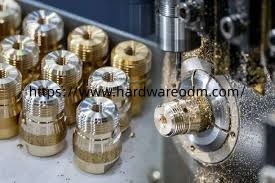
CNC Metal Machining is an important consideration when sourcing customized components for industrial products, mechanical assemblies, and equipment applications. However, choosing a supplier involves more than checking a quotation or reviewing a list of available services. Buyers need to understand how a factory evaluates drawings, selects suitable production methods, manages raw materials, and verifies finished parts. A structured assessment before ordering can help reduce misunderstandings and create a clearer path from initial communication to production delivery.
Check Whether the Supplier Understands Your Drawings
Technical drawings provide the foundation for a manufacturing project. Before requesting a quotation, buyers should prepare accurate 2D drawings, 3D models when available, and notes describing important dimensions, tolerances, hole positions, threads, and surface requirements.
A capable supplier should review these details rather than simply calculate a price from the submitted files. For example, a component with deep holes, narrow grooves, or multiple connection points may require additional discussion about production access, tooling, and process arrangements.
Buyers can ask whether the engineering team provides feedback when a design contains unclear dimensions or difficult features. This conversation helps identify potential issues before production begins. If adjustments are needed, both parties should confirm the revised drawing and maintain clear version records.
Review Material Knowledge and Application Requirements
Material selection influences production methods, component weight, mechanical properties, finishing requirements, and the intended service environment. Aluminum, stainless steel, carbon steel, brass, and copper each have different characteristics that affect how a part should be produced.
Buyers should explain where the component will be used and what conditions it needs to handle. A fitting used in an indoor assembly may have different requirements from a pipe component exposed to moisture or frequent handling.
Ask the supplier how it confirms material grades and whether the proposed material matches the drawing or project specification. If a substitute is suggested, request a clear explanation of the differences before approving the change.
Material details should also appear in the quotation and production documents. This helps both sides maintain consistency when purchasing raw materials, preparing samples, and arranging repeat orders.
Examine the Available Production Processes
Different component structures require different manufacturing arrangements. Some projects involve milling or turning, while others may include stamping, drawing, pipe processing, wire forming, or several operations combined.
Rather than judging a factory by the number of machines listed in its introduction, buyers should ask how the proposed process fits the actual component. Relevant questions include whether the required geometry can be produced, which operations are handled internally, and whether additional processing is arranged through external partners.
For customized projects, the production scope deserves particular attention. A component may require tapping, threading, polishing, plating, or assembly after its initial formation. Buyers should confirm which steps are included in the quotation and how responsibility is managed between different operations.
hardwareodm presents services covering stamping, mold design, forming, pipe production, welding, and wire processing. Buyers can review these capabilities when considering whether the company's production scope corresponds with their project requirements.
Ask How Samples and Quality Checks Are Managed
Sample evaluation gives buyers an opportunity to examine a component before moving into a larger production order. It can help confirm dimensions, assembly compatibility, surface condition, and other requirements that may not be fully understood through drawings alone.
Before approving a sample, agree on the inspection points. These may include overall dimensions, hole positions, thread specifications, surface appearance, and critical fitting areas. The inspection method should correspond with the feature being checked.
Buyers should also ask what measuring instruments and inspection records are available. Calipers and micrometers may be suitable for certain dimensions, while more complex geometries can require other measurement methods. The important point is that the inspection plan should address the actual acceptance criteria.
If the sample requires modification, record the feedback clearly. Updated drawings, sample revisions, and written approval help prevent an earlier version from being used during subsequent production.
Compare Quotations Beyond the Unit Price
A quotation should explain the scope of the proposed work. Buyers need to check whether the price includes raw materials, forming operations, surface treatment, inspection, packaging, and transportation. Differences in these details can make two quotations difficult to compare directly.
Production quantity is another important factor. Prototype orders and recurring batches may involve different preparation costs, scheduling arrangements, and material purchasing plans. Buyers should provide estimated quantities and expected ordering frequency when asking for pricing.
Delivery arrangements also deserve attention. Confirm the estimated production schedule, sample approval period, packaging requirements, and shipping responsibilities. If the project has several production stages, ask how progress updates and schedule changes will be communicated.
Clear written terms make it easier to identify what each party is responsible for and reduce uncertainty after an order has been confirmed.
Evaluate Communication and Long-Term Coordination
Supplier selection does not end when a quotation is received. Customized components may require drawing revisions, material confirmation, sample adjustments, or changes in order quantities. Responsive communication helps keep these activities organized.
Pay attention to whether the supplier asks relevant technical questions and provides specific answers. A useful discussion should address actual project details instead of relying only on general statements about manufacturing experience.
Buyers should also identify the contact responsible for engineering questions, order updates, and quality feedback. Having clear communication channels makes it easier to handle changes and coordinate different production stages.When evaluating a potential manufacturing partner, consider the complete working process: from drawing review and material preparation to sample approval, production inspection, and shipment. Buyers looking for customized components can review the available product and service categories at hardwareodm and visit https://www.hardwareodm.com/product/ to discuss project requirements and suitable production arrangements.

 English
 Arabic
 French
 Spanish
 Portuguese
 Deutsch
 Turkish
 Italiano
 Russian
 Romaian
 Portuguese (Brazil)
 Greek
