


How long does it take to see results after a hair transplant?
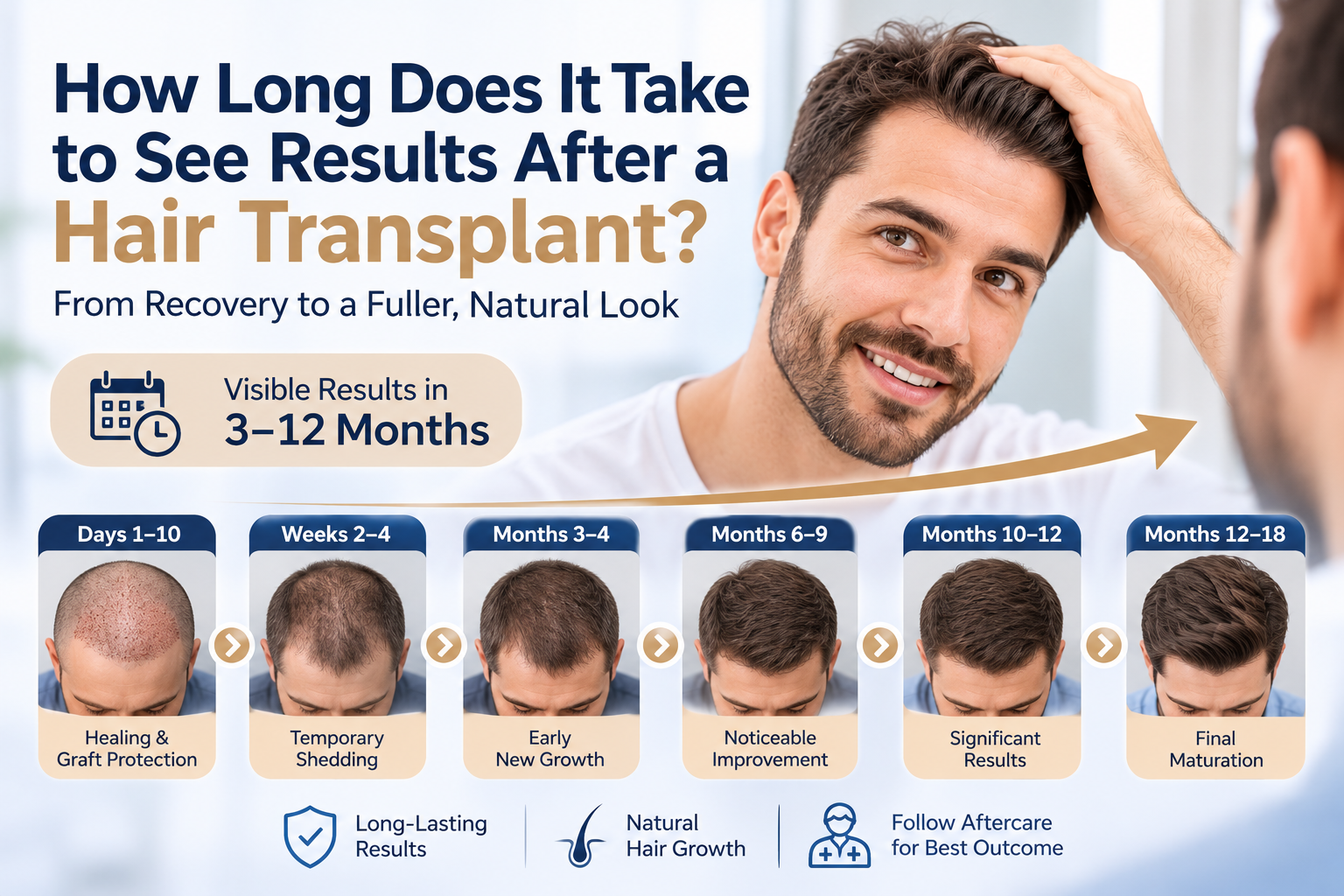
A hair transplant does not produce a full head of hair overnight. Although the procedure relocates healthy hair follicles into thinning or bald areas, the transplanted hair needs time to recover, enter its natural growth cycle, and develop visible thickness. Most patients begin noticing early new growth around three to four months after surgery, with more noticeable improvement developing between six and twelve months. In some cases, the final appearance continues maturing for up to 18 months.
The exact Hair Transplant in Jeddah recovery timeline depends on several factors, including the surgical technique, donor hair quality, scalp condition, graft survival, and individual healing response. Understanding each stage can help patients distinguish normal post-transplant shedding from potential complications and maintain realistic expectations.
Hair Transplant Results Timeline: What Happens Month by Month?
Hair restoration is a gradual biological process. Transplanted follicles need time to settle into their new locations before producing visible hair. The following timeline explains what patients commonly experience after surgery.
Days 1–10: Initial Healing and Graft Protection
The first ten days primarily involve scalp recovery. Small scabs may develop around the implanted grafts, and mild redness, swelling, tenderness, or itching can occur.
During this stage, protecting the recipient area is particularly important. Patients should follow their surgeon's instructions for washing the scalp, sleeping position, medication, and daily activities.
Avoid scratching, rubbing, or applying unnecessary pressure to the transplanted area. The grafts need time to become securely established in the recipient sites.
Weeks 2–4: Temporary Hair Shedding Begins
One of the most surprising stages of hair transplant recovery is temporary shedding.
Many transplanted hair shafts fall out during the first few weeks after surgery. This is commonly known as shock shedding or post-transplant shedding. Although it may appear that the procedure has not worked, the follicles can remain beneath the scalp and continue their natural growth cycle.
Temporary shedding is generally expected and does not automatically indicate graft failure.
Some patients may also experience temporary shock loss in nearby existing hair. If shedding appears excessive, persistent, or unusual, a medical assessment can help identify the cause.
Months 2–3: The Resting Phase
During the second and third months, the scalp may look similar to how it appeared before surgery. Some patients become concerned because visible hair growth remains limited.
However, this period is often part of the normal recovery process. Transplanted follicles may be resting before entering a new active growth phase.
Patience is important because the absence of obvious hair growth at this stage does not necessarily mean the transplant has failed.
Months 3–4: Early New Hair Growth
Around the third or fourth month, many patients begin noticing the first signs of new hair growth.
Initially, the emerging strands may appear thin, soft, or uneven. Hair density is usually limited, and the transplanted area may not yet look full.
This is an early milestone rather than the final outcome. The new follicles gradually produce more visible hair as their growth cycles progress.
Months 5–6: Visible Improvement Develops
Between five and six months, hair growth often becomes more noticeable. New strands may increase in length and begin providing better coverage.
Some patients observe improvements around the hairline and frontal scalp before seeing significant changes in the crown. This can vary depending on the treatment area and individual growth patterns.
At this point, the hair may still look finer or less dense than expected. Continued maturation is normal.
Months 7–9: Increasing Coverage and Thickness
The seventh to ninth months are often associated with more noticeable cosmetic improvement.
Transplanted hair continues growing, and existing strands may become thicker. The overall appearance of the treated area can look more natural as the hair gains length and blends with surrounding hair.
Patients may also find it easier to style their hair during this stage.
Months 10–12: Significant Results Become More Apparent
By the end of the first year, many patients can assess a substantial portion of their hair transplant outcome.
The transplanted area may have improved coverage, better visual density, and a more defined hairline. However, the final appearance depends on graft survival, hair characteristics, scalp condition, and the number of follicles transplanted.
Months 12–18: Final Maturation
Some patients continue seeing improvements beyond the first year, particularly in the crown or other areas where growth may develop more gradually.
During this period, transplanted hair can continue maturing in thickness, texture, and overall appearance.
Not everyone needs 18 months to see their final result. The timeline varies between individuals.
Why Does Hair Take So Long to Grow After Transplantation?
A hair transplant works with the natural hair growth cycle rather than producing immediate hair growth.
Each hair follicle passes through several phases:
-
Anagen: The active growth phase, during which the hair strand becomes longer.
-
Catagen: A short transitional phase when active growth slows.
-
Telogen: The resting phase, during which the hair remains temporarily inactive.
-
Exogen: The shedding phase, when an old hair strand falls out.
After transplantation, the surgical process can temporarily interrupt the visible growth cycle. The hair shaft may shed while the follicle remains capable of producing a new strand.
The follicle then gradually resumes activity, which explains why visible results take several months rather than appearing immediately after surgery.
What Can Make Hair Transplant Results Faster or Slower?
Although the general recovery timeline is similar for many patients, individual results can differ.
1. Quality of Donor Hair
Healthy donor follicles are essential for successful hair restoration. Hair taken from suitable donor areas, usually the back and sides of the scalp, may retain characteristics that make it more resistant to genetic hair loss.
Donor density, follicle quality, and available graft numbers influence the treatment plan and potential coverage.
2. Surgical Technique
The technique used for hair transplantation can influence extraction, implantation, and recovery.
-
FUE: Individual follicular units are extracted from the donor area and implanted into thinning regions.
-
Sapphire FUE: Uses sapphire blades to create recipient channels.
-
DHI: Uses an implantation pen approach to place extracted follicles into the recipient area.
No technique guarantees faster hair growth or a particular final density. The most suitable approach depends on the patient's scalp, donor characteristics, and restoration goals.
3. Scalp Health and Postoperative Care
Scalp health plays an important role in recovery. Infection, inflammation, excessive irritation, or poor wound healing may affect the postoperative course.
Following washing instructions, avoiding unnecessary pressure on grafts, and attending follow-up appointments can support appropriate healing.
4. Individual Hair Characteristics
Hair thickness, colour contrast with the scalp, curl pattern, and natural density can influence how full the transplanted area appears.
For example, thicker or curlier hair may provide greater visual coverage than finer hair, even when the number of transplanted grafts is similar.
5. Ongoing Genetic Hair Loss
A hair transplant does not stop genetic hair loss in untreated areas. Natural hair surrounding the transplanted region may continue thinning over time.
A suitable long-term management plan may help preserve the overall appearance, depending on the patient's diagnosis and medical suitability.
How Much Does a Hair Transplant Cost?
Hair Transplant costs depend on the selected technique, treatment area, graft requirements, donor hair availability, and surgical planning.
The previously reviewed treatment information for Enfield Royal Clinic Jeddah listed the following estimated prices:
| Hair Transplant Procedure | Estimated Cost |
|---|---|
| Standard FUE | SAR 8,000–14,000 |
| Sapphire FUE | SAR 10,000–16,000 |
| DHI Hair Transplant | SAR 12,000–20,000 |
| No-Shave FUE | SAR 12,000–18,000 |
| Beard Hair Transplant | SAR 6,000–10,000 |
| FUE with PRP Programme | SAR 9,000–15,000 |
These are procedure-based estimated price ranges, not per-graft charges. The final quotation should be confirmed during consultation because the treatment plan and current clinic pricing may change.
Tabby and Tamara instalment arrangements were also referenced in the previously reviewed clinic information, subject to applicable terms and availability.
How Can You Support Better Hair Transplant Recovery?
Good aftercare helps protect the scalp while transplanted follicles recover. Although no routine can guarantee a specific growth rate, following medical guidance can reduce avoidable complications.
Consider these practical recommendations:
-
Follow the surgeon's instructions for washing and drying your scalp.
-
Avoid scratching, rubbing, or picking scabs from the recipient area.
-
Sleep in the recommended position during early recovery.
-
Avoid strenuous exercise for the period advised by your surgeon.
-
Protect the scalp from excessive sun exposure during the healing stage.
-
Avoid smoking and nicotine as advised by your medical team.
-
Attend scheduled postoperative examinations.
-
Discuss appropriate hair-loss medication with a qualified doctor if needed.
Do not apply unapproved products or begin supplements and medication without medical advice.
When Should You Be Concerned About Slow Hair Growth?
Not seeing substantial growth during the first two or three months is not necessarily a reason for concern. Hair follicles need time to complete their resting phase and begin producing new strands.
However, patients should contact their medical team if they experience worsening pain, increasing redness, pus, fever, unusual swelling, or other signs of infection.
If little or no visible growth develops after the expected assessment period, a surgeon can examine the scalp and evaluate possible reasons, including graft survival, healing issues, or underlying hair-loss conditions.
Comparing photographs taken at consistent intervals can also help patients and doctors assess gradual changes more objectively.
Frequently Asked Questions:
How many months does it take to see hair transplant results?
Early new growth commonly appears around three to four months. More noticeable improvement often develops between six and twelve months, while some results continue maturing up to 18 months.
Is it normal to have no hair growth after two months?
Yes. Many patients experience a resting phase during the second and third months. Visible growth often begins later, so limited changes during this period do not automatically indicate failure.
When does transplanted hair become thick?
Hair commonly becomes more noticeable between six and nine months. Thickness and overall appearance may continue improving during the first 12–18 months.
Does FUE take longer to show results than DHI?
Neither technique guarantees faster hair growth. Both involve relocating follicles that must recover and resume their natural growth cycle. Individual healing and follicle characteristics are more important than the technique's name alone.
Can transplanted hair fall out before new growth appears?
Yes. Temporary shedding of transplanted hair shafts is common during the early recovery period. The follicles may remain beneath the scalp and produce new hair later.
When can I judge whether my hair transplant was successful?
A preliminary assessment may be possible around six months, but a more meaningful evaluation is usually made around 12 months. Some patients require up to 18 months for continued maturation.
Final Thoughts: Give Your Hair Time to Grow
Hair transplant results develop gradually, and the first few months can involve temporary shedding and limited visible change. Early growth commonly begins around months three to four, while fuller cosmetic improvement usually takes several more months.
The best way to approach hair restoration is to understand the recovery stages, choose an appropriate surgical plan, follow postoperative instructions, and attend regular follow-ups. A personalised medical assessment can help establish realistic expectations based on donor hair quality, the treatment area, and individual hair-loss patterns.

 English
 Arabic
 French
 Spanish
 Deutsch
 Turkish
 Dutch
 Italiano
 Russian
 Romaian
 Portuguese (Brazil)
 Greek
