


Black Friday 2026 Craft Setup Guide: Choosing a Vinyl Cutter for Home Businesses in Kuwait
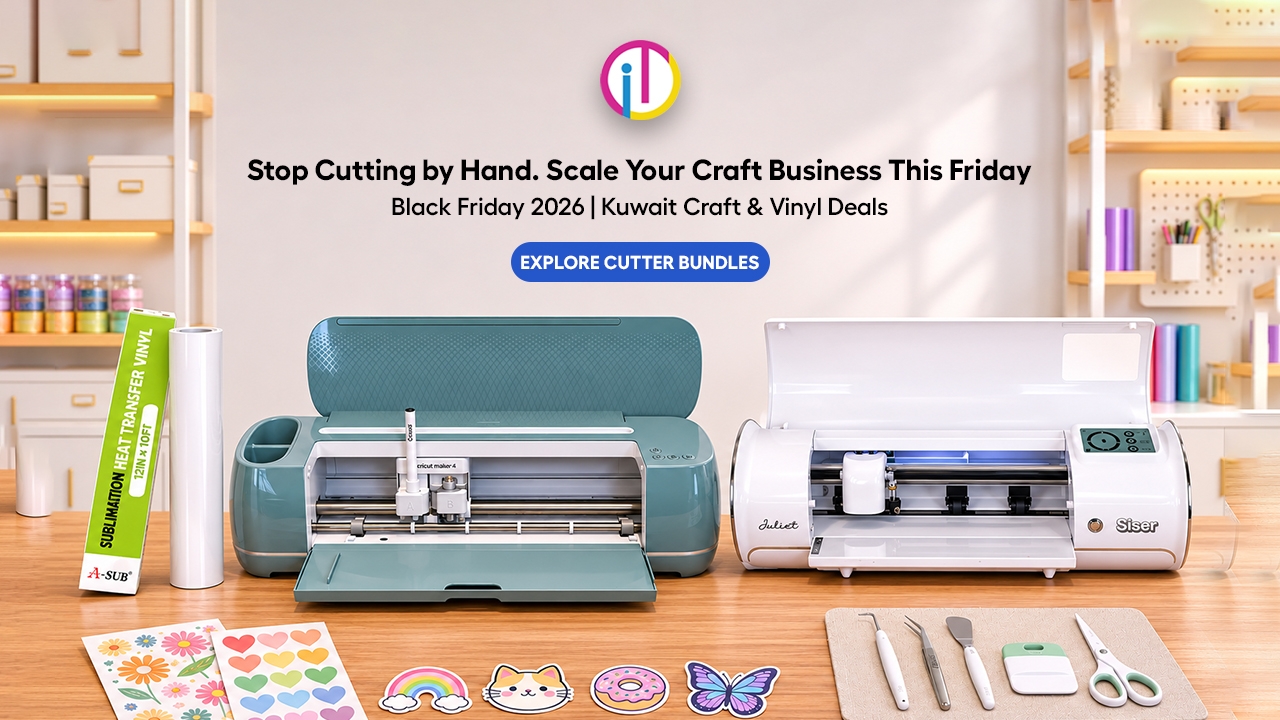
Starting a personalised-products business from home can be an appealing way to turn creative skills into a source of income. Custom T-shirts, name stickers, wedding favours, car decals, packaging labels and personalised gifts all have something in common: many require clean, consistent cuts that are difficult to reproduce by hand.
That is where a vinyl cutter can make a real difference. Instead of spending hours trimming designs with scissors or a craft knife, you can use a digital cutting machine to produce repeatable shapes, lettering and patterns. For anyone planning to start or expand a craft business in Kuwait, Black Friday 2026 offers a useful opportunity to compare machines, bundles and essential supplies before investing.
But the biggest discount is not necessarily the best purchase. The right machine depends on what you plan to make, how many orders you expect to handle and which materials you need to cut.
Start With the Products You Want to Sell
Before comparing brands or prices, decide what your business will actually produce. A machine suited to personalised gifts may not be the most practical choice for someone making apparel graphics or large shop signs.
Consider these common home-business products:
-
Custom apparel: Names, logos and designs cut from heat-transfer vinyl (HTV) and applied to T-shirts, hoodies, uniforms and tote bags.
-
Personalised gifts: Names and decorative details for mugs, bottles, notebooks, gift boxes and other items.
-
Stickers and labels: Product labels, planner stickers, packaging seals and decorative decals.
-
Event and party décor: Cake toppers, invitation details, welcome signs, table decorations and customised party favours.
-
Business signage: Window lettering, display graphics, promotional decals and vehicle graphics.
Write down your three most likely product categories and the materials they require. This simple exercise can prevent you from buying a machine with features you may never use—or one that cannot handle your intended projects.
Cricut, Siser or a Wider Cutting Setup: What Should You Compare?
A vinyl cutter is not a one-size-fits-all purchase. Different machines are designed around different working styles, material requirements and production needs.
Cricut: Useful for a Broad Range of Personalised Crafts
Cricut machines are worth considering if your planned products include small personalised items, decorative projects, stickers and apparel designs. Their design-led workflow can be convenient for people who want to create a variety of products without building a highly specialised production setup from the beginning.
When comparing Cricut models, look at the materials supported, available tools, cutting dimensions, design workflow and the accessories included. A compact machine may be enough for smaller projects, while a more versatile model can offer room to experiment with different craft applications.
Siser: Worth Considering for Vinyl-Focused Work
Siser cutters are another option for businesses that expect to work regularly with vinyl and apparel decoration. For example, the Siser Juliet has a 30 cm cutting format, while the Siser Romeo offers a wider 60 cm format.
The difference matters when you move beyond occasional personalised items. A wider working area can make larger designs and certain production jobs more practical. However, machine width should be considered alongside available workspace, material handling and expected order sizes.
Compare the Working Format, Not Just the Brand
A useful way to compare machines is to ask:
-
What is the maximum practical cutting width?
-
Which vinyl types and other materials are supported?
-
Does the machine suit detailed designs as well as larger shapes?
-
How does the design software fit your workflow?
-
Are replacement blades, mats and accessories available?
-
Is the machine appropriate for your expected weekly order volume?
Explore the available cutting machine options to compare different machine formats and brands before deciding which one matches your product range.
Why a Starter Bundle Can Be More Practical Than Buying a Machine Alone
A common beginner mistake is to spend most of the budget on the cutting machine and leave too little for the materials and tools needed to complete actual orders.
A cutter is only one part of the workflow. Depending on the products you intend to sell, you may also need:
-
Cutting mats suitable for your materials
-
Standard and specialty vinyl
-
Heat-transfer vinyl for apparel
-
Weeding tools for removing unwanted material
-
Transfer tape for applying adhesive vinyl
-
Scrapers and application tools
-
Replacement blades
-
A heat press for transferring designs onto fabric
This is why a complete starter bundle can be worth comparing with a standalone machine. A bundle may bring several compatible items together, reducing the time spent sourcing each component separately. Still, check its contents carefully. A larger bundle is not automatically better if it includes materials you will not use.
For Black Friday, compare the individual prices of the items included, the final bundle price, warranty coverage and whether the accessories match your intended projects. You can review cutting machine combo options as one way to assess complete craft setups.
Vinyl Cutting Is Only One Part of the Production Process
Understanding the difference between cutting, printing and heat application is important before investing.
A standard vinyl cutter cuts shapes, letters and designs from compatible material. It does not print full-colour artwork by itself. If you want to produce colourful stickers, for example, you may need a printer for the artwork and a compatible cutting workflow to trim around the printed design.
Apparel decoration follows a different process. You can cut a design from heat-transfer vinyl, remove the excess material and apply the remaining design to fabric using a suitable heat press. The press is a separate piece of equipment, and its size, temperature control and working area should match the products you plan to make.
For businesses looking to expand into more than basic vinyl projects, it is useful to consider the wider production workflow. Equipment and materials for vinyl, sublimation, DTF and heat application can be explored through a dedicated print and craft equipment range.
The important point is to buy equipment according to the products you intend to deliver—not simply because a machine appears in a discounted bundle.
How to Plan Your Craft Business Budget for Black Friday 2026
A discounted machine can still become an expensive purchase if you overlook the ongoing costs of running it. Before placing an order, divide your budget into four areas.
1. The machine
Decide how much you can reasonably invest in the cutter itself. Avoid paying for advanced capabilities unless they solve a real production need.
2. Essential materials
Estimate the vinyl, transfer tape, cutting mats and other supplies required for your first set of products. Start with a limited selection of colours and finishes that suit your planned designs.
3. Supporting equipment
If you intend to sell decorated clothing, factor in a heat press. If your products require printed designs, consider the printer and compatible materials as part of the complete workflow.
4. Running costs
Allow for replacement blades, material wastage, packaging, test cuts, electricity, delivery and occasional reprints. These expenses affect the profit you make on every order.
Black Friday is a good time to compare the total cost of a working setup rather than focusing on the discount percentage displayed beside a single machine.
Check These Details Before Buying a Vinyl Cutter
A few practical checks can help you avoid problems after the machine arrives.
Workspace: Measure your available desk or workbench. Remember that you need room for the machine, material feeding, tools and finished products.
Material compatibility: Confirm that the machine supports the vinyl and other materials you plan to use. Do not assume every cutter handles every material.
Design workflow: Check whether the software is suitable for your experience level and whether you can create, import and edit the designs you need.
Cutting precision: If your products involve small lettering, intricate logos or detailed patterns, pay attention to the machine's ability to handle fine cuts.
After-sales support: Check warranty terms, accessories, replacement parts and local support arrangements. This is particularly important when the machine will be used to fulfil paid orders.
Bundle contents: Read the complete product list. Confirm whether the bundle includes the cutting mat, tools, vinyl, transfer materials or heat press you actually need.
Delivery and payment: Check the seller's delivery terms, payment options and return policy before completing the purchase.
Build a Small Product Range Before Taking Large Orders
Once your machine is installed, resist the temptation to offer every possible custom product immediately. Begin with a focused range that uses similar materials and production steps.
For example, a home business might start with personalised tote bags, simple T-shirt designs and name decals. These products allow the owner to practise cutting, weeding, application and quality checks without managing too many production methods at once.
Make a few samples and test them before advertising. Check whether the lettering is clean, the vinyl adheres properly and the finished product looks consistent. Record the material used, time taken and approximate cost for each item.
That information will help you set prices more realistically. It will also show which designs are profitable and which ones create too much material waste or production time.
As demand grows, you can add more colours, larger designs, printed stickers or other product categories. Expanding in stages is usually more manageable than investing in every piece of equipment at the beginning.
Make Black Friday a Business Decision, Not an Impulse Purchase
Black Friday 2026 should be an opportunity to make a considered equipment purchase. A vinyl cutter can help a home business reduce manual work, improve consistency and take on personalised orders more efficiently—but only when the machine matches the work.
Start with your product ideas, compare the cutting width and material compatibility, calculate the cost of the complete setup and check the support available after purchase. A practical starter machine with the right accessories may be a better business investment than a more expensive model with features you do not need.
The goal is not simply to own a cutting machine. It is to build a reliable workflow that turns creative designs into products customers are happy to buy.

 English
 Arabic
 French
 Portuguese
 Deutsch
 Turkish
 Dutch
 Italiano
 Russian
 Romaian
 Portuguese (Brazil)
 Greek
