


Thinning Hair? How PRP Hair Treatment Works and Who It Really Helps
Thinning Hair? How PRP Hair Treatment Works and Who It Really Helps
Hair loss is rarely dramatic. It does not happen in a single day; it happens in small increments that are easy to dismiss until the evidence becomes hard to ignore — a wider parting, a thinner crown, a hairline that has crept back a little further than last year. For people in the early stages of thinning, the question is usually not whether something can be done, but what is worth doing. PRP Hair Treatment is one of the options most often raised in that conversation, because it is non-surgical, uses the patient's own blood, and has a long history in medicine.
The appeal is easy to understand. No surgery, no daily medication, no foreign substance — just the body's own platelets, concentrated and delivered to the scalp. But the simplicity of the idea can be misleading. PRP is a course of treatment, not a single appointment, and it works for some people far better than for others. Whether it is worth the time and the commitment depends on the pattern of hair loss, the state of the follicles, and the quality of the clinic carrying it out.
This article explains how PRP works, who it tends to help, what a course of treatment involves, and how to judge whether it is the right choice. It is written as a neutral guide, so that anyone considering the treatment can go into the consultation with a clear picture of what to expect.
How PRP Hair Treatment Works
PRP stands for platelet-rich plasma, and the name describes the treatment quite directly. A small sample of the patient's blood is taken, usually from the arm, and spun in a centrifuge. The spinning separates the blood into its components: red blood cells settle at the bottom, plasma rises to the top, and the platelets — the tiny cell fragments that carry growth factors — are concentrated in a layer in between. That platelet-rich plasma is drawn off and prepared for injection.
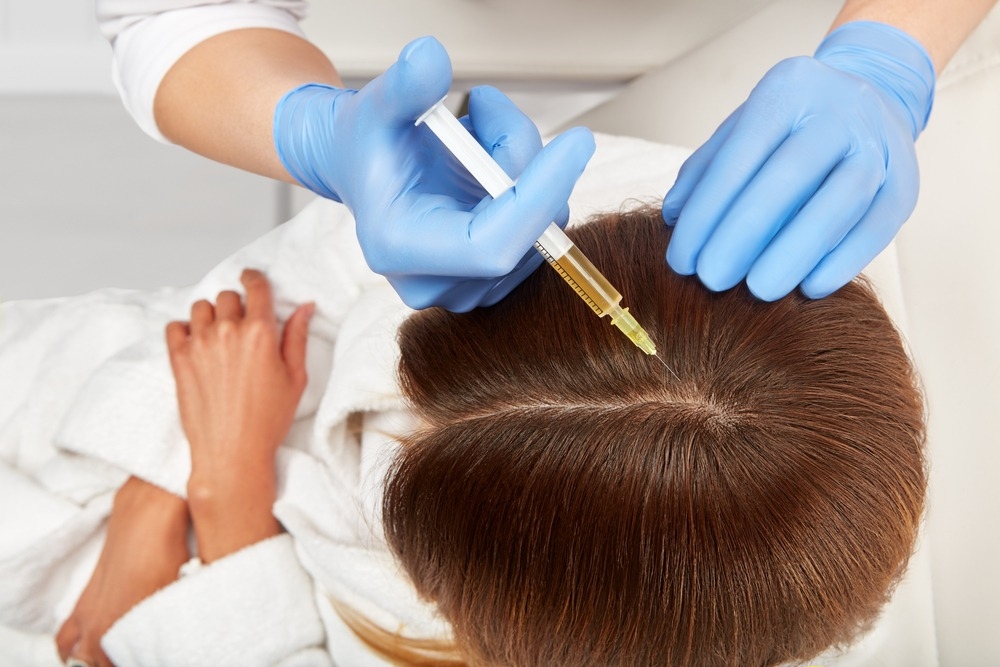
The plasma is then injected into the scalp in a series of small injections across the areas where the hair is thinning. The injections are shallow, targeting the layer of the scalp where the follicles sit, and a numbing cream or local anaesthetic is usually applied first. The whole appointment typically takes under an hour, and most patients return to normal activities the same day.
The idea behind the treatment is that the growth factors in the platelets signal the follicles to repair and renew. In practice, this means PRP can support follicles that are weakened but still alive, improving the thickness and quality of the hair they produce and sometimes slowing further thinning. It cannot, however, revive follicles that have closed completely, and it is not a cure for genetic hair loss. That distinction — between weakened follicles and lost ones — is the single most important factor in whether PRP will help.
A course usually involves three or four sessions spaced a few weeks apart, followed by maintenance sessions every few months. The spacing matters because the growth factors work over time, not instantly. Hair grows slowly, and any improvement in thickness or density usually becomes visible after several months, once the initial course is complete.
What a Course of Treatment Looks Like
The first step is a consultation and a scalp assessment, and it is the step that matters most. The practitioner should examine the pattern of hair loss, ask how long the thinning has been present, and judge whether the follicles in the affected areas are still active. A clinic that recommends a course of PRP without examining the scalp is skipping the one assessment that determines whether the treatment has any chance of working.
Each session follows the same pattern. Blood is drawn, spun in the centrifuge, and the platelet-rich plasma is prepared. The scalp is numbed, and the plasma is injected in a grid pattern across the thinning areas. The injections sting, and the scalp is often tender for a day or two afterwards, with some mild swelling. Most people wash their hair the next day and return to work immediately, although strenuous exercise is usually avoided for a day.
Between sessions, the main task is patience. Shedding may reduce first, then the hair may gradually feel thicker. The full effect is generally assessed after six months or more. Maintenance sessions, usually every few months, help sustain whatever improvement has been achieved, and stopping them may mean the benefit fades over time. That ongoing commitment is worth understanding before the first session, not after the third.
How to Choose the Right Clinic for PRP Hair Treatment
Experience and Qualifications
PRP is a simple idea but a technique-sensitive treatment: the preparation, the concentration of platelets and the placement of the injections all affect the outcome. Ask how often the practitioner performs PRP, how many hair cases they have treated, and what training they have. Confirm that the practitioner is licensed by the Dubai Health Authority before booking anything.
Technology and Techniques
Not all PRP systems are equal. The centrifuge and the preparation method determine the concentration of platelets in the final product, and this can vary between clinics. Ask what system the clinic uses, how the plasma is prepared, and whether the clinic measures or checks the concentration. A clinic that can explain its process in plain language is more likely to deliver a consistent treatment than one that cannot.
Safety and Hygiene Standards
Because PRP uses the patient's own blood, the risk of an allergic reaction is very low, but hygiene still matters. Blood must be handled safely, equipment must be sterile, and the treatment should take place in a clean clinical setting. Ask about the clinic's infection control procedures, and be wary of any provider that seems casual about them.
Consultation and Assessment
A good consultation includes a proper examination of the scalp and an honest discussion of whether PRP is likely to help. Be cautious of any clinic that recommends a course of treatment without examining the scalp, or that promises regrowth without discussing the limitations. A cooling-off period is reasonable, and a good clinic will welcome a second opinion. A consultation at a well-established practice such as Enfield Royal Clinic Dubai will normally include a full scalp assessment before any course is recommended, so the patient knows whether the treatment is a realistic option for their pattern of hair loss.
Patient Experience and Follow-Up
Ask how progress is monitored, how many follow-up appointments are included, and what happens if the results are limited. PRP is a course of treatment over months, so the relationship with the clinic matters, and the quality of follow-up is part of the treatment rather than an afterthought.
Expected Results and Limitations
Before committing, make sure the expected result is described realistically. Improvement takes months, results vary between individuals, and PRP cannot restore hair from follicles that have closed. A practitioner who explains these limits clearly is giving the patient the information needed to make a genuinely informed decision.
Who Should Avoid PRP?
PRP is not suitable for everyone, and a responsible practitioner will say so where it does not fit. People whose hair follicles have already closed completely are unlikely to benefit, since there is nothing left for the growth factors to support. In such cases a transplant, or another approach entirely, may be more appropriate, and a clinic that recommends PRP anyway is not giving honest advice.
PRP is also less suitable where the hair loss has an underlying medical cause that has not been investigated, such as a thyroid condition, a nutritional deficiency, or a scalp condition. In those cases the underlying cause should be addressed first, and PRP may still have a role afterwards. People with certain blood conditions, or those taking blood-thinning medication, should discuss their history with the practitioner, since the treatment involves drawing and handling blood. A proper consultation should cover all of this before any treatment is booked.
Frequently Asked Questions
Does PRP hurt?
The injections can be uncomfortable, and most patients describe a prickling or stinging sensation in the scalp. A numbing cream or local anaesthetic is usually applied beforehand to reduce the discomfort, and the injections themselves are shallow. Tenderness and mild swelling for a day or two afterwards are normal and usually settle quickly.
How soon will I see results from PRP?
Hair grows slowly, so results take time. Most patients begin to notice an improvement in hair thickness or a reduction in shedding after a few months, usually after the initial course of sessions. The full effect is generally assessed after six months or more. Anyone expecting visible change within days is likely to be disappointed.
Is PRP safe?
PRP uses the patient's own blood, so the risk of an allergic reaction or rejection is very low. The main risks are the usual ones for any injection: soreness, swelling, bruising and a small risk of infection. These risks are minimised by sterile technique and proper handling of the blood sample, which is why the clinic's hygiene standards matter.
Can PRP be combined with a hair transplant?
Yes, PRP is often used alongside a hair transplant, either to support the healing of the transplanted grafts or to strengthen the existing hair around them. It is also used with topical or oral hair loss medications. Combining treatments can be appropriate, but it should be planned by a qualified practitioner after a full assessment.
Will I need PRP forever?
Maintenance sessions are usually recommended every few months to sustain the improvement, because the effect of PRP is not permanent. If maintenance stops, the benefit may gradually fade. The practitioner should explain the maintenance schedule and its cost at the first consultation, so the patient can judge the long-term commitment before starting.
Conclusion
PRP hair treatment is a reasonable option for people in the early stages of hair thinning, particularly where the follicles are still active but weakened. It is non-surgical, uses the body's own resources, and fits easily into a normal routine. But it is not a quick fix and not a cure: it takes months, it needs maintenance, and it cannot restore hair that is already gone.
Anyone considering it should start with a proper scalp assessment and an honest conversation about whether it is likely to help. That discussion is the best way to find out whether platelet-rich plasma hair treatment is the right step, what a course would involve, and whether the time is right to begin.

 English
 Arabic
 French
 Spanish
 Portuguese
 Deutsch
 Turkish
 Dutch
 Russian
 Romaian
 Portuguese (Brazil)
 Greek
