


Bank Statement Loans: Mortgage Options for Self-Employed
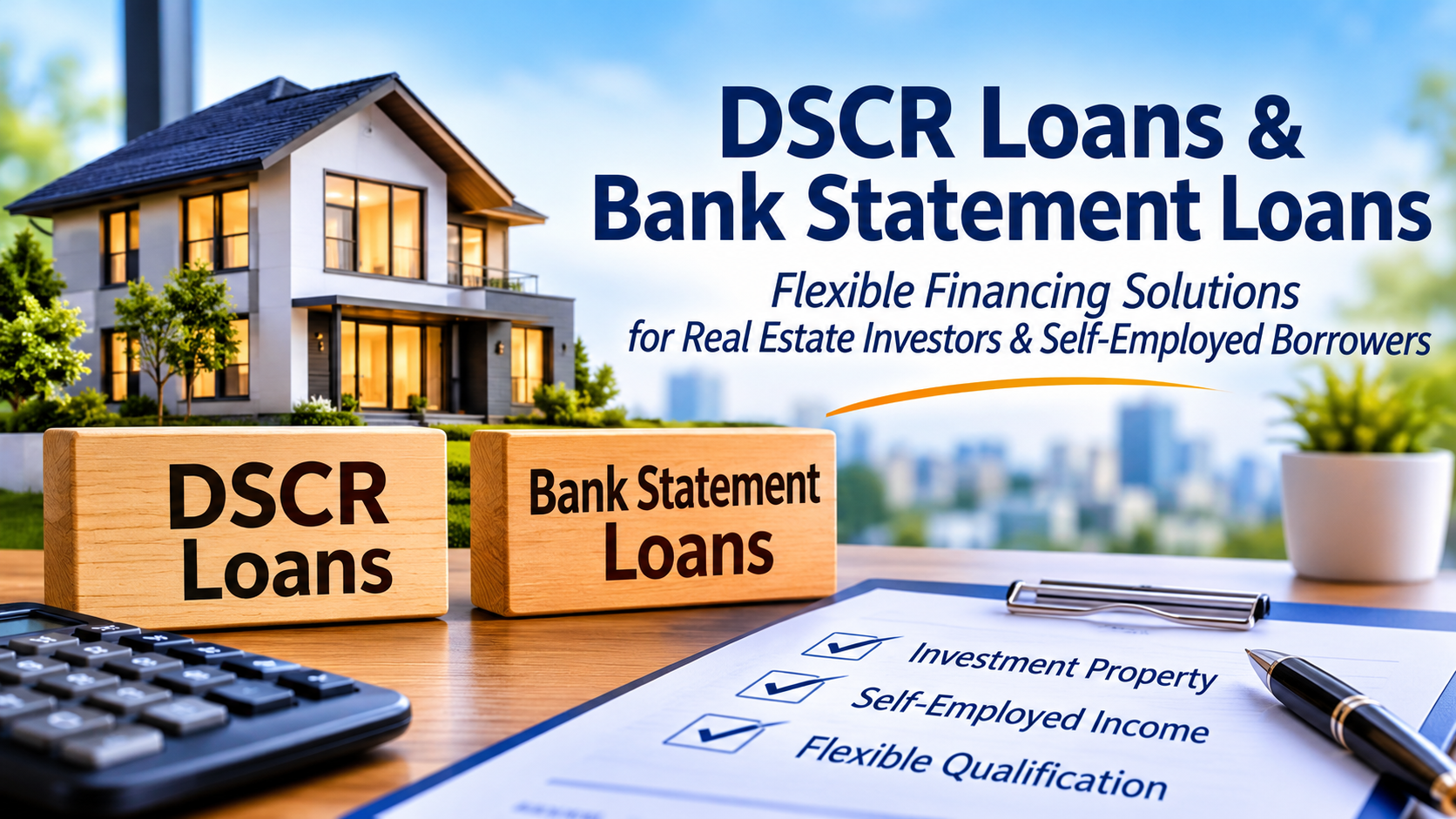
Bank Statement Loans: A Mortgage Guide for Self-Employed Borrowers
Getting a mortgage can be challenging for self-employed individuals and business owners who do not receive traditional salary statements. Their income may come from multiple clients, business transactions, or irregular payments, making conventional income documentation more complicated.
This is where bank statement loans can provide an alternative mortgage qualification approach. These programs use bank deposit activity to help lenders assess a borrower's income instead of relying exclusively on traditional tax returns.
Understanding how these loans work can help borrowers explore financing options that match their income structure.
What Are Bank Statement Loans?
Bank statement loans are mortgage programs that use personal or business bank statements to evaluate a borrower's income.
They are commonly designed for self-employed individuals, freelancers, independent contractors, and business owners whose financial situations may not fit traditional mortgage documentation requirements.
Depending on the program, lenders may review 12 or 24 months of bank statements to understand regular deposits and estimate qualifying income.
How Do Bank Statement Loans Work?
The application process generally begins with reviewing the borrower's financial records.
Lenders may examine:
-
Personal or business bank statements.
-
Regular deposits and income patterns.
-
Business expenses, where applicable.
-
Credit history and outstanding debts.
-
Available down payment and financial reserves.
For business bank statements, lenders may apply an expense factor to estimate the income available to the borrower. The calculation method varies depending on the loan program.
Who Should Consider Bank Statement Loans?
These mortgage options may be worth exploring for borrowers who earn income outside traditional employment arrangements.
Common examples include:
1. Self-Employed Professionals
Consultants, professionals, and independent service providers may receive income directly from customers or clients.
2. Small Business Owners
Entrepreneurs may have substantial business deposits but report income differently from salaried employees.
3. Freelancers and Contractors
Individuals working with multiple clients may receive payments at different times throughout the month.
4. Commission-Based Earners
Some borrowers receive variable income through sales commissions or other performance-based payments.
Benefits of Bank Statement Loans
1. Alternative Income Documentation
These programs can help borrowers demonstrate their earning capacity through bank activity rather than relying exclusively on conventional income documents.
2. Suitable for Different Income Structures
Business owners and independent professionals may find this approach useful when their income is not reflected in standard salary statements.
3. Flexible Documentation Options
Depending on the lender, borrowers may be able to use personal or business bank statements for income evaluation.
4. More Financing Possibilities
For eligible borrowers, bank statement programs can provide another route to explore mortgage financing.
What Are the Important Requirements?
Although requirements differ between lenders, borrowers should be prepared to provide relevant financial information.
Important considerations include:
-
Bank statements: Usually 12 or 24 months, depending on the program.
-
Credit score: Lenders establish minimum credit requirements.
-
Down payment: The required amount depends on the property and loan conditions.
-
Debt-to-income ratio: Existing financial obligations may affect eligibility.
-
Business income: Lenders may evaluate deposits and deduct estimated business expenses.
-
Cash reserves: Some programs require additional funds after closing.
Borrowers should also understand the interest rate, fees, repayment conditions, and any additional underwriting requirements before proceeding.
Bank Statement Loans vs. Traditional Mortgages
The main difference is how income is documented.
Traditional mortgages generally rely on documents such as tax returns, pay stubs, and W-2 forms. Bank statement programs may instead use deposit history to estimate qualifying income.
However, alternative documentation does not automatically mean easier approval. Creditworthiness, repayment ability, property details, and lender guidelines remain important.
Conclusion
Bank statement loans can be an alternative mortgage financing option for self-employed professionals, freelancers, and business owners with non-traditional income documentation. By reviewing bank statements and evaluating deposit patterns, lenders can develop an estimate of qualifying income. Before applying, compare available programs and understand their documentation requirements, costs, and repayment terms.
FAQs
1. Who qualifies for bank statement loans?
Self-employed individuals, freelancers, independent contractors, and business owners may qualify, depending on lender requirements.
2. How many months of bank statements are required?
Many programs request 12 or 24 months of statements, although requirements vary by lender.
3. Are bank statement loans only for business owners?
No. They may also be available to independent contractors, consultants, and other borrowers with qualifying non-traditional income sources.

 English
 Arabic
 French
 Portuguese
 Deutsch
 Turkish
 Dutch
 Italiano
 Russian
 Romaian
 Portuguese (Brazil)
 Greek
