


Is Hunepulley Bearing Pulley Wheel Suitable for Your Next Project?
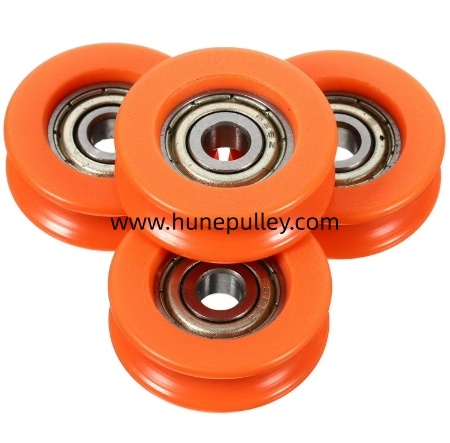
Mechanical equipment relies on carefully coordinated components to achieve stable movement and dependable operation. Among these components, the Bearing Pulley Wheel plays an important role in supporting rotational movement, guiding cables or tracks, and reducing friction in various mechanical arrangements. With a focus on practical hardware development, Hunepulley offers pulley-related solutions designed to address different equipment structures and application requirements.
A pulley wheel with an integrated bearing combines two functional elements within a compact assembly. The wheel provides a contact surface for movement, while the bearing allows rotational motion around its central axis. This arrangement can help reduce resistance during operation and support smoother movement when the component is correctly selected and installed. Its practical design makes it suitable for a range of mechanical systems where controlled rotation is required.
Material selection has a direct influence on the characteristics of pulley products. Metal wheels are often considered for applications requiring structural strength and resistance to mechanical stress. Plastic materials, including engineering plastics, can offer a different combination of weight, noise characteristics, and surface performance. The appropriate choice depends on the working environment, contact surface, expected load, and operating conditions.
Bearing configuration is equally important. Different equipment designs may require different bearing structures to accommodate rotational requirements and installation limitations. A suitable bearing arrangement helps maintain stable wheel movement and supports the interaction between the pulley and its connected components. Attention to internal structure and assembly precision can also contribute to consistent product performance.
The wheel profile should match the intended track, cable, or contact surface. Groove shapes, edge structures, and overall dimensions influence how a pulley interacts with surrounding equipment. For example, certain applications require a guided groove to maintain positioning, while others use a flat contact surface for straightforward movement. Choosing an appropriate configuration helps reduce unnecessary friction and supports the intended mechanical function.
These components can be found in a variety of applications. Industrial machinery may use pulley assemblies to guide moving parts, while furniture hardware can incorporate compact wheels into sliding structures. Equipment manufacturers may also use bearing-supported rollers in transmission systems, automation equipment, and material-handling arrangements. Each application introduces different requirements, making product compatibility an important part of the selection process.
For manufacturers and hardware distributors, consistency during production is another significant consideration. A pulley component needs to maintain suitable dimensions, bearing alignment, and assembly quality to work properly within its intended system. Manufacturing procedures should therefore consider material preparation, component fitting, and inspection throughout production. These details help reduce installation difficulties and support a more predictable user experience.
Customization can also help address specialized mechanical requirements. Depending on the application, adjustments may involve wheel diameter, groove design, bearing type, material selection, or mounting structure. Providing clear information about the equipment and its operating environment makes it easier to identify an appropriate product configuration. This approach is particularly useful when standard components do not fully match an existing mechanical design.
Beyond technical specifications, convenient installation and maintenance deserve attention. A well-considered pulley structure should fit its intended mounting arrangement and allow users to understand how the component interacts with surrounding parts. Routine inspection and appropriate maintenance can help preserve operating conditions and identify signs of wear before they affect the wider equipment system.
As mechanical products continue to incorporate compact structures and flexible movement mechanisms, bearing-supported pulley components remain relevant across many industries. Their value comes from the coordination of wheel design, bearing performance, material properties, and installation compatibility. Careful selection of these elements helps manufacturers develop practical equipment solutions for different working environments.
A small rotating component can make a meaningful contribution to the movement of an entire system. If you are planning a new mechanical design or reviewing your existing hardware options, take a moment to browse https://www.hunepulley.com/product/ . Follow the details behind the movement, explore the available pulley solutions, and see which product could become part of your next engineering idea.

 English
 Arabic
 French
 Spanish
 Deutsch
 Turkish
 Dutch
 Italiano
 Russian
 Romaian
 Portuguese (Brazil)
 Greek
