


Photo Booth/Kiosk Market Size, Share, Trends, and Growth Forecast
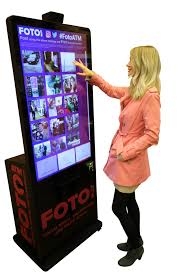
In a group discussion on modern retail and event technology, participants often debate whether self-service photo stations are a passing social-media novelty or durable commercial infrastructure. Across the Photo Booth/Kiosk Market, systems span two distinct worlds: experiential open-air and mirror booths used at weddings, brand activations, and shopping malls, alongside regulated identity kiosks deployed at transit hubs, post offices, and retail pharmacies for passport and visa photos. Modern units combine DSLR or high-resolution mirrorless optics, ring lighting, touchscreens, cashless payment terminals, and instant cloud or QR-code sharing so users receive both physical keepsake strips and social-ready digital files within seconds. Detailed Photo Booth/Kiosk analysis demonstrates that businesses increasingly deploy customized booths not just to entertain guests, but to capture organic social reach and first-party brand engagement. For group discussion participants, this dual identity makes the sector a fascinating case study: one core hardware category serves both emotional celebration marketing and strict government biometric compliance.
During a roundtable on venue monetization and event budgets, the conversation naturally turns from novelty appeal to unit economics, maintenance overhead, and hardware durability. Purchasing commercial-grade booths with dye-sublimation printers, touchscreens, and rugged enclosures requires meaningful upfront capital, while rental operators and venue hosts must manage paper-roll replenishment, software licensing, and venue revenue-sharing agreements. At the same time, smartphone cameras grow more capable every year, forcing kiosk operators to justify why consumers or brands will pay for dedicated hardware. Participants in a group discussion can test this competitive tension directly: what gives a physical photo booth or kiosk an advantage over a guest's own smartphone? Comparing studio lighting quality, instant tactile prints, branded physical backdrops, and certified government biometric compliance keeps the discussion grounded in real customer value rather than surface-level tech hype.
Frequently Asked Questions
1. What are the two primary commercial uses for photo booths and kiosks today?They serve experiential entertainment and brand activations at events and retail venues, as well as regulated biometric identity photography for passports, visas, and official licenses.
2. How do modern photo kiosks compete with high-end smartphone cameras? They offer professional studio lighting, instant dye-sublimation prints, full-length interactive mirrors, custom physical props, and certified biometric compliance that smartphones cannot easily replicate.
➤➤➤Explore MRFR’s Related Ongoing Coverage In Semiconductor Industry:
Language Translation Device Market
Letter Of Credit Confirmation Market
Level Measuring Equipment Market
Litigation Funding Investment Market

 English
 Arabic
 French
 Spanish
 Deutsch
 Turkish
 Dutch
 Italiano
 Russian
 Romaian
 Portuguese (Brazil)
 Greek
