


Seeing Beyond the Surface: The Science and Applications of Conoscope Lens Technology
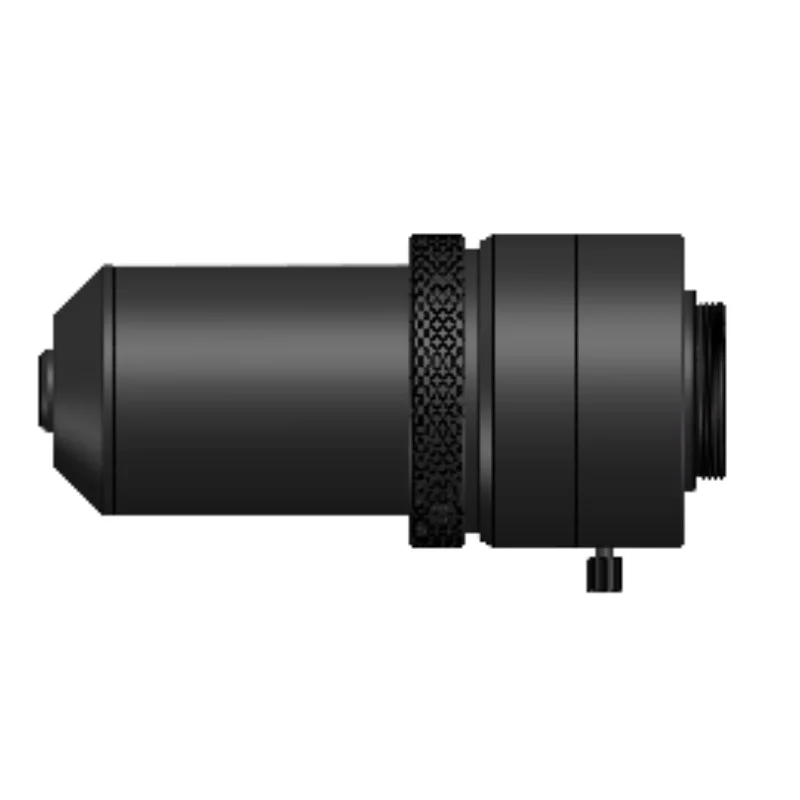
Understanding how light behaves at different angles is essential in many areas of modern optical engineering. From material inspection to specialized imaging and measurement, engineers often need more than a conventional view of an object or surface. They require optical systems capable of collecting and analyzing light from multiple directions. A conoscope lens is associated with optical arrangements designed for observing angular light distributions and studying properties that may not be visible through ordinary imaging alone.
What Is Conoscope Technology?
Conoscopy is an optical technique used to examine the angular distribution of light passing through or interacting with a material. It is particularly relevant in applications involving anisotropic materials, where optical properties can vary depending on the direction of observation or the polarization of light.
A conoscope optical arrangement collects light over a range of angles and directs it toward an imaging or observation system. This allows specialists to examine patterns that provide information about the optical behavior of a sample.
The lens is an important part of the arrangement because its optical characteristics influence how light is collected and delivered to the detection system. The complete instrument may also include illumination components, polarizing elements, sample holders, and imaging sensors.
Why Angular Light Analysis Matters
Conventional imaging systems generally focus on producing a clear representation of an object or surface. However, some materials interact with light differently depending on its direction. In these situations, studying angular behavior can provide additional information.
For example, anisotropic materials may exhibit different refractive properties along different directions. This behavior can influence how light travels through the sample and create recognizable optical patterns under suitable observation conditions.
Angular analysis can help researchers investigate these characteristics. It is useful in optical characterization, material research, and selected inspection processes where understanding light behavior is important.
The Role of a Conoscope Lens
A conoscope lens helps manage the collection and transmission of light within a conoscopic optical system. Its design must support the intended angular range while maintaining suitable image quality and optical alignment.
Several characteristics influence its performance:
Optical design: The lens configuration determines how incoming light is gathered and directed. The design must match the geometry and requirements of the complete instrument.
Transmission quality: Suitable optical materials allow light to pass through with limited unwanted absorption or scattering across the intended wavelength range.
Surface precision: Optical surfaces need appropriate finishing to reduce distortions and maintain consistent light transmission.
Angular coverage: The required field of angular observation should be considered when selecting the optical configuration.
System compatibility: The lens must work effectively with other components, including sensors, polarizers, illumination sources, and mechanical mounting structures.
These factors are interconnected. A lens that performs well in one optical arrangement may not automatically deliver the same results in another system.
Applications in Optical Research and Inspection
Conoscope-based systems can support several specialized fields where angular optical information is valuable.
In material science, researchers may use conoscopic observation to study anisotropic crystals and investigate their optical characteristics. The patterns produced under appropriate conditions can provide information about properties such as optical orientation and birefringence.
In microscopy, conoscopic techniques can complement conventional observation when examining samples with direction-dependent optical behavior. They offer another way to investigate material structures that may not be fully understood through standard bright-field imaging.
Optical testing and quality evaluation may also benefit from angular analysis. Depending on the instrument and testing method, it can help specialists assess optical components or materials and identify variations that influence performance.
The exact application depends on the instrument configuration, sample characteristics, and measurement objectives.
Factors to Consider When Selecting Optical Components
Choosing a suitable lens requires understanding the complete measurement process. Before selecting an optical component, engineers should establish the sample type, required angular range, wavelength requirements, and expected measurement accuracy.
Material selection is another important consideration. Different optical materials have different refractive indices, transmission characteristics, and environmental limitations. The selected material should be compatible with the intended operating conditions.
Mechanical integration also deserves attention. Accurate positioning helps maintain the designed optical path, while stable mounting can reduce alignment changes during operation. For systems used in research or inspection environments, repeatability is particularly important.
Finally, the lens should be evaluated as part of the complete optical assembly. Testing only the individual component may not reveal how it performs alongside the illumination system, detection sensor, and other optical elements.
Manufacturing Precision and Optical Reliability
Specialized optical lenses require careful manufacturing and inspection. Surface defects, dimensional variations, and incorrect optical alignment can affect how light travels through a system.
Manufacturers therefore consider material preparation, precision processing, polishing, coating requirements, and quality inspection according to the intended application. Consistent production standards help ensure that components meet the relevant technical specifications.
Clear communication between equipment developers and optical suppliers is valuable throughout this process. Technical drawings, sample requirements, operating wavelengths, and performance expectations provide a practical foundation for selecting or developing suitable components.
Supporting the Next Generation of Optical Detection
As optical measurement systems become more specialized, the ability to study light from different directions remains important in research and industrial applications. Conoscopic techniques provide useful insight into the angular behavior of light, while carefully designed optical components help make these observations possible.
For developers working on microscopy, material analysis, and precision detection equipment, understanding the requirements of a conoscope lens can support better component selection and system planning. The right optical configuration ultimately depends on the measurement objective, sample properties, and performance requirements of the complete instrument.

 English
 Arabic
 French
 Spanish
 Portuguese
 Deutsch
 Turkish
 Italiano
 Russian
 Romaian
 Portuguese (Brazil)
 Greek
