


Step-by-Step Professional Logo Vectorization Services Explained
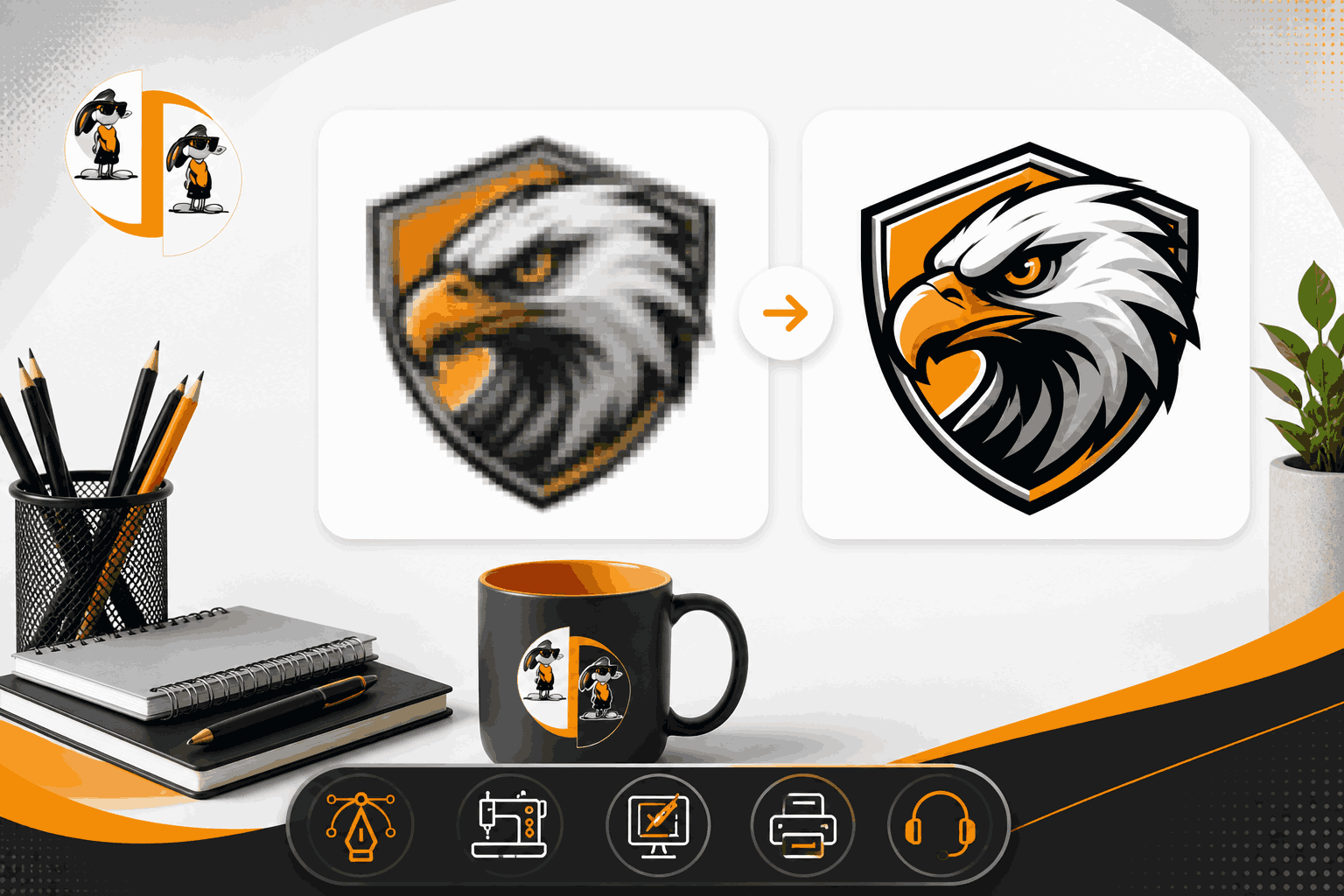
Many businesses struggle with blurry logos, poor print quality, and inconsistent branding because they still use low-resolution image files. A logo that looks acceptable on a mobile screen may become pixelated and distorted when printed on banners, uniforms, packaging, or promotional materials.
This problem affects branding, customer trust, and production quality.
That’s why Professional Logo Vectorization Services are essential for modern businesses.
Professional vectorization converts pixel-based artwork into scalable vector graphics that remain sharp and clean at every size. These files are used for printing, embroidery, signage, packaging, and digital marketing.
Understanding the vectorization process helps businesses choose better services and avoid low-quality results. In this guide, you’ll learn the complete step-by-step process of professional logo vectorization and why it plays an important role in branding and production quality.
What Are Professional Logo Vectorization Services?
Professional Logo Vectorization Services involve converting raster logo files into scalable vector graphics using professional design software.
Raster files include:
-
JPG
-
PNG
-
GIF
-
BMP
These image types use pixels. When resized, they lose quality and become blurry.
Vector graphics work differently because they are created using:
-
Paths
-
Curves
-
Shapes
-
Mathematical coordinates
This allows vector logos to remain:
-
Sharp
-
Scalable
-
Editable
-
Print-ready
Common Vector File Formats
Professional vectorization services usually provide:
-
AI
-
EPS
-
SVG
-
PDF
These formats are suitable for:
-
Embroidery
-
Printing
-
Packaging
-
Vehicle wraps
-
Websites
-
Advertising materials
Why Manual Vectorization Matters
Professional vectorization is not automatic tracing.
Experienced designers manually recreate:
-
Shapes
-
Typography
-
Curves
-
Icons
-
Colors
Manual work creates cleaner and more accurate results compared to automatic software.
Why the Vectorization Process Matters
Understanding the process helps businesses appreciate the value of professional vector artwork.
Better Print Quality
Vector graphics ensure:
-
Sharp edges
-
Smooth curves
-
Clean details
This improves:
-
Embroidery quality
-
Screen printing
-
Packaging
-
Signage
Stronger Branding Consistency
Vector logos maintain consistent quality across:
-
Websites
-
Social media
-
Uniforms
-
Marketing materials
Easier Future Editing
Vector files allow designers to:
-
Resize logos
-
Change colors
-
Modify layouts
-
Create alternate versions
Long-Term Cost Savings
Professional vector files reduce:
-
Printing errors
-
Production mistakes
-
Reprints
-
Design corrections
Step-by-Step Process of Professional Logo Vectorization
Professional vectorization follows a structured workflow to ensure accuracy and quality.
Step 1: Reviewing the Original Logo
The designer analyzes:
-
Image quality
-
Resolution
-
Typography
-
Shapes
-
Complexity
This determines the best vectorization approach.
Step 2: Importing the Raster File
The original logo is imported into vector software such as Adobe Illustrator.
The designer prepares the artwork for manual recreation.
Step 3: Manual Shape Recreation
Shapes and curves are manually redrawn using vector paths.
This includes:
-
Icons
-
Borders
-
Symbols
-
Design elements
Manual tracing creates smooth and clean results.
Step 4: Typography Recreation
Text elements are recreated for:
-
Better readability
-
Cleaner curves
-
Accurate spacing
This step is important for maintaining brand consistency.
Step 5: Color Matching
Professional designers match colors using:
-
RGB
-
CMYK
-
Pantone systems
This ensures color consistency across print and digital platforms.
Step 6: Path Optimization
Curves and lines are refined to improve:
-
Scalability
-
Smoothness
-
Printing quality
Messy or unnecessary points are removed.
Step 7: Layer Organization
Design elements are organized into layers for easier editing and production use.
Step 8: Exporting Vector Files
Final files are exported into:
-
AI
-
EPS
-
SVG
-
PDF
Different industries require different formats.
Step 9: Quality Testing
The logo is tested at multiple sizes to ensure:
-
Sharpness
-
Accuracy
-
Scalability
This guarantees professional-quality output.
Expert Tips for Better Vector Logos
Following these professional tips can improve final results.
Use High-Resolution Source Files
Higher-quality source images create more accurate vectors.
Keep Logos Clean and Simple
Simple logos:
-
Scale better
-
Print cleaner
-
Work better for embroidery
Choose Manual Vectorization
Manual tracing provides:
-
Cleaner lines
-
Better curves
-
More accurate details
Save Multiple File Formats
Always request:
-
AI
-
EPS
-
SVG
-
PDF
This provides flexibility for future use.
Test Before Production
Always test logos before:
-
Printing
-
Embroidery
-
Packaging production
This helps avoid costly mistakes.
Common Mistakes Businesses Make
Many companies damage branding quality through avoidable mistakes.
Using Low-Quality Source Images
Tiny PNG files often create poor vectorization results.
Relying on Automatic Software
Auto-tracing tools frequently create:
-
Jagged edges
-
Poor typography
-
Inaccurate curves
Choosing Cheap Services
Low-cost providers often sacrifice quality.
Ignoring Production Requirements
Different industries require specific file preparation.
Not Saving Editable Files
Without editable vectors, future updates become difficult.
Real Examples and Case Studies
Apparel Brand Example
A clothing business upgraded its old logo through professional vectorization.
Results included:
-
Better embroidery quality
-
Cleaner printing
-
Improved branding consistency
Restaurant Business Example
A restaurant replaced its blurry logo with vector artwork.
Results included:
-
Sharper menus
-
Better signage
-
Stronger customer trust
These examples show how vectorization improves production quality and branding.
Conclusion
Professional branding requires clean and scalable logo artwork. Low-resolution images often create problems with printing, embroidery, and marketing materials.
That’s why Professional Logo Vectorization Services are important for businesses that want high-quality branding and production results.
From sharper printing and better embroidery to stronger brand consistency, professional vectorization provides long-term value and flexibility.
Understanding the step-by-step process helps businesses make better decisions and choose higher-quality services.
Whether you need artwork for websites, uniforms, packaging, or signage, vector graphics help your business maintain a polished and professional image across every platform.
👉 Upgrade your logo today with professional vectorization services and improve your brand quality everywhere.
FAQs
1. What are professional logo vectorization services?
Professional logo vectorization services convert raster logos into scalable vector graphics suitable for printing, embroidery, and branding.
2. Why is manual vectorization better than auto-tracing?
Manual vectorization creates cleaner curves, sharper typography, and more accurate artwork than automatic software.
3. What file formats are used for vector logos?
Common vector formats include:
-
AI
-
EPS
-
SVG
-
PDF
4. Can old or blurry logos be vectorized?
Yes. Professional designers can recreate old or low-quality logos into clean vector artwork.
5. Why are vector logos important for printing and embroidery?
Vector logos improve printing quality, embroidery stitching accuracy, and branding consistency across all platforms.

 Arabic
 French
 Spanish
 Portuguese
 Deutsch
 Turkish
 Dutch
Dutch
 Italiano
 Russian
 Romaian
 Portuguese (Brazil)
 Greek
Greek
