


How to Create Safe Parking Areas That Reduce Workplace Accidents
How to Create Safe Parking Areas That Reduce Workplace Accidents
Every workplace has movement. Employees arrive in cars, delivery vehicles enter loading zones, contractors park heavy equipment, and visitors move through unfamiliar spaces. In busy facilities, parking areas often become one of the most overlooked safety risks. A poorly designed parking zone can lead to collisions, slips, pedestrian injuries, and property damage within seconds.
Many organizations focus heavily on internal operational safety but underestimate the dangers that exist outside the main building. Yet parking lots are often the first and last places employees interact with during the workday. Creating a safer environment in these areas requires planning, visibility, traffic control, and employee awareness.
Professionals studying workplace safety frequently encounter these risks while researching broader safety systems and training pathways. During this process, many learners also compare factors such as the NEBOSH Course Fee when selecting a professional qualification that helps them understand hazard identification, risk assessment, and workplace traffic management more effectively.
Why Are Parking Areas High-Risk Zones?
Parking areas combine vehicles, pedestrians, changing weather conditions, and limited attention spans. Unlike controlled production environments, parking lots often lack supervision and structured movement systems.
A worker walking toward the entrance may check their phone while reversing vehicles move nearby. A delivery driver may park temporarily in an unsafe spot because loading areas are unclear. During rain, faded markings and poor drainage can increase slip hazards.
These small issues often combine into larger incidents.
Workplace Parking Hazards
Some of the most frequent risks include:
-
Reversing vehicle collisions
-
Pedestrian impact incidents
-
Poor lighting during night shifts
-
Blind corners and blocked visibility
-
Uneven walking surfaces
-
Inadequate signage
-
Congested traffic flow
-
Unsafe speed inside premises
-
Poor separation between vehicles and pedestrians
Even workplaces with excellent internal safety procedures can experience preventable accidents if parking safety is ignored.
The Role of Parking Design in Accident Prevention
A safe parking area starts with thoughtful design rather than reactive corrections after incidents occur.
Good design reduces confusion. It guides movement naturally and minimizes the chances of human error.
1. Separate Vehicles and Pedestrians
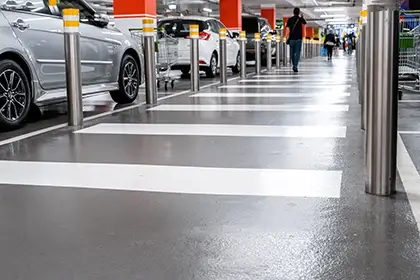
One of the most effective strategies is separating walking paths from driving lanes. Pedestrians should never compete with moving vehicles for the same space.
Clearly marked walkways help employees move safely from parking spaces to entrances. Raised walkways or painted pedestrian lanes improve visibility and reduce unexpected crossing.
For example, a warehouse in Karachi reduced near-miss incidents after introducing painted pedestrian paths with reflective barriers near loading zones. Workers no longer crossed randomly between parked trucks.
2. Improve Visibility
Visibility problems contribute to many parking accidents.
Organizations should assess:
-
Lighting coverage during evening shifts
-
Blind spots near corners
-
Obstructions caused by parked vehicles
-
Visibility during rain or fog
Convex mirrors at sharp turns can help drivers detect approaching vehicles or pedestrians. Reflective signs and bright markings also improve visibility in low-light conditions.
3. Use Clear Traffic Direction Systems
Confusing traffic movement creates unnecessary risk.
A simple one-way traffic system can significantly reduce reversing and head-on conflicts. Directional arrows, stop signs, and speed limit markings should remain visible at all times.
Consistency matters. If drivers can predict movement patterns, they react more safely.
4. Speed Control Measures That Actually Work
Many workplace drivers assume parking lots are low-risk environments. This often leads to speeding or careless reversing.
Reducing speed is one of the simplest ways to lower injury severity.
5. Effective Speed Reduction Methods
Organizations can introduce:
-
Speed bumps near crossings
-
Rumble strips before intersections
-
Posted speed limits
-
Flashing warning lights
-
Entry barriers near pedestrian zones
However, speed control should remain practical. Excessive bumps or poorly placed barriers may frustrate drivers and create new hazards.
A manufacturing facility once installed several aggressive speed breakers in a narrow parking lane. Drivers began swerving around them, increasing collision risk. After redesigning the layout with moderate speed control and clearer lane markings, traffic flow improved significantly.
Importance of Lighting and Weather Protection
Lighting affects both security and safety.
Dim parking lots increase the chances of trips, falls, vehicle impact, and criminal activity. Employees leaving late shifts may struggle to identify potholes, curbs, or moving vehicles.
Areas That Require Priority Lighting
Focus especially on:
-
Pedestrian crossings
-
Entry and exit points
-
Stairways
-
Loading zones
-
Security checkpoints
-
Weather conditions also influence safety.
Rainwater accumulation creates slippery conditions and hides surface damage. Proper drainage systems help prevent water pooling and reduce deterioration of parking surfaces.
In extremely hot climates, faded paint markings become another concern. Regular maintenance keeps directional signs visible and effective.
Parking Safety for Heavy Vehicles and Industrial Sites
Industrial workplaces face additional challenges because of forklifts, trailers, trucks, and heavy machinery.
These vehicles require larger turning spaces and have major blind spots.
Establish Dedicated Heavy Vehicle Zones
Heavy vehicles should operate separately from employee parking whenever possible.
Best practices include:
-
Dedicated truck lanes
-
Restricted pedestrian access
-
Controlled reversing zones
-
Spotters during maneuvering
-
Scheduled loading times
A logistics company experienced repeated near misses between forklifts and employee vehicles because both shared a narrow access route. After redesigning the traffic flow and separating industrial equipment routes, incident reports declined noticeably.
Reverse Parking Policies
Some organizations require reverse parking for employee vehicles. This allows safer forward exits and improves visibility during departure.
Although employees may initially resist the change, proper awareness training often improves compliance.
The Human Factor in Parking Area Accidents
Even perfectly designed parking areas can become unsafe if workers ignore procedures.
Human behavior remains one of the largest contributing factors.
Common Unsafe Behaviors
Examples include:
-
Using mobile phones while walking
-
Speeding through parking zones
-
Ignoring designated walkways
-
Parking in unauthorized areas
-
Reversing without checking surroundings
Workplaces should address these behaviors through awareness campaigns rather than punishment alone.
Simple reminders can make a major difference.
Posters near entrances, toolbox talks, and short safety briefings help reinforce expectations regularly.
Conduct Regular Parking Area Risk Assessments
Parking safety is not a one-time project.
Conditions change over time due to weather, construction, increased staffing, or traffic growth.
Regular inspections help identify emerging hazards before incidents occur.
What to Include in a Parking Risk Assessment
A parking assessment should evaluate:
|
Inspection Area |
Key Questions |
|
Traffic Flow |
Are lanes clear and organized? |
|
Signage |
Are signs visible and understandable? |
|
Surface Condition |
Are there cracks, potholes, or slippery areas? |
|
Lighting |
Are all areas adequately illuminated? |
|
Pedestrian Safety |
Are walkways protected and marked? |
|
Emergency Access |
Can emergency vehicles enter easily? |
|
Visibility |
Are blind spots minimized? |
Involving employees during inspections often reveals practical concerns management may overlook.
For instance, workers may identify dangerous shortcuts frequently used during shift changes.
Emergency Preparedness in Parking Areas
Parking areas should also form part of emergency planning.
During evacuations, these spaces can quickly become chaotic if traffic movement is uncontrolled.
Emergency Planning Essentials
Organizations should establish:
-
Emergency assembly points
-
Clear evacuation routes
-
Vehicle access for emergency responders
-
Traffic control during incidents
-
Communication systems for large facilities
Security personnel and supervisors should understand their responsibilities during emergencies involving parking zones.
Technology That Improves Parking Safety
Modern workplaces increasingly use technology to reduce risks.
While technology cannot replace good planning, it can support safer operations.
Useful Safety Technologies
Examples include:
-
Motion sensor lighting
-
CCTV monitoring
-
Smart access barriers
-
Vehicle detection systems
-
Reversing alarms
-
Digital visitor management
Some large facilities also use AI-assisted camera systems to identify unsafe driving patterns or pedestrian conflicts.
However, technology should support human awareness rather than replace it.
Building a Strong Parking Safety Culture
Policies alone do not create safer workplaces. Culture does.
Employees are more likely to follow parking rules when leadership consistently prioritizes safety.
Ways to Strengthen Safety Culture
Organizations can:
-
Include parking safety in induction training
-
Discuss incidents openly during meetings
-
Encourage hazard reporting
-
Reward safe driving behavior
-
Review near misses regularly
Managers should also lead by example. Employees notice when supervisors ignore parking rules or speed limits.
Consistency builds trust and accountability.
The Importance of Safety Training and Professional Learning
Many workplace incidents occur because hazards are not properly recognized early enough.
Professional safety education helps supervisors, managers, and workers understand how to identify risks systematically and implement practical controls.
Courses focused on occupational health and safety often cover traffic management, workplace inspections, incident investigation, and risk assessment techniques. When learners explore professional development options, they frequently compare institutes, teaching quality, and learning structures related to NEBOSH in Pakistan to determine which pathway best supports their career goals and practical understanding of workplace safety systems.
The value of structured learning becomes especially clear in industries where vehicle movement, contractor access, and industrial transport create constant interaction between people and machinery.
FAQs
What causes most parking area workplace accidents?
Most incidents occur due to poor visibility, speeding, distracted walking, reversing vehicles, and unclear traffic management systems.
How can workplaces improve pedestrian safety in parking lots?
Organizations can create marked walkways, improve lighting, install barriers, and separate pedestrian routes from vehicle lanes.
Why is lighting important in workplace parking areas?
Good lighting improves visibility, reduces slip and trip hazards, helps drivers detect pedestrians, and supports overall security.
Should workplaces conduct parking area inspections regularly?
Yes. Regular inspections help identify hazards such as damaged surfaces, faded markings, blocked visibility, or traffic congestion before accidents occur.
Are speed bumps effective in reducing parking lot accidents?
When properly designed and positioned, speed bumps can help reduce vehicle speed and lower collision risks in high-pedestrian areas.
What role does employee behavior play in parking safety?
Employee behavior significantly affects safety outcomes. Distractions, unsafe parking habits, and ignoring traffic rules can increase accident risks even in well-designed parking areas.
Conclusion
Safe parking areas are an essential part of workplace safety management. They protect employees, visitors, contractors, and drivers from preventable harm while improving overall site organization and awareness.
Simple measures such as clear signage, pedestrian separation, proper lighting, controlled traffic flow, and regular inspections can dramatically reduce workplace accidents. More importantly, organizations that treat parking safety seriously create a stronger overall culture of responsibility and hazard awareness.
As workplaces continue evolving, parking areas should never remain an afterthought. A safer arrival and departure experience often reflects a company’s wider commitment to protecting people throughout the entire workday.

 English
 Arabic
 French
 Spanish
 Portuguese
 Deutsch
 Dutch
Dutch
 Italiano
 Russian
 Romaian
 Portuguese (Brazil)
 Greek
Greek
