


A Complete Guide to Paramedical Courses and Career Opportunities
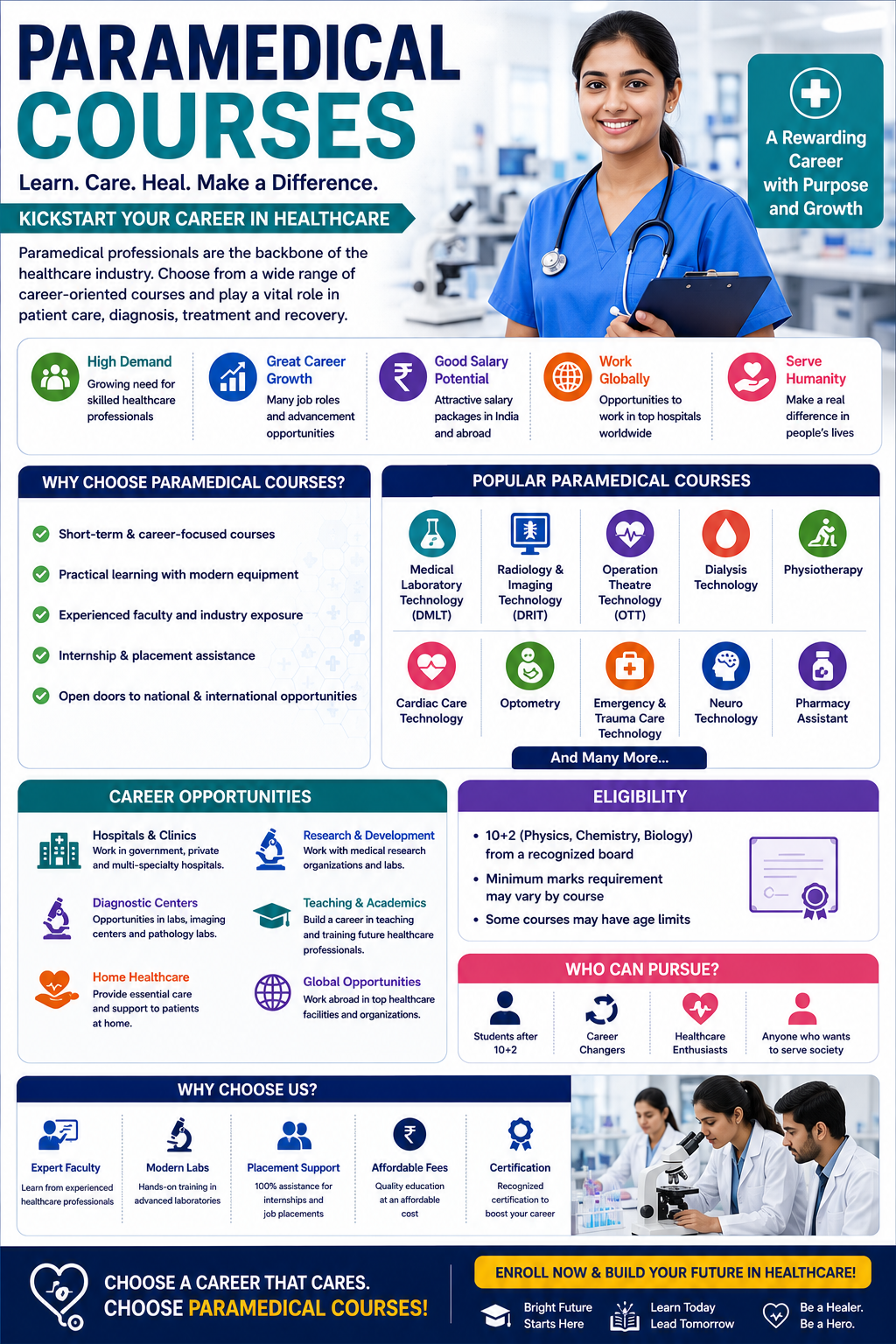
Healthcare systems around the world rely on far more than doctors and nurses to function effectively. A wide range of trained professionals work behind the scenes and alongside clinical staff to support diagnosis, treatment, and patient care. For students interested in entering the healthcare field without pursuing a traditional medical degree, this growing category of study programs offers a practical and often faster path into the industry. This guide explains what these programs typically cover, the career paths they lead to, and what students should consider when choosing the right one for their goals.
What This Field of Study Covers
Professional Paramedical Courses broad category includes a wide range of specialized training programs designed to prepare students for supportive and technical roles within healthcare settings. Common areas of study include radiography, medical laboratory technology, physiotherapy, operation theater technology, dialysis technology, optometry, and anesthesia technology, among others. Rather than focusing on general medical education, these programs are built around a specific technical or clinical skill set, allowing students to enter the workforce with focused, job-ready expertise. Programs vary in length, typically ranging from one to three years depending on the specialization and level of certification pursued.
Why Students Choose This Path
Many students are drawn to this route because it offers a quicker and often more affordable entry into healthcare compared to a full medical or nursing degree. These programs tend to combine classroom instruction with substantial hands-on clinical training, giving students practical exposure to real patient care environments well before graduation. This hands-on component helps students build confidence and competence in their chosen specialty, making them job-ready almost immediately after completing their studies. Additionally, the healthcare industry's ongoing shortage of trained technical staff means graduates in these fields often face strong, consistent demand.
Popular Specializations to Consider
Radiography and medical imaging programs train students to operate diagnostic equipment such as X-ray, CT, and MRI machines, playing a critical role in disease diagnosis and treatment planning. Medical laboratory technology programs prepare students to conduct diagnostic tests on blood, tissue, and other samples, supporting physicians in identifying and monitoring illness. Physiotherapy-focused programs, meanwhile, train students to help patients recover mobility and manage pain following injury, surgery, or chronic conditions. Operation theater technology programs prepare students to assist surgical teams by managing equipment and maintaining a sterile environment during procedures, while dialysis technology programs focus specifically on operating and maintaining the equipment used to treat patients with kidney failure. Each of these specializations offers a distinct career trajectory, and prospective students should research the day-to-day responsibilities of each role before committing to a program.
What to Look for in a Quality Program
When evaluating different paramedical courses, students should prioritize programs that are properly accredited by relevant healthcare or educational authorities, since accreditation often affects eligibility for licensure and future employment. A strong curriculum should balance theoretical coursework with substantial clinical or laboratory training, ideally including a supervised internship or practicum at a hospital or diagnostic center. It is also worth researching the qualifications of the faculty, the condition of laboratory and training facilities, and whether the institution has established partnerships with hospitals or clinics for practical placement opportunities. Programs with strong placement support and industry connections can make a meaningful difference when it comes to securing a first job after graduation.
Admission Requirements and Eligibility
Eligibility requirements vary depending on the specific specialization and level of certification, but most programs require completion of secondary education, often with a background in science subjects such as biology, chemistry, or physics. Some advanced or specialized programs may require additional coursework or a minimum academic score for admission. Prospective students should carefully review the eligibility criteria for their specific area of interest, since certain specializations, such as anesthesia technology or advanced imaging, may have more rigorous entry requirements compared to general laboratory or assistant-level programs.
Career Outlook After Graduation
Graduates of these training programs typically find employment in hospitals, diagnostic centers, private clinics, and specialized treatment facilities. Many roles offer opportunities for career advancement through additional certification, specialization, or further education, allowing professionals to move into supervisory, teaching, or more advanced clinical positions over time. The demand for skilled technical healthcare professionals continues to grow alongside expanding healthcare infrastructure, making this an increasingly stable and rewarding career path for those who complete the right training.
Final Thoughts
This field offers a practical, focused pathway into the healthcare industry for students who want meaningful, hands-on careers without pursuing a traditional medical degree. By carefully researching program accreditation, curriculum quality, and clinical training opportunities, students can choose a specialization that aligns with their interests and sets them up for long-term success. Whether your interest lies in diagnostic imaging, laboratory science, or patient rehabilitation, pursuing the right paramedical courses can open the door to a stable and fulfilling career within the broader healthcare field.

 Arabic
 French
 Spanish
 Portuguese
 Deutsch
 Turkish
 Dutch
Dutch
 Italiano
 Russian
 Romaian
 Portuguese (Brazil)
 Greek
Greek
