


How Meta-Framework Stability Enables Faster, Smarter Web Development Services
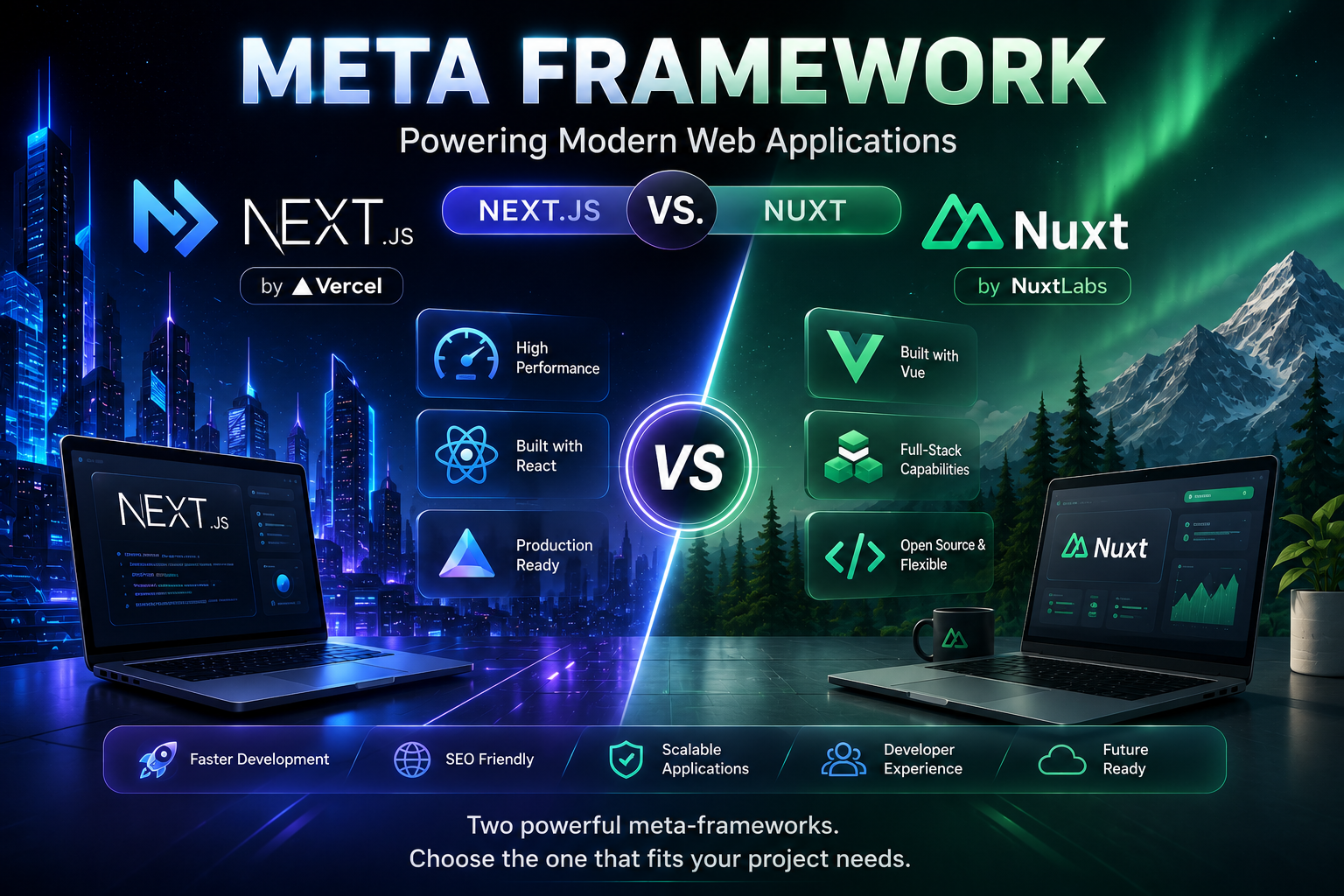
Understanding Meta Frameworks and Their Importance in Web Development
Meta-frameworks are built on top of existing frameworks, providing a layer of abstraction that simplifies development processes. They enable developers to leverage the strengths of multiple frameworks while streamlining workflows, making them an essential choice for delivering modern web development services.
By understanding meta-frameworks, developers can build scalable, secure, and high-performing custom web applications that are easier to maintain and update. This approach helps development teams deliver reliable services that meet evolving business requirements while ensuring better performance, flexibility, and long-term scalability.
Stability in meta frameworks directly influences the performance and reliability of web applications. A stable framework ensures that developers can rely on consistent behavior and predictable performance, reducing the likelihood of encountering bugs and issues during development.
How Meta-Frameworks Accelerate Modern Web Application Development
Meta-frameworks have transformed the way developers build modern web applications by offering a complete development ecosystem instead of just a frontend library. Solutions like Next.js for React and Nuxt for Vue come equipped with production-ready capabilities that eliminate much of the manual setup traditionally required for complex applications.
With built-in file-based routing, intelligent caching, API integration, image optimization, and support for server-side rendering (SSR) and static site generation (SSG), these frameworks enable teams to develop high-performance applications more efficiently. This streamlined approach reduces development time, minimizes configuration errors, and helps maintain consistent coding standards across projects.
Key Advantages of Meta-Frameworks in Modern Web Development
1.> Production-Ready Architecture: Meta-frameworks provide a structured foundation with built-in tools and best practices, reducing initial project setup time.
2.> Automatic File-Based Routing: Developers can create application routes based on the folder structure, eliminating the need for manual route configuration.
3.> Intelligent Caching: Built-in caching mechanisms improve page loading speed, reduce server requests, and enhance overall application performance.
Integrated API Support: Create and manage backend APIs within the same project, enabling seamless communication between frontend and backend components.
4.> Server-Side Rendering (SSR) & Static Site Generation (SSG): Deliver faster page loads, improve SEO performance, and provide a better user experience through optimized rendering methods.
5.> Performance Optimization: Features such as automatic code splitting, image optimization, lazy loading, and asset compression help achieve excellent Core Web Vitals.
6.> Enhanced Developer Productivity: Hot module replacement, simplified configuration, and automated workflows allow developers to focus on building features instead of managing infrastructure.
7.> Scalable and Maintainable Applications: Modular architecture and standardized project structures make applications easier to scale, update, and maintain over time.
8.> Future-Ready Web Development: Meta-frameworks support modern deployment platforms, cloud environments, and evolving web standards, making them an ideal choice for building secure, high-performance custom web applications.
Next.js vs. Nuxt: Choosing the Right Meta-Framework for Modern Web Development
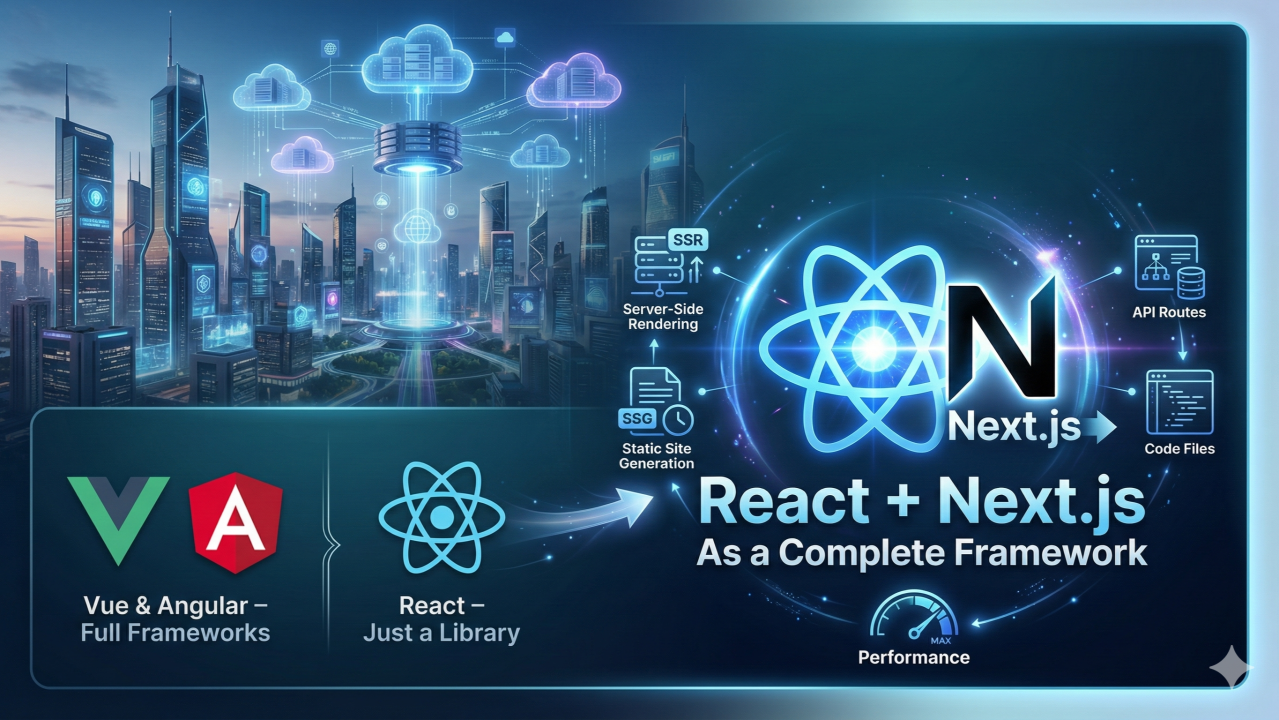
Meta-frameworks have become the preferred choice for building scalable web apps and high-performance web applications. While Next.js is built on React, Nuxt extends the Vue.js ecosystem with powerful production-ready capabilities. Both frameworks simplify development by providing built-in routing, server-side rendering (SSR), static site generation (SSG), API integration, and performance optimizations. These features make them ideal for creating modern business web solutions that are secure, fast, and easy to maintain. However, each framework has unique strengths, making it suitable for different project requirements and long-term scalability.
|
Feature |
Next.js (React) |
Nuxt (Vue) |
|
1.> Framework Base |
Built on React |
Built on Vue.js |
|
2.> Learning Curve |
Moderate to Advanced |
Beginner to Intermediate |
|
3.> Routing |
Automatic file-based routing |
Automatic file-based routing |
|
4.> Server-Side Rendering (SSR) |
Excellent support with React Server Components |
Native SSR support with Vue |
|
5.> Static Site Generation (SSG) |
Supported using App Router and Static Export |
Supported through Nuxt Generate |
|
6.> API Development |
Built-in API Routes and Route Handlers |
Server API powered by Nitro |
|
7.> Performance |
Excellent Core Web Vitals and streaming support |
Fast rendering with optimized hydration |
|
8.> SEO |
Outstanding SEO with SSR, SSG, and metadata management |
Excellent SEO with built-in head management |
|
9.> Image Optimization |
Automatic image optimization component |
Nuxt Image module |
|
10.> Developer Experience |
Large ecosystem, extensive third-party libraries |
Simpler syntax and convention-based development |
|
11.> Enterprise Adoption |
Widely used by startups and large enterprises |
Popular among Vue-focused organizations |
|
12.> Best For |
Large-scale enterprise platforms, SaaS products, eCommerce, dashboards |
Content-driven websites, business portals, Vue applications, marketing sites |
How to Choose the Right Web & Mobile App Development Company: Proven Tips
Selecting the right web and mobile app development company is a critical decision that can significantly impact your project's success. Beyond technical expertise, look for a partner with a strong portfolio, transparent communication, scalable development practices, and proven expertise in delivering web application services. Evaluating these key factors will help you choose a reliable technology partner capable of providing web and mobile application development solutions that transform your vision into a secure, high-performing, and future-ready application.
1. Evaluate the Company's Portfolio and Industry Experience
-
Review the company's previous projects and success stories.
-
Check whether they have experience in your industry or business domain.
-
Analyze the quality, functionality, and performance of their delivered applications.
-
Assess whether they offer IT resource augmentation services to help businesses quickly access skilled professionals for specialized project needs.
-
Consider their expertise in IT team augmentation to ensure they can seamlessly scale your development team as your project grows.
2. Assess Technical Expertise Across Modern Technologies
-
Ensure proficiency in modern frameworks like React, Next.js, Angular, Vue.js, Flutter, and React Native.
-
Verify backend expertise in technologies such as Node.js, .NET, Python, or Java.
-
Evaluate their knowledge of cloud platforms, DevOps, AI, and database management.
-
Choose a company capable of building secure, scalable, and future-ready applications.
3. Verify UI/UX Design and Product Development Capabilities
-
Review their design portfolio and product prototypes.
-
Ensure they follow user-centered design principles.
-
Check whether they create intuitive, responsive, and engaging user interfaces.
-
Strong UI/UX enhances customer satisfaction and product adoption.
4. Review Client Testimonials, Ratings, and Case Studies
-
Read verified client reviews on trusted platforms.
-
Analyze detailed case studies and measurable project outcomes.
-
Look for long-term client relationships and repeat business.
-
Positive feedback demonstrates credibility and reliability.
5. Understand Their Development Process and Communication
-
Ask about their development methodology (Agile, Scrum, or Kanban).
-
Ensure regular project updates and milestone reviews.
-
Verify the use of collaboration tools like Jira, Slack, or Trello.
-
Transparent communication helps reduce project risks.
6. Check Scalability, Security, and Quality Assurance Practices
-
Ensure the company follows secure coding standards.
-
Verify comprehensive testing, including functional, performance, and security testing.
-
Assess their ability to build scalable application architectures.
-
Quality assurance ensures a stable and reliable product.
7. Ensure Transparent Pricing and Project Timelines
-
Request a detailed project estimate and cost breakdown.
-
Understand the pricing model (fixed cost, hourly, or dedicated team).
-
Confirm realistic project timelines and milestone-based delivery.
-
Transparency helps avoid hidden costs and unexpected delays.
8. Confirm Post-Launch Support and Maintenance Services
-
Check if they provide ongoing maintenance and technical support.
-
Ensure regular security updates and bug fixes.
-
Verify their process for performance monitoring and feature enhancements.
-
Continuous support keeps your application optimized over time.
9. Evaluate Team Collaboration and Project Management Approach
-
Assess the experience of developers, designers, QA engineers, and project managers.
-
Verify collaboration across cross-functional teams.
-
Check project tracking and reporting mechanisms.
-
Effective teamwork leads to faster and higher-quality project delivery.
10. Verify Intellectual Property Protection and NDA Policies
-
Ensure they sign a Non-Disclosure Agreement (NDA).
-
Confirm that the source code and project assets remain your property.
-
Review their data privacy and confidentiality practices.
-
Strong legal protection safeguards your business ideas and intellectual property.
11. Choose a Technology Partner Focused on Long-Term Business Growth
-
Select a company that understands your business objectives.
-
Look for strategic guidance beyond software development.
-
Ensure they can scale your application as your business grows.
-
A long-term technology partner contributes to sustained innovation and digital success.
Conclusion
As modern web applications continue to evolve, choosing the right meta-framework is no longer just a technical decision—it is a strategic investment in performance, scalability, and long-term maintainability. Both Next.js and Nuxt provide production-ready capabilities such as server-side rendering, static site generation, intelligent routing, caching, and API integration, enabling development teams to build secure and high-performing applications with greater efficiency. Partnering with a custom web app development consultancy firm or a professional website design company ensures businesses can leverage these technologies to build scalable, future-ready digital solutions that support long-term growth.

 English
 Arabic
 French
 Spanish
 Portuguese
 Deutsch
 Turkish
 Dutch
Dutch
 Russian
 Romaian
 Portuguese (Brazil)
 Greek
Greek
