


Stem Cell Therapy for Knees: A Complete Guide for Patients Considering Non-Surgical Options
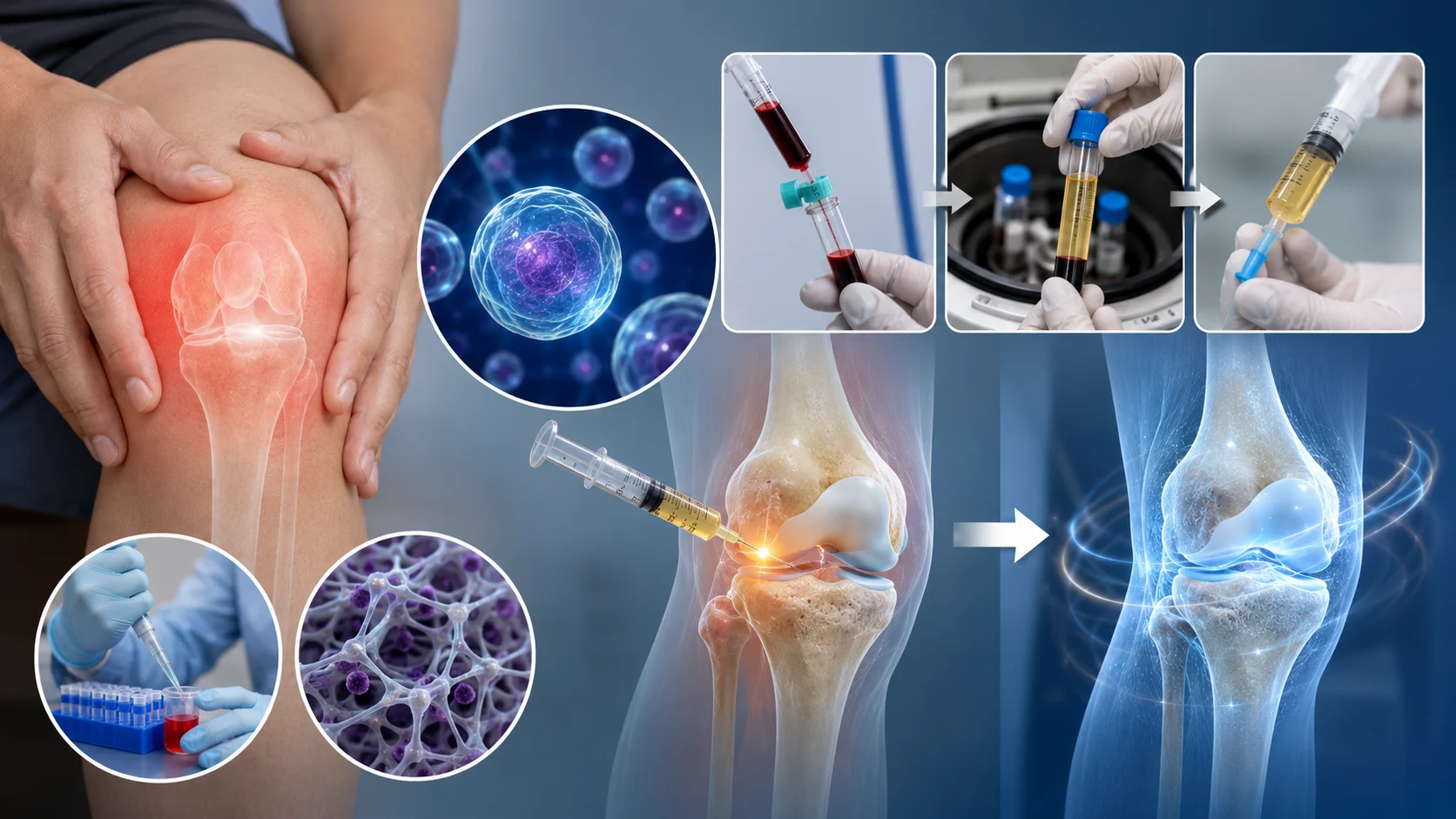
Knee pain has a way of quietly taking over daily life — stairs become harder, walks get shorter, and simple movements start to feel like a calculated decision. For many people who have already tried physical therapy, medication, or cortisone shots without lasting relief, stem cell therapy for knees has become one of the more talked-about alternatives to surgery. Before deciding whether it's worth exploring, it helps to understand what the treatment actually involves.
What Stem Cell Therapy for Knees Actually Does
At a basic level, this treatment involves injecting concentrated stem cells directly into the knee joint. These are typically mesenchymal stem cells (MSCs), sourced from a patient's own bone marrow or fat tissue, or in some cases from donor umbilical cord tissue. Once inside the joint, these cells work in a few different ways: they release growth factors that support tissue repair, they help calm the inflammation that drives pain and swelling, and in some cases they may support the formation of new cartilage-producing cells.
It's a minimally invasive, outpatient procedure — no hospital stay, no general anesthesia in most cases, and a much shorter downtime than traditional knee surgery.
Who Tends to Benefit Most
Not every knee condition responds the same way to this treatment. It tends to work best for patients with mild to moderate osteoarthritis, cartilage damage where some healthy tissue still remains, or meniscus wear that hasn't progressed too far. Patients with completely bone-on-bone joints — where cartilage has worn away entirely — generally see more limited results, since there's less structural tissue left for the cells to support.
In other words, stem cell therapy works best as an early-to-mid intervention, not a last resort after the joint has fully deteriorated.
The Three Common Cell Sources
Clinics generally draw from one of three sources:
Bone Marrow Aspirate Concentrate (BMAC): Harvested from the patient's own pelvis, then concentrated before injection. Because it's autologous (from the patient's own body), rejection risk is very low, and it remains one of the most studied approaches in orthopedic care.
Adipose-Derived Stem Cells: Collected from fat tissue via a minor liposuction-style procedure. Fat tissue is rich in usable stem cells, and some recent research suggests slightly stronger outcomes compared to bone-marrow-derived cells in certain patient groups.
Umbilical Cord Tissue MSCs: A donor-based (allogeneic) option, known for strong anti-inflammatory properties and the convenience of not requiring a harvesting procedure. Long-term outcome data on this source is still developing.
What Actually Happens During Treatment
The process generally follows a predictable path: consultation and imaging to confirm candidacy, cell harvesting (same day for most autologous procedures), lab processing to concentrate the cells, and finally an ultrasound-guided injection into the knee itself — usually completed within about an hour. Mild soreness and swelling for a few days afterward is normal, with most patients back to light activity within a week.
What the Research Actually Shows
This isn't just anecdotal. A meta-analysis covering 35 studies and over 2,300 patients found meaningful improvements in pain scores, physical function, and cartilage quality following MSC injections. Separate research places success rates — meaning improved function and reduced pain — between 60% and 85% in patients with mild-to-moderate osteoarthritis (Kellgren-Lawrence grades 2–3). That said, not every study shows dramatic results; at least one Phase 1 trial found no significant difference from a saline injection, which underscores how much patient selection and protocol quality matter.
Cost and Timeline Expectations
Pricing varies by clinic, cell source, and geography, but most patients should expect somewhere in the range of $7,000–$10,000 per knee, with some advanced protocols running higher. Because the treatment isn't FDA-approved as a standalone knee osteoarthritis therapy, it's typically not covered by insurance.
Results aren't instant. Most patients start noticing meaningful change between four and twelve weeks post-treatment, with continued improvement over six to twelve months. Relief generally lasts one to three years, sometimes longer in patients with less advanced joint damage.
Stem Cell Therapy vs. Knee Replacement
It's worth being clear about one thing: stem cell therapy is not a substitute for a knee replacement in cases of severe, end-stage arthritis. It's a regenerative option that may delay the need for surgery in appropriately selected patients — not a guaranteed alternative to it. Knee replacement remains the more predictable, longer-lasting solution for advanced joint damage, while stem cell therapy offers a less invasive path for people who aren't there yet.
Final Thoughts
Stem cell therapy for knees isn't a miracle cure, and it isn't right for everyone — but for patients with mild to moderate joint damage who want to explore options before committing to surgery, the research and real-world outcomes are genuinely encouraging. The most important step is an honest evaluation from a provider who can assess imaging, medical history, and realistic expectations before recommending a path forward.
For a more detailed technical breakdown of the procedure, patient candidacy, and current research, see this in-depth guide on stem cell therapy for knees from Conscious Medicine (Cmed Regen), a regenerative medicine clinic in Alpharetta, GA.

 English
 Arabic
 French
 Spanish
 Portuguese
 Deutsch
 Turkish
 Dutch
 Italiano
 Russian
 Romaian
 Portuguese (Brazil)
