


How Often Should You Get a Comprehensive Eye Exam?
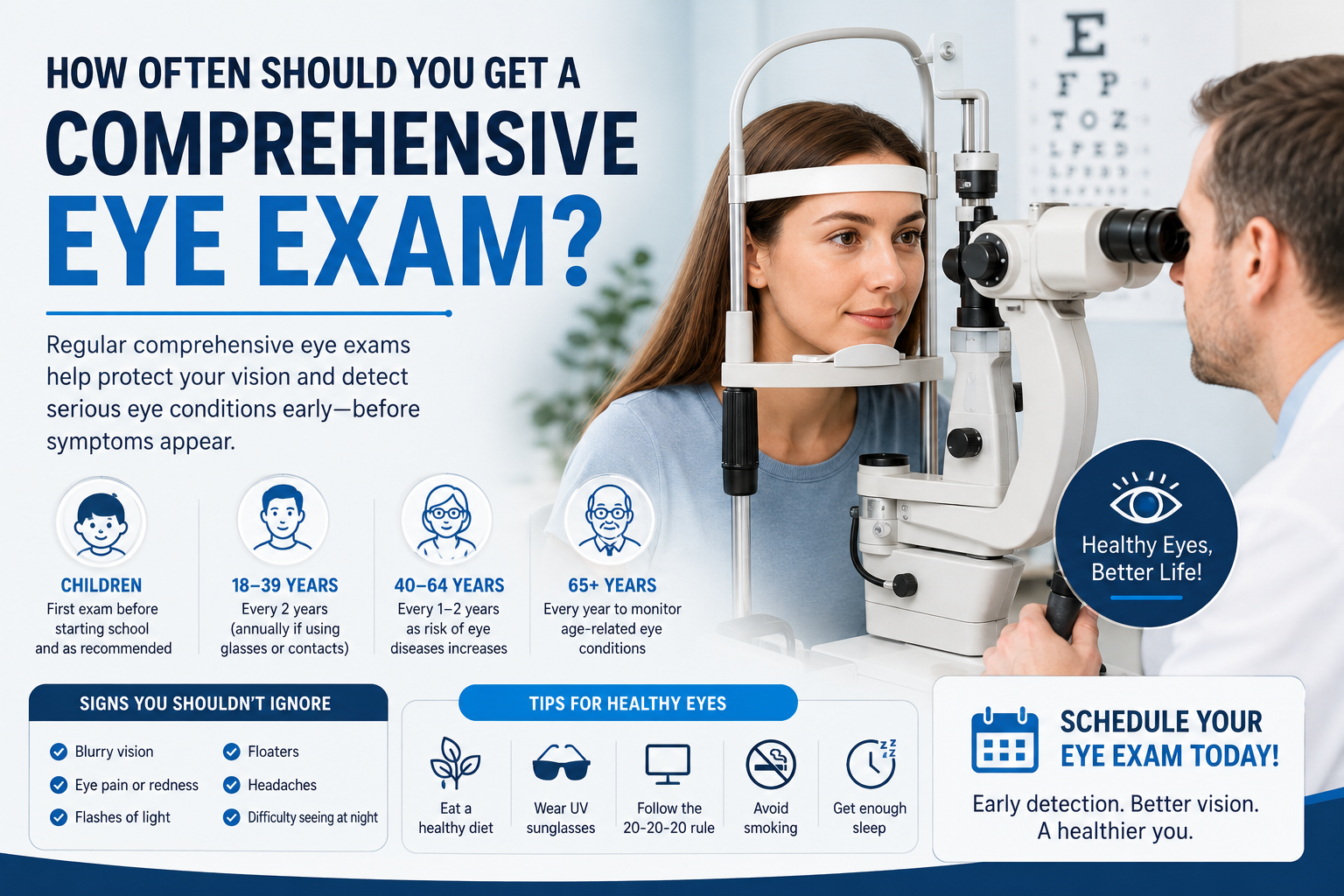
Your eyes play a vital role in your daily life, allowing you to work, drive, read, and enjoy the world around you. However, many people only think about visiting an eye doctor when they notice blurry vision or discomfort. The truth is that regular comprehensive eye exams are essential for maintaining healthy vision and detecting eye diseases before symptoms appear. Knowing how often you should schedule an eye exam can help protect both your eyesight and your overall health.
What Is a Comprehensive Eye Exam?
A comprehensive eye exam is much more than a simple vision screening. It is a detailed evaluation of your eye health, visual acuity, and overall eye function. During the exam, an eye care professional checks for refractive errors, evaluates eye movement and coordination, measures eye pressure, and examines the retina and optic nerve.
These examinations can detect common vision problems such as nearsightedness, farsightedness, and astigmatism, while also identifying serious eye conditions like glaucoma, cataracts, diabetic retinopathy, and age-related macular degeneration.
Why Regular Eye Exams Matter
Many eye diseases develop gradually without noticeable symptoms in their early stages. By the time vision changes become obvious, permanent damage may have already occurred. Routine eye exams allow eye care professionals to identify problems early, making treatment more effective and helping preserve vision.
Additionally, your eyes can reveal signs of several systemic health conditions, including:
- Diabetes
- High blood pressure
- High cholesterol
- Autoimmune disorders
- Certain neurological conditions
Early detection can lead to timely medical intervention and better overall health outcomes.
How Often Should Adults Get a Comprehensive Eye Exam?
The recommended frequency depends on your age, health, and risk factors.
Children
Children should receive their first comprehensive eye exam before starting school or as recommended by their pediatrician or eye specialist. Regular eye exams help detect vision problems that may affect learning, reading, and development.
Adults Aged 18–39
Healthy adults with no vision problems or risk factors should generally have a comprehensive eye exam every two years. However, individuals who wear glasses or contact lenses may need annual visits to ensure their prescriptions remain accurate.
Adults Aged 40–64
After age 40, the risk of eye diseases begins to increase. Many eye care professionals recommend having a comprehensive eye exam every one to two years. This is also the age when people often experience presbyopia, a normal age-related condition that affects near vision.
Adults Aged 65 and Older
Older adults should have an eye exam every year. The likelihood of developing cataracts, glaucoma, and macular degeneration rises significantly with age, making regular monitoring essential.
Who Needs More Frequent Eye Exams?
Some individuals require more frequent eye examinations regardless of age. You may need annual or more frequent visits if you:
- Have diabetes
- Have high blood pressure
- Have a family history of glaucoma or other eye diseases
- Wear contact lenses
- Have experienced an eye injury
- Take medications that affect vision
- Have previously been diagnosed with an eye condition
Your eye care professional will recommend a personalized examination schedule based on your medical history and eye health.
What Happens During a Comprehensive Eye Exam?
A typical comprehensive eye exam includes several tests designed to evaluate your vision and eye health.
These may include:
- Vision testing
- Prescription assessment
- Eye pressure measurement
- Pupil examination
- Retinal evaluation
- Peripheral vision testing
- Color vision assessment
- Eye muscle function evaluation
Depending on your age and symptoms, your doctor may also perform retinal imaging or dilate your pupils for a more detailed examination of the back of the eye.
Signs You Should Schedule an Eye Exam Immediately
Even if your routine appointment is months away, certain symptoms should never be ignored. Seek professional evaluation if you experience:
- Sudden vision loss
- Persistent blurry vision
- Double vision
- Eye pain
- Flashes of light or floating spots
- Redness that does not improve
- Frequent headaches related to vision
- Difficulty seeing at night
Prompt diagnosis and treatment can prevent serious complications and permanent vision loss.
Tips for Maintaining Healthy Eyes
Along with regular eye exams, adopting healthy habits can support long-term eye health.
Some practical tips include:
- Eat a balanced diet rich in leafy greens and omega-3 fatty acids.
- Wear UV-protective sunglasses outdoors.
- Follow the 20-20-20 rule during prolonged screen use.
- Avoid smoking.
- Control diabetes and blood pressure.
- Wear protective eyewear during sports or hazardous work.
- Get enough sleep to reduce eye strain.
These simple lifestyle choices can significantly reduce the risk of developing vision problems.
Conclusion
A comprehensive eye exam is one of the most effective ways to protect your eyesight and detect health issues early. While healthy adults may only need exams every one or two years, children, seniors, and individuals with certain medical conditions often require more frequent evaluations. Regular visits to your eye care professional not only ensure clear vision but also help identify serious eye diseases before they cause irreversible damage. If you're looking for a trusted Optometrist in the Bronx, NY, scheduling routine eye exams with an experienced professional can help safeguard your vision and support your long-term eye health. Prioritizing regular eye exams today can help preserve your eyesight and improve your quality of life for years to come.

 English
 Arabic
 French
 Spanish
 Portuguese
 Deutsch
 Dutch
Dutch
 Italiano
 Russian
 Romaian
 Portuguese (Brazil)
 Greek
Greek
