


Comprehensive Field Guide to Thermal Optic Deployment and Game Tracking
Introduction to Modern Nighttime Tracking
Modern hunting requires precision, clarity, and reliability when tracking elusive game in low-light environments. Choosing the best thermal binoculars for hunting can dramatically alter your success rate in the field. Traditional glass optics often fail once dusk settles, leaving hunters blind to vital thermal signatures hidden within dense brush or shadows. Advanced thermal devices remove these visual barriers by capturing infrared radiation and translating it into a high-contrast digital display. Whether you are scanning wide-open pastures or thick timber, having a reliable dual-eyepiece viewing system ensures reduced eye strain and enhanced depth perception during extended scouting sessions.
As wildlife management practices evolve and hunting pressures increase, ethical harvesting demands immediate target identification and confirmation of game sex or rack size before pulling the trigger. Thermal observation tools provide a distinct advantage in this arena. By sensing body heat rather than relying on reflected ambient light, these instruments cut through camouflage, tall grass, and dark timber thickets where traditional binoculars fail entirely. Hunters can survey expansive hillsides in seconds, picking up tiny heat anomalies that indicate the presence of bedding deer, wild hogs, or predators long before those animals become aware of human presence.
Understanding Thermal Imaging Technology and Sensor Mechanics
How Infrared Sensors Detect Wildlife
At the core of any high-performance unit lies an uncooled focal plane array that measures minute temperature differences between an animal and its surrounding habitat. Modern thermal observation gear leverages this science to penetrate light fog, light foliage, and absolute darkness without requiring any external illumination. By utilizing color palettes such as white hot, black hot, and adjustable red highlights, hunters can quickly pinpoint movement across varied topography without losing track of their surroundings.
The physics behind thermal imaging relies on the fact that all objects with a temperature above absolute zero emit infrared energy. Advanced microbolometers capture this invisible radiation and convert it into electrical signals, which are then processed into the visual images viewed on the internal display screens. This process operates completely independent of visible light sources, meaning moonless nights, heavy overcast skies, or blinding dust storms do not impede your field of view when you employ thermal imaging binoculars for hunting during critical nighttime operations.
Evaluating Sensor Resolution and Sensitivity
Sensor specifications dictate how crisp your target appears at extended distances. Core metrics like pixel pitch (often 12$\mu m$) and thermal sensitivity (measured as NETD below 20mK) determine how effectively the optic separates a target from a cooling background. High-refresh-rate displays operating at 50Hz ensure smooth tracking of fast-moving game without image tearing or lag.
Furthermore, larger detector formats—such as 640x512 resolution cores—provide a wider field of view while retaining exceptional image clarity at higher digital magnifications. When paired with high-quality germanium objective lenses, these sensors capture maximum thermal energy, delivering sharp outlines of antlers, body mass, and leg movement even at extreme ranges. Understanding these core hardware components helps hunters select tools that perform reliably under harsh environmental conditions.
Evaluating Optics Performance and Technical Specifications
When outfitting your kit, understanding the gap between different product tiers is essential for balancing your budget with performance demands. Entry-level variants typically feature smaller lens diameters and lower detector resolutions, making them ideal for casual observers or close-range woodland stalking. Conversely, professional-grade platforms—such as advanced dual-tube systems—incorporate larger 50mm objective lenses, integrated laser rangefinders reaching up to 3000 meters, and high-definition OLED screens. These elite tools provide unmatched detection ranges and detailed target recognition necessary for serious wilderness expeditions, proving that understanding entry level vs professional thermal binoculars will make or break your purchasing decision.
Entry-level models usually utilize 384x288 resolution sensors paired with 25mm or 35mm lenses. While these specifications are more than sufficient for identifying larger animals within 500 meters in open terrain, they may lack the fine pixel density required to judge trophy quality at greater distances. On the other hand, professional units built for serious outfitters and long-range hunters feature 640x512 sensors, manual focus rings, and advanced image-processing algorithms that sharpen edges and suppress background noise. Evaluating your specific hunting style—whether stationary blind hunting, spot-and-stalk mountain expeditions, or night predator control—will guide your investment toward the appropriate tier of thermal technology.
Ergonomics, Battery Life, and Field Durability in Harsh Environments
Design and Comfort for Extended Scouting
Using a dual-tube configuration mirrors natural human vision, preventing the fatigue associated with squinting through a single-tube monocular for hours. Ergonomic interpupillary adjustments and tactile, glove-friendly buttons allow seamless operation during freezing night excursions. When scanning vast landscapes for hours on end, eye strain can severely degrade observational efficiency. Dual-eyepiece setups distribute visual input evenly across both eyes, creating a more immersive and comfortable viewing experience that mimics natural binocular vision.
In addition to visual comfort, physical weight distribution plays a crucial role during mobile hunts. Modern manufacturers utilize lightweight magnesium alloy or reinforced composite chassis to keep overall weight manageable, ensuring the device can be comfortably worn around the neck or packed securely in a chest harness during long hikes. Rubberized armor coatings provide a secure, non-slip grip even when hands are wet, cold, or wearing thick winter gloves.
Power Management and Weather Resistance
Field reliability depends heavily on robust build quality. Top-tier thermal units feature rugged rubber-armored housings protected by internal nitrogen purging to prevent fogging. Coupled with dependable rechargeable battery systems and IP66 weatherproofing ratings, these tools endure heavy rain, dust, and extreme temperature fluctuations without compromising internal circuitry or display integrity.
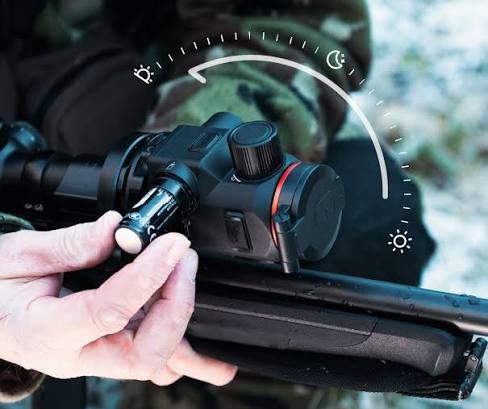
Battery life is a critical parameter during extended wilderness trips where electrical power sources are unavailable. High-capacity internal battery packs combined with swappable 18650 cells ensure continuous operation through sub-zero winter nights. Intelligent auto-off sleep sensors—which activate when the unit is lowered from the face—conserve battery power during inactive periods, maximizing total runtime in the field.
Integrating Thermal Optics into Your Strategic Hunting Workflow
Maximizing the utility of advanced thermal hardware requires disciplined field practices. Unlike traditional glassing, where hunters look for color contrast and movement, thermal scouting relies entirely on thermal signatures. Successfully integrating these tools involves combining wide-area thermal scanning with precise high-magnification optical verification.
When entering a new hunting area before dawn, operators should begin with a low-magnification, wide field-of-view setting to quickly sweep ridgelines, field edges, and tree lines. Once a heat signature is detected, zooming in or switching to a detailed color palette helps confirm the species and antler conformation. Mastering these operational techniques ensures hunters minimize unnecessary movement, maintain stealth, and capitalize on every opportunity presented during nocturnal or low-light expeditions.
Conclusion
Investing in quality thermal optics transforms how you navigate and interpret the nocturnal wilderness. By matching your specific terrain requirements with the right sensor resolution, lens size, and ergonomic design, you ensure absolute confidence on every expedition. Exploring options tailored to your hunting style will ultimately yield greater situational awareness, enhanced safety, and a more rewarding outdoor experience across all seasons.
Frequently Asked Questions
What makes dual-eyepiece thermal systems better than single monoculars?
Dual-eyepiece systems allow hunters to use both eyes simultaneously, which significantly reduces eye strain, improves depth perception, and offers a more natural, comfortable viewing experience over long hours of scanning.
Can thermal units operate effectively in complete daylight?
Yes, thermal devices detect heat signatures rather than visible light, meaning they function equally well in total pitch blackness, heavy fog, and bright daylight conditions.
How far can a professional thermal device detect a target?
High-end professional models equipped with large objective lenses and sensitive VOx sensors can detect human-sized or large animal heat signatures at distances stretching up to 3,000 meters.
Do these optical units support media recording?
Most modern high-performance thermal tools include built-in internal memory for capturing photos and videos with sound, alongside Wi-Fi connectivity for live streaming via mobile applications.
What maintenance do thermal housing units require?
Maintenance is minimal, requiring occasional lens cleaning with optical microfiber cloths and regular inspection of battery compartments and rubber seals to preserve weatherproofing integrity.

 English
 Arabic
 French
 Spanish
 Portuguese
 Turkish
 Dutch
Dutch
 Italiano
 Russian
 Romaian
 Portuguese (Brazil)
 Greek
Greek
