


MPO Fiber Cable: Benefits, Applications, Types, and Installation Guide
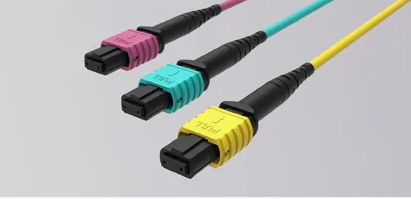
Modern data centers and enterprise networks require reliable infrastructure capable of handling increasing amounts of data while using physical space efficiently. As network speeds and equipment densities continue to increase, traditional point-to-point cabling can create congestion and make large installations difficult to manage. An MPO fiber cable addresses this challenge by combining multiple optical fibers into a single compact cable assembly. This multi-fiber approach can help organizations establish high-density connections while maintaining a more organized and scalable network architecture.
The demand for efficient fiber infrastructure is growing alongside cloud computing, artificial intelligence, high-performance computing, video applications, and other data-intensive technologies. Data centers may require thousands of connections between servers, switches, storage systems, and optical equipment. MPO-based cabling can simplify these deployments by allowing multiple fibers to be connected through a compact interface. When properly selected and installed, it can improve space utilization, simplify network expansion, and support the high bandwidth requirements of modern optical networks.
Understanding MPO Fiber Cable and Its Importance
An MPO fiber cable is a multi-fiber optical cable assembly designed to connect several fibers through a single multi-fiber connector interface. MPO technology is particularly useful in structured cabling environments where a large number of optical channels must be managed efficiently. Instead of using separate connectors for every fiber, an MPO assembly can group multiple fibers together, reducing cable bulk and simplifying certain installation processes. These cables are available in different fiber counts, fiber types, connector configurations, and lengths to accommodate various network designs. However, selecting an MPO cable involves more than choosing the appropriate number of fibers. Polarity, connector gender, key orientation, insertion loss, transmission distance, and equipment compatibility must all be considered. A properly designed MPO system ensures that the fibers are mapped correctly from one end of the network to the other, allowing optical signals to travel between compatible equipment.
Why MPO Cabling Matters for Modern Data Centers
Data centers are under continuous pressure to accommodate more computing equipment and greater network capacity within limited physical space. Every server, switch, storage platform, and optical transceiver can add additional connectivity requirements. Without an efficient cabling strategy, these connections can quickly create crowded racks and difficult-to-manage pathways. MPO fiber cables help address this issue by consolidating multiple optical channels into compact assemblies. This can reduce the number of individual cables that technicians need to route and manage. High-density cabling can also make equipment areas more organized, potentially improving accessibility during maintenance and upgrades. For large-scale deployments, pre-terminated MPO assemblies may simplify installation by reducing the amount of field termination required. As network architectures evolve toward higher speeds and greater port densities, compact multi-fiber connectivity can provide an effective foundation for physical infrastructure.
Applications and Features of MPO Fiber Cable
MPO fiber cables are used in a wide range of high-density optical networking applications. Common environments include data centers, telecommunications facilities, enterprise networks, server rooms, and structured cabling systems. An MPO trunk cable can connect patching equipment or distribution systems across a facility, while breakout assemblies can convert a multi-fiber connection into individual fiber connections when required by the network architecture. MPO cassettes can also provide modular connections between multi-fiber trunks and conventional duplex ports. Depending on the system, MPO cables may be manufactured using single-mode or multimode fiber and may be configured with different fiber counts and connector arrangements. These options allow network designers to select assemblies appropriate for transmission distance and equipment requirements. The compact structure of MPO cabling can help reduce cable congestion while supporting organized network expansion. The overall performance, however, depends on the complete system, including the cable, connectors, transceivers, patching components, and network equipment.
Choosing the Right MPO Fiber Cable
Selecting the correct MPO fiber cable requires a detailed assessment of the network's current architecture and future requirements. Fiber type should be selected according to transmission distance, equipment specifications, and the intended application. Single-mode fiber is generally associated with longer-distance optical communication, while multimode fiber can be suitable for many shorter-distance data center applications. Fiber count is another important consideration because the cable must provide enough channels for the intended connection while allowing room for future expansion where practical. Connector polarity and gender must also be verified because an incompatible configuration can prevent proper communication between network components. Cable length should be carefully planned to provide sufficient routing without creating excessive slack or unnecessary congestion. Network operators should also consider connector performance specifications such as insertion loss and return loss. Working with qualified fiber specialists and following manufacturer compatibility information can help organizations select cables that integrate correctly with their existing infrastructure.
Installation, Testing, and Maintenance Considerations
Proper installation is essential for maintaining reliable performance from MPO fiber cables. Optical fiber should be handled carefully to avoid excessive bending, pulling, twisting, or crushing during routing. Cables should be installed according to their specified bend radius and protected from physical stress that could affect signal transmission. MPO connector end faces should remain clean because dust and contamination can interfere with optical coupling. Inspection and cleaning should be performed using appropriate tools and procedures before connections are made. Polarity should also be verified during installation to ensure that transmit and receive paths are correctly aligned throughout the network. After installation, optical testing can identify problems such as excessive loss, damaged fibers, or faulty connections. Proper labeling and documentation are equally important in high-density installations because numerous similar cables can make troubleshooting difficult. A structured maintenance program helps technicians identify connections quickly and reduces the risk of accidental disconnection during network changes.
Benefits of MPO Fiber Cable for High-Density Networks
One of the primary benefits of MPO fiber cabling is its ability to provide multiple optical connections through a compact interface. This can help organizations make better use of rack space and cable pathways while reducing the physical bulk associated with large numbers of individual fiber cables. MPO systems can also simplify large-scale deployments through the use of pre-terminated assemblies, potentially reducing installation complexity and labor requirements. Structured MPO cabling can make network layouts easier to organize and can support modular approaches to future expansion. For data centers, these advantages are particularly valuable because equipment density and bandwidth requirements continue to increase. A well-designed MPO infrastructure can provide a cleaner physical environment while supporting high-performance optical connectivity. The technology is most effective when cable configurations, polarity, connector types, and equipment are carefully matched before installation.
Future Trends in MPO Fiber Connectivity
The rapid expansion of artificial intelligence, cloud computing, machine learning, and high-performance computing is driving demand for increasingly capable data center networks. As optical transmission speeds rise, network designers are looking for ways to accommodate more connections without allowing physical infrastructure to become excessively large or difficult to manage. MPO-based systems are well positioned for dense environments because their multi-fiber architecture can support numerous optical channels through compact interfaces. Future developments are likely to focus on higher-density connectors, improved optical performance, modular cabling architectures, and infrastructure designed for easier migration between network speeds. Data centers may also place greater emphasis on pre-terminated systems and standardized cabling to accelerate deployment and simplify maintenance. Organizations planning new network infrastructure should consider how emerging technologies could affect both bandwidth and connection density. Designing a scalable MPO architecture today can help reduce the physical challenges associated with future network expansion.
Conclusion
Efficient fiber infrastructure is increasingly important as organizations adopt faster networking technologies and data-intensive applications. An MPO fiber cable provides a compact way to manage multiple optical connections while supporting high-density, organized, and scalable network architectures. Its advantages can include improved space utilization, simplified deployment, cleaner cable management, and compatibility with demanding data center applications. However, achieving reliable performance requires careful attention to fiber type, fiber count, polarity, connector configuration, installation practices, cleaning, and testing. By selecting the right MPO solution and incorporating it into a thoughtfully designed structured cabling system, organizations can build network infrastructure capable of supporting current requirements while remaining prepared for future growth.

 English
 French
 Spanish
 Portuguese
 Deutsch
 Turkish
 Dutch
Dutch
 Italiano
 Russian
 Romaian
 Portuguese (Brazil)
 Greek
Greek
