


Security Guards vs CCTV: Which Is Best for Your UK Business
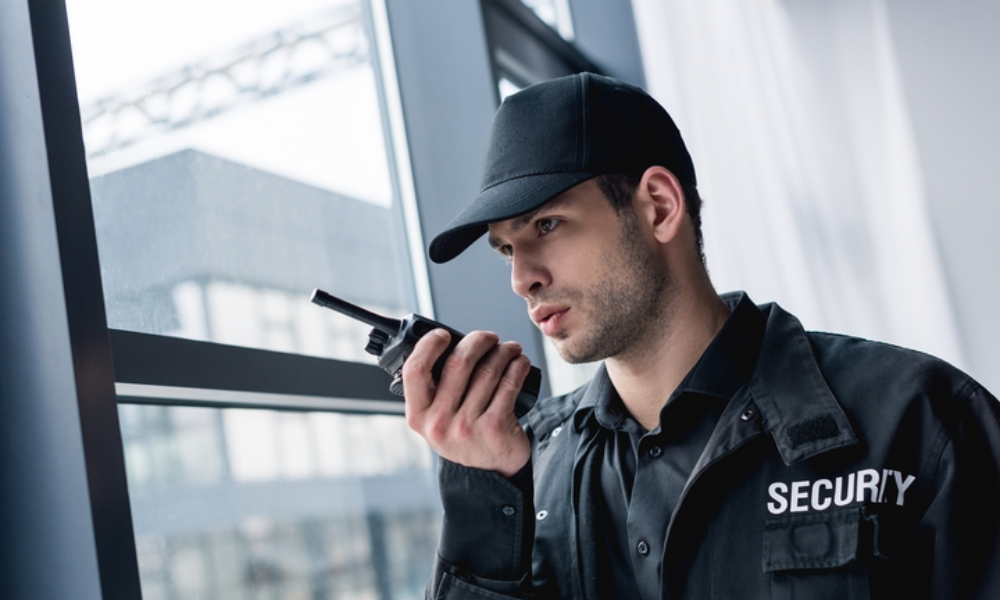
Choosing the right security solution is an important decision for UK businesses. Theft, vandalism, unauthorised access, workplace incidents and property damage can all create financial and operational problems. Two of the most common options are professional security guards and CCTV surveillance, but each provides protection in a different way.
CCTV offers continuous visual monitoring and can provide recorded evidence, while security guards provide a physical presence, human judgement and an immediate response to situations they observe. The Security Industry Authority (SIA) regulates both security guarding and certain CCTV activities, demonstrating the importance of using appropriately qualified professionals where licensing requirements apply.
What Can Security Guards Offer?
Security guards provide an active physical presence at business premises. Depending on the service, officers can monitor entrances, patrol buildings, check visitors, protect restricted areas and respond to suspicious activity.
A visible guard can also act as a deterrent. Someone considering theft or unauthorised entry may be less likely to target a property when they know trained personnel are present. For businesses with valuable stock, equipment or machinery, this human presence can provide an important additional layer of protection.
What Can CCTV Offer?
CCTV provides businesses with the ability to monitor specific areas of a property using cameras. Systems can cover entrances, car parks, storage areas, reception spaces, corridors and other locations where security risks may exist.
One of the main advantages of CCTV is its ability to provide recorded footage. This can help businesses review incidents, understand what happened and potentially provide useful evidence. However, CCTV is not simply a matter of installing cameras; businesses also need to consider how footage is managed, secured and used in accordance with data protection requirements.
Security Guards Provide Human Judgement
One of the biggest differences between security guards and CCTV is the ability to assess situations in real time. A camera can capture activity, but it cannot independently decide what a particular situation means or physically intervene.
A trained security officer can notice unusual behaviour, communicate with employees, follow established procedures and escalate an incident when appropriate. This can be particularly valuable when a business faces situations involving trespassing, aggressive behaviour or attempted theft.
CCTV Provides Continuous Monitoring
CCTV can monitor areas throughout the day and night without requiring a person to physically stand in each location. This makes it particularly useful for larger premises with multiple entrances, storage areas or vulnerable points.
Cameras can also provide a broader view than a single security officer may be able to maintain. Businesses can position cameras strategically to monitor areas that are difficult to patrol continuously, creating useful visibility across the property.
Which Is Better for Crime Prevention?
Security guards and CCTV can both contribute to crime prevention, but they work differently. A visible security officer can immediately communicate that a property is actively protected, which may discourage opportunistic criminals from attempting an offence.
CCTV can also act as a deterrent, particularly when cameras are clearly visible and supported by appropriate signage. However, its strongest advantage is often monitoring and evidence rather than physical intervention. For businesses concerned about both prevention and response, combining the two can provide stronger coverage.
Which Is More Cost-Effective?
Cost depends heavily on the size of the property, operating hours, security risks and level of protection required. CCTV generally involves an initial investment in cameras, recording equipment, installation and maintenance, while professional guarding involves ongoing staffing costs.
For a small property with limited security risks, CCTV may provide an efficient way to monitor key areas. Larger or higher-risk businesses may benefit more from a combination of technology and physical security. The best choice should therefore be based on a proper assessment rather than simply choosing the cheapest option.
When Should Your Business Choose Security Guards?
Security guards can be particularly useful when a business requires a visible deterrent or human response. Retail stores, construction sites, warehouses, industrial facilities, offices and events may all benefit from trained personnel.
Guards can also provide services that cameras cannot, such as checking visitors, managing entrances, conducting physical patrols and responding directly to situations within their responsibilities. Where relevant private security activities are carried out under contract, businesses should ensure personnel have the appropriate SIA licence.
When Should Your Business Choose CCTV?
CCTV may be appropriate when a business needs continuous monitoring across several areas or wants recorded footage for incident investigation. It can be particularly useful for entrances, car parks, warehouses, retail spaces and areas where physical guarding is not required at all times.
Businesses should remember that CCTV involves privacy and data protection responsibilities. The Information Commissioner's Office recommends considering why CCTV is necessary, how recordings will be used and retained, who can access them and how people will be informed that recording is taking place.
Why Combining Both Can Be More Effective
For many UK businesses, the choice does not need to be security guards or CCTV. A layered security strategy can combine both solutions so that each addresses different weaknesses.
Cameras can provide continuous surveillance and recorded evidence, while guards can monitor activity, respond to alerts, control access and investigate concerns according to their procedures. This combination can create a more comprehensive security system than relying on either solution alone.
Choosing the Right Security Guards
When selecting Security Guards, businesses should consider the type of premises, operating hours, potential threats, valuable assets and areas requiring physical protection. The provider's experience, staff training, supervision and incident-response procedures should also be assessed.
It is important to verify relevant SIA licensing requirements before hiring contracted security personnel. Businesses can check security staff through the SIA register, while the SIA also maintains a register of approved security contractors.
How to Decide Between Guards and CCTV
The right choice starts with a security risk assessment. Consider what you are protecting, where vulnerabilities exist, when incidents are most likely and how quickly you need a response.
If your main requirement is continuous monitoring and recorded evidence, CCTV may be suitable. If you need access control, physical patrols and an immediate human response, security guards may be the stronger option. If your premises have several risks, combining both can provide the most balanced approach.
Conclusion
There is no single security solution that is best for every UK business. CCTV offers continuous monitoring, broad coverage and valuable recorded footage, while security guards provide visibility, human judgement, access control and a physical response.
For many organisations, the most effective approach is to use both. By combining trained security personnel with well-managed CCTV and other protective measures, businesses can create multiple layers of security that help protect people, property and assets while responding more effectively to changing risks.

 English
 French
 Spanish
 Portuguese
 Deutsch
 Turkish
 Dutch
Dutch
 Italiano
 Russian
 Romaian
 Portuguese (Brazil)
 Greek
Greek
