


How a 3PL Logistics Company in India Actually Creates Operational Advantage
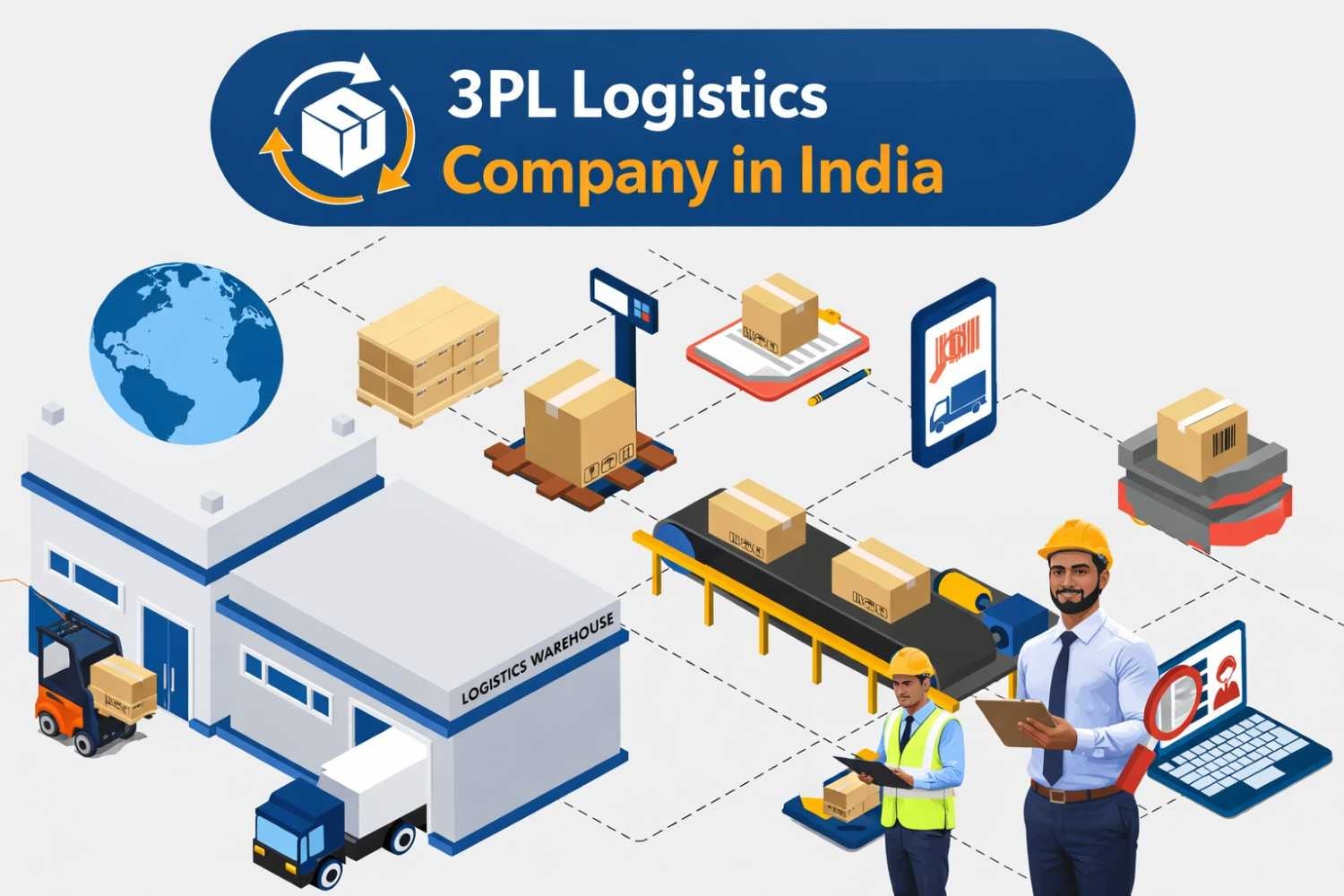
The logistics industry in India has changed faster than many businesses expected. Customers want shorter delivery windows, businesses want tighter inventory control, and operations teams are under constant pressure to reduce logistics costs without creating service problems. In this environment, choosing a 3pl logistics company in India is no longer simply about finding someone who can transport goods from one location to another. It is about deciding who can reliably manage the operational complexity sitting between procurement, warehousing, transportation and the final customer.
This distinction matters because logistics rarely fails at the obvious point. A delayed shipment may actually begin with incorrect inventory data. A missed delivery may come from poor route planning. Higher freight costs may be the result of weak consolidation rather than expensive transportation. In reality, the logistics partner is often managing a chain of small decisions that collectively determine whether a supply chain works smoothly or becomes expensive to maintain.
Why 3PL Decisions Matter More Than They Used To
For logistics businesses, outsourcing logistics can look attractive on paper. Instead of maintaining warehouses, transport resources, operational staff and technology internally, a company can transfer part of that responsibility to a specialist. The real question, however, is what happens after the handover.
A good third-party logistics service provider does more than execute instructions. It should understand shipment patterns, inventory movement, delivery priorities and operational constraints well enough to identify problems before they become customer complaints.
This is where most businesses struggle. They compare providers mainly on freight rates or warehouse charges. Those numbers are easy to compare, but they do not reveal how a provider handles exceptions, peak demand, stock discrepancies, failed deliveries or sudden changes in shipment volumes.
For example, a logistics company may quote an attractive transportation rate but lack the network density required for a particular business. Another provider may cost slightly more per shipment while reducing empty movement, improving consolidation and delivering more consistently. The cheaper quote can easily become the more expensive operation after three months.
That is why logistics decisions should be judged by operational performance, not just the initial quotation.
What a 3PL Logistics Company in India Should Actually Manage
The strongest 3pl logistics company in India usually becomes an extension of the client's operations team. That does not mean the logistics provider should control every business decision. It means the provider has enough operational visibility to make sensible decisions within agreed parameters.
Consider a manufacturer supplying multiple distributors across different regions. If the logistics partner only handles transportation, the manufacturer still has to coordinate warehouse dispatches, vehicle availability, shipment tracking and delivery exceptions separately. The arrangement may technically be outsourced, but the management workload has not really disappeared.
A more mature 3PL model connects these activities. Inventory can be monitored at the warehouse level, shipments can be planned according to destination and urgency, and transportation can be matched with actual volume instead of assumptions.
This is also where inventory management logistics services become important. Inventory is not just a warehouse issue. Poor stock visibility can lead to unnecessary replenishment, delayed dispatches and products sitting in one location while another location runs short.
I have seen logistics operations where the warehouse itself was not the biggest problem. The bigger issue was that nobody had a reliable picture of what was actually available, what was already allocated and what was moving between locations. Once those three numbers were separated properly, many apparently complicated logistics problems became easier to solve.
The Difference Between Cheap Logistics and Affordable 3PL Logistics Solutions
There is a significant difference between cheap logistics and affordable 3pl logistics solutions.
Cheap usually means reducing the visible cost of one activity. Affordable means controlling the total cost of moving and storing goods without damaging service quality.
A business should therefore look beyond transportation rates. Warehouse handling, loading and unloading, packaging, reverse logistics, failed deliveries, inventory carrying costs and technology expenses can all influence the final logistics bill.
Suppose a company saves ₹8 on every shipment by selecting a low-cost transportation arrangement. If the same arrangement increases failed deliveries, customer support calls and re-dispatches, the saving is not real. It has simply moved from the freight invoice to another part of the business.
This is why experienced logistics teams pay close attention to cost per successful delivery, inventory accuracy, turnaround time and exception frequency. These measures tell a more honest story than a single freight rate.
For growing businesses, scalability matters too. A logistics arrangement that works for 500 shipments a month may become inefficient at 5,000. The provider should be able to add capacity without forcing the client to redesign the entire operating model.
Where End-to-End 3PL Services in India Make Sense
Not every business needs a completely outsourced supply chain. Some companies prefer to retain warehousing while outsourcing transportation. Others may already have their own fleet but need help with distribution planning or technology.
However, end-to-end 3pl logistics services become particularly useful when several logistics functions have become difficult to coordinate internally.
A business might need inbound transportation from suppliers, warehouse management, stock control, order processing, distribution to dealers and reverse logistics. Managing each function through separate vendors creates additional coordination points. Every handoff introduces the possibility of information being lost or delayed.
An integrated 3PL arrangement reduces some of that friction. The provider can coordinate activities around the movement of goods rather than treating every service as an isolated transaction.
That does not automatically make an integrated model better. There is a trade-off. Greater outsourcing also creates greater dependency on the provider. Contract terms, data ownership, reporting standards, escalation processes and performance metrics therefore become extremely important.
Honestly speaking, businesses sometimes spend weeks negotiating rates and only a few minutes discussing what happens when something goes wrong. That should be the opposite.
How to Evaluate a Third Party Logistics Service Provider
Choosing a third party logistics service provider should involve more than a presentation and a price sheet. Ask the provider to explain how it would handle realistic situations from your operation.
What happens if demand suddenly increases by 40%? How are delivery exceptions escalated? Who owns inventory discrepancies? How quickly can warehouse capacity be expanded? What happens when a transport partner fails to report? Which operational data will the client receive, and how frequently?
The answers reveal the maturity of the operation.
Technology should also be evaluated carefully. A tracking dashboard looks impressive during a sales presentation, but visibility is only useful when the underlying data is accurate. A sophisticated system cannot compensate for poor scanning discipline, delayed updates or incorrect master data.
For logistics teams, integration capability is becoming equally important. Warehouse systems, order platforms, transportation systems and customer interfaces need to exchange information reliably. Manual spreadsheets may still have a place for temporary analysis, but they become risky when they are effectively running the daily operation.
A Practical Way to Select the Right 3PL Partner
Before signing a contract, logistics teams should evaluate the provider against the actual operating conditions of the business rather than selecting a partner based on brand size alone.
-
Check whether the provider's network matches your shipment geography and volume profile, not just its advertised coverage.
-
Review operational KPIs such as delivery success rate, inventory accuracy, turnaround time, claims and exception closure.
-
Test the provider with a realistic operational scenario and examine how quickly and clearly the team responds.
-
Understand pricing beyond the headline rate, including handling, storage, returns, waiting charges and additional services.
-
Confirm technology integration, reporting ownership, escalation procedures and contract-level service commitments.
A pilot project is often more revealing than a long sales presentation. Running a controlled operation for a defined period gives both sides an opportunity to discover issues that were invisible during negotiations.
What Will Change in 3PL Logistics Services in India Through 2026
The next phase of logistics will be less about simply adding vehicles and warehouses and more about making existing assets work intelligently.
Businesses are becoming more comfortable with data-led planning, real-time shipment visibility, automated warehouse processes and predictive demand analysis. AI is also entering logistics operations, particularly in forecasting, route planning, exception identification and resource allocation. But technology should not be treated as a shortcut around weak processes.
A poorly organised operation with an AI dashboard is still a poorly organised operation.
The stronger trend is toward connected logistics. Businesses increasingly expect their logistics partners to provide visibility across inventory, warehousing and transportation instead of sending separate reports for each activity. This will push 3PL providers to improve integrations, data quality and operational responsiveness.
Another important shift will be flexibility. Demand patterns can change quickly, particularly in sectors affected by e-commerce, seasonal sales and regional consumption. Providers that can scale capacity without creating excessive fixed costs will have an advantage.
For logistics decision-makers, this means the future 3PL conversation will be less about "How much does delivery cost?" and more about "How efficiently can the entire logistics system respond when conditions change?"
Conclusion
The right 3pl logistics company in India should not simply move products. It should reduce operational friction, improve visibility and give the business greater control over logistics performance.
That requires looking beyond rates and asking harder questions about inventory accuracy, warehouse discipline, transportation reliability, technology integration and scalability.
A strong 3PL relationship should make the client's operation easier to manage, not merely shift the same problems to an external vendor. The best time to discover whether a provider can do that is before signing a long-term contract.
Start with your actual shipment patterns, recurring bottlenecks and cost leaks. Then evaluate providers against those realities. In logistics, the partner that looks slightly more expensive at the beginning can sometimes be the one that saves the business considerably more once the operation is running at scale.
FAQs
1. What does a 3PL logistics company in India do?
A 3PL company can manage services such as transportation, warehousing, inventory handling, order fulfilment and distribution on behalf of another business. The exact scope depends on the company's operating requirements and outsourcing model.
2. How can 3PL services reduce logistics costs?
A capable 3PL provider can reduce costs through shipment consolidation, better vehicle utilisation, warehouse planning, route optimisation and improved inventory control. The focus should be total logistics cost rather than only the transportation rate.
3. When should a business consider outsourcing logistics?
Outsourcing becomes worth considering when logistics consumes significant management time, internal infrastructure is becoming expensive, service levels are inconsistent or the business needs to expand into new regions without building an entire logistics network.
4. Are inventory management logistics services included in 3PL?
They can be. Many 3PL providers offer inventory receiving, storage, stock tracking, order processing, cycle counting and dispatch management. Businesses should confirm the exact inventory responsibilities and accuracy KPIs in the service agreement.
5. What should I check before choosing a third party logistics service provider?
Look at network coverage, operational experience, technology integration, service-level commitments, inventory accuracy, delivery performance and exception handling. A pilot or limited rollout can also expose practical problems before a long-term commitment.

 Arabic
 French
 Spanish
 Portuguese
 Deutsch
 Turkish
 Dutch
Dutch
 Italiano
 Russian
 Romaian
 Portuguese (Brazil)
 Greek
Greek
