


How to Choose the Right Pilot Training Academy in India: Courses, Costs and DGCA Ground School
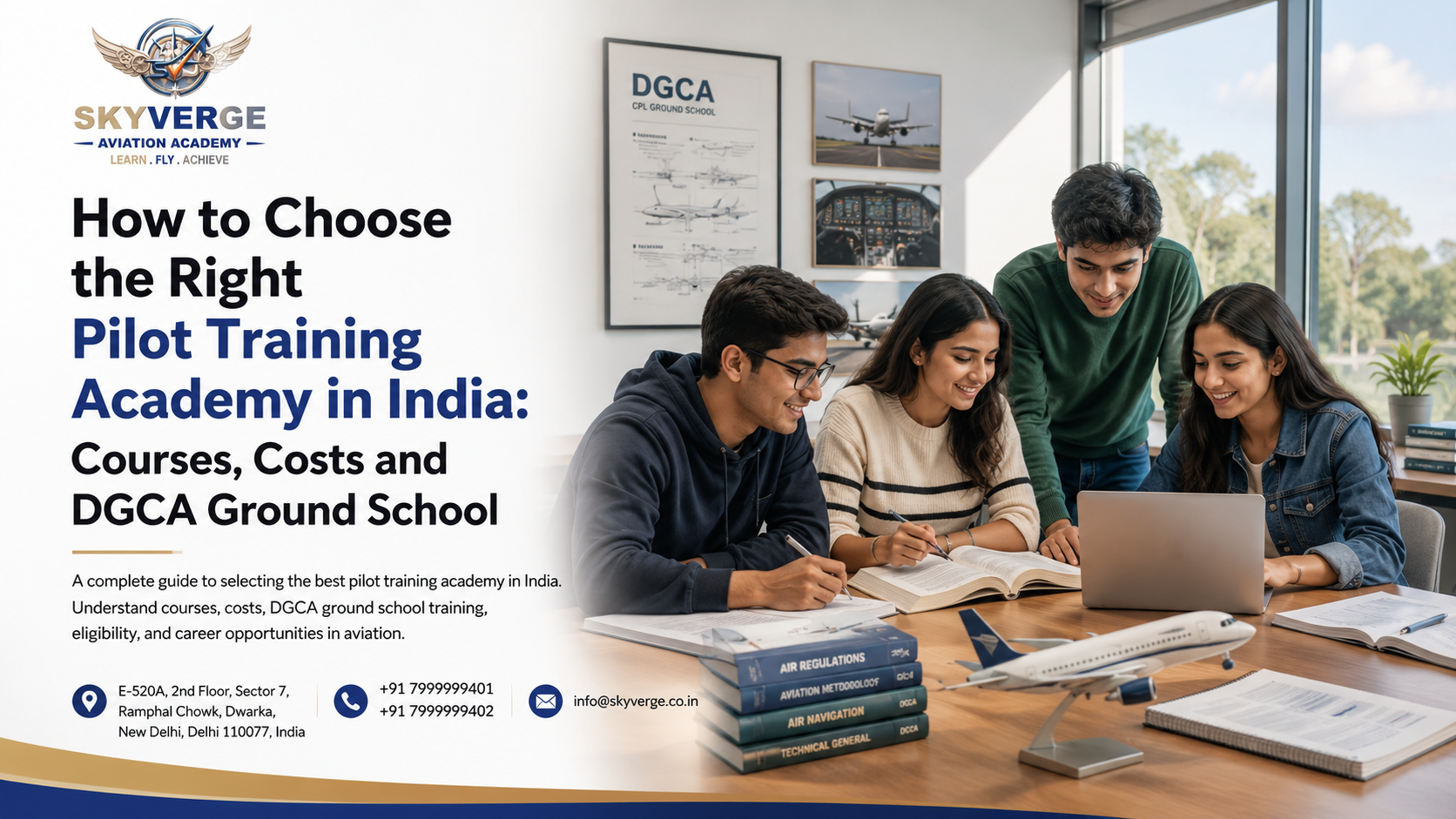
Becoming a commercial pilot is a goal that attracts thousands of students in India every year. With the aviation sector continuing to evolve, aspiring pilots are becoming more careful about where they train, what qualifications they need, how much training may cost, and whether an academy provides the right balance between theoretical knowledge and practical flying experience.
In 2026, pilot training is no longer simply about learning to fly an aircraft. Students also need to understand aviation regulations, examination procedures, meteorology, navigation, aircraft systems, communication, safety management and the professional standards expected in commercial aviation.
For students planning their aviation careers, choosing an appropriate training pathway is therefore one of the most important decisions they will make. SkyVerge Aviation Academy aims to help aspiring pilots build a strong foundation by combining aviation education, structured preparation and an understanding of the requirements associated with professional pilot training.
Understanding the Commercial Pilot Training Journey
A commercial aviation career requires considerably more preparation than simply obtaining basic flying experience. Students need to progress through theoretical examinations, medical requirements, flight training and licensing requirements applicable to their chosen pathway.
The Commercial Pilot Course in india is generally designed for students who want to pursue professional flying as a career. The exact structure can vary depending on the training organisation, aircraft fleet, flying environment and student's individual progress.
A typical training journey can involve:
- Meeting the required educational criteria
- Completing the applicable medical assessment
- Registering with the relevant DGCA systems
- Preparing for aviation theory examinations
- Completing ground-school training
- Undertaking practical flight training
- Building the required flying experience
- Completing the applicable examinations and checks
- Progressing toward the Commercial Pilot Licence pathway
The regulatory framework is important throughout this process. DGCA is India's aviation regulator and is responsible for areas including aviation safety, airworthiness and regulation of civil aviation.
This is why students should evaluate an academy based on its training structure and regulatory understanding rather than selecting an institute solely because of advertisements or promises about career outcomes.
What Makes a Pilot Training Institute a Good Choice?
Students often search online for the Best pilot training institute in India, but there is no single factor that makes an academy suitable for everyone.
Instead, students should evaluate several practical aspects before making a decision.
1. Quality of Ground Training
Strong theoretical knowledge is essential for a professional pilot. A student may eventually operate sophisticated aircraft, but that responsibility begins with understanding the principles behind aviation.
A good training environment should provide structured instruction in areas such as:
- Air Navigation
- Aviation Meteorology
- Air Regulations
- Aircraft and General Knowledge
- Human Performance
- Radio communication
- Flight planning
- Aviation safety
- Performance and limitations
Students should also understand how their theoretical preparation connects with actual cockpit decision-making.
2. Flight Training Environment
Flying hours are one of the most important components of pilot training. However, students should not judge a training academy purely by the number of aircraft it advertises.
They should consider aircraft availability, instructor experience, maintenance standards, scheduling systems, weather conditions and the overall operational environment.
Consistent flying opportunities can help students maintain continuity in their training. Long gaps between flights can make learning less efficient and may affect the overall duration of training.
3. Instructor Support
Instructors have a major influence on a student's development.
A good instructor does more than teach manoeuvres. They help students understand decision-making, situational awareness, communication, cockpit discipline and safe operating practices.
Students should therefore ask about instructor availability, student-to-instructor ratios and how progress is monitored.
Why DGCA Ground School Matters
One of the most important parts of professional pilot preparation is DGCA ground school.
Ground school gives students the theoretical foundation required to understand aviation before and alongside practical flying. It should not be treated as something that students simply complete to pass examinations.
For example, understanding meteorology can help a pilot interpret weather conditions and make better operational decisions. Navigation knowledge helps pilots understand routes, charts and position calculations. Air regulations provide the regulatory framework within which flight operations take place.
The DGCA's examination system has also become increasingly digital. The current Pariksha portal integrates examination functions for flight crew and other aviation candidates, and candidates with a Computer Number are required to register on the portal for future examinations.
The current 2026 examination calendar also demonstrates why students need to stay updated with official notices rather than relying exclusively on older information available online.
At SkyVerge Aviation Academy, students can approach ground preparation as a long-term learning process rather than simply an examination exercise.
How Much Does Pilot Training Cost in India?
One of the first questions students and parents ask is about Pilot training cost in India.
There is no universal fixed figure because the total expenditure can depend on numerous variables.
These may include:
- Type and number of aircraft used for training
- Flying hours required
- Aircraft operating costs
- Fuel prices
- Instructor charges
- Examination expenses
- Medical assessments
- Licensing and administrative fees
- Accommodation and living expenses
- Additional training or remedial flying
- Training duration
- Simulator or specialised training where applicable
Students should therefore be cautious about comparing academies only by their initial quoted package.
For example, one academy may advertise a lower starting price but have additional expenses outside the headline figure. Another may provide a more comprehensive training package.
The better approach is to request a detailed fee structure and understand exactly what is included and what may be charged separately.
What Should Students Ask About Training Fees?
Before paying an admission fee, students should ask:
- How many flying hours are included?
- What happens if additional flying hours are required?
- Are examination fees included?
- Are medical expenses included?
- What administrative or licensing charges apply?
- Is accommodation included?
- Are there additional charges for repeated training?
- What happens if aircraft availability affects the schedule?
A transparent fee structure makes it easier for families to plan financially.
The Role of Technology in Pilot Training
Pilot training in 2026 is increasingly influenced by digital learning tools and technology.
Students now have access to online examination systems, digital study resources, aviation applications, electronic documents and increasingly sophisticated simulation-based learning.
However, technology should complement—not replace—fundamental aviation knowledge and practical flying experience.
The most effective approach combines classroom learning, independent study, instructor guidance, practical flight training and appropriate simulation.
Students should also develop the habit of checking official DGCA communications because examination schedules, procedures and regulatory requirements can change. The DGCA's Pariksha portal currently publishes examination schedules and notices for flight-crew candidates.
Frequently Asked Questions Students Often Ask
1. What qualifications do I need to start commercial pilot training in India?
For flight-crew categories other than PPL, DGCA's current Pariksha guidance states that candidates generally need to have passed 10+2 with Physics and Mathematics from a recognised board or university, or hold an equivalent qualification. Students should always verify the latest requirements before beginning their training.
2. Is ground school really necessary if I am mainly interested in flying?
Yes. Professional flying requires much more than controlling an aircraft. Pilots need theoretical knowledge of navigation, meteorology, regulations, aircraft systems, human performance and other aviation subjects. Ground training provides the academic foundation needed to understand these areas and prepare for applicable examinations.
3. How much should I budget for pilot training?
The total Pilot training cost in India varies significantly according to the training organisation, aircraft, flying hours, accommodation, examinations and additional requirements. Instead of relying on a single advertised figure, students should request a complete fee breakdown before enrolling.
4. How long does it take to become a commercial pilot?
The duration can vary depending on the student's progress, weather, aircraft availability, examination timelines, training schedule and whether additional flying is required. Students should avoid academies that promise an unrealistically fixed completion period without explaining these variables.
5. How should I choose the right pilot training academy?
Look beyond rankings and advertisements. Compare the academy's regulatory approvals, aircraft availability, instructors, ground-training structure, safety culture, fee transparency, student support and training environment. A suitable academy should help students understand the complete pathway rather than focusing only on admissions.
Why Students Should Think Beyond the Admission Process
Choosing an aviation academy is a long-term career decision. Students should think about the type of professional pilot they want to become rather than simply asking how quickly they can complete training.
The aviation industry expects pilots to demonstrate discipline, technical knowledge, communication skills, situational awareness and sound judgement.
This means that habits developed during training can remain important throughout a pilot's career.
Students should therefore focus on:
- Consistent study habits
- Strong theoretical understanding
- Regular flying practice
- Accurate documentation
- Professional communication
- Safety-oriented thinking
- Time management
- Continuous learning
These qualities can be more valuable than simply completing a course quickly.
Preparing for a Career in Aviation With SkyVerge Aviation Academy
For students exploring professional pilot training, SkyVerge Aviation Academy can serve as a starting point for understanding the different stages of the aviation education journey.
The objective should be to create informed aspiring pilots who understand both the opportunities and responsibilities associated with aviation.
From understanding the Commercial Pilot Course in india to preparing for DGCA ground school, students should approach every stage with patience and discipline.
The cost of training is also an important consideration, but it should be evaluated alongside training quality, safety standards, instructor support and the overall learning environment.
Most importantly, aspiring pilots should rely on current information from official aviation authorities when making decisions about examinations, licensing and regulatory requirements. DGCA's official systems remain the appropriate reference point for current regulatory and examination information.
Aviation is a demanding profession, but for students who are genuinely passionate about flying and willing to develop the necessary knowledge, discipline and professionalism, it can become a rewarding long-term career.
SkyVerge Aviation Academy — Building Knowledge, Confidence and Skills for the Pilots of Tomorrow.
Contact SkyVerge Aviation Academy
SkyVerge Aviation Academy
E-520A, 2nd Floor, Sector 7, Ramphal Chowk, Dwarka, New Delhi, Delhi 110077, India
Phone:
+91 7999999401
+91 7999999402
Email:
[email protected]
SkyVerge Aviation Academy — Building Knowledge, Confidence and Skills for the Pilots of Tomorrow.

 English
 Arabic
 French
 Portuguese
 Deutsch
 Turkish
 Dutch
Dutch
 Italiano
 Russian
 Romaian
 Portuguese (Brazil)
 Greek
Greek
