


How to Become a Pilot in India: A Student Guide
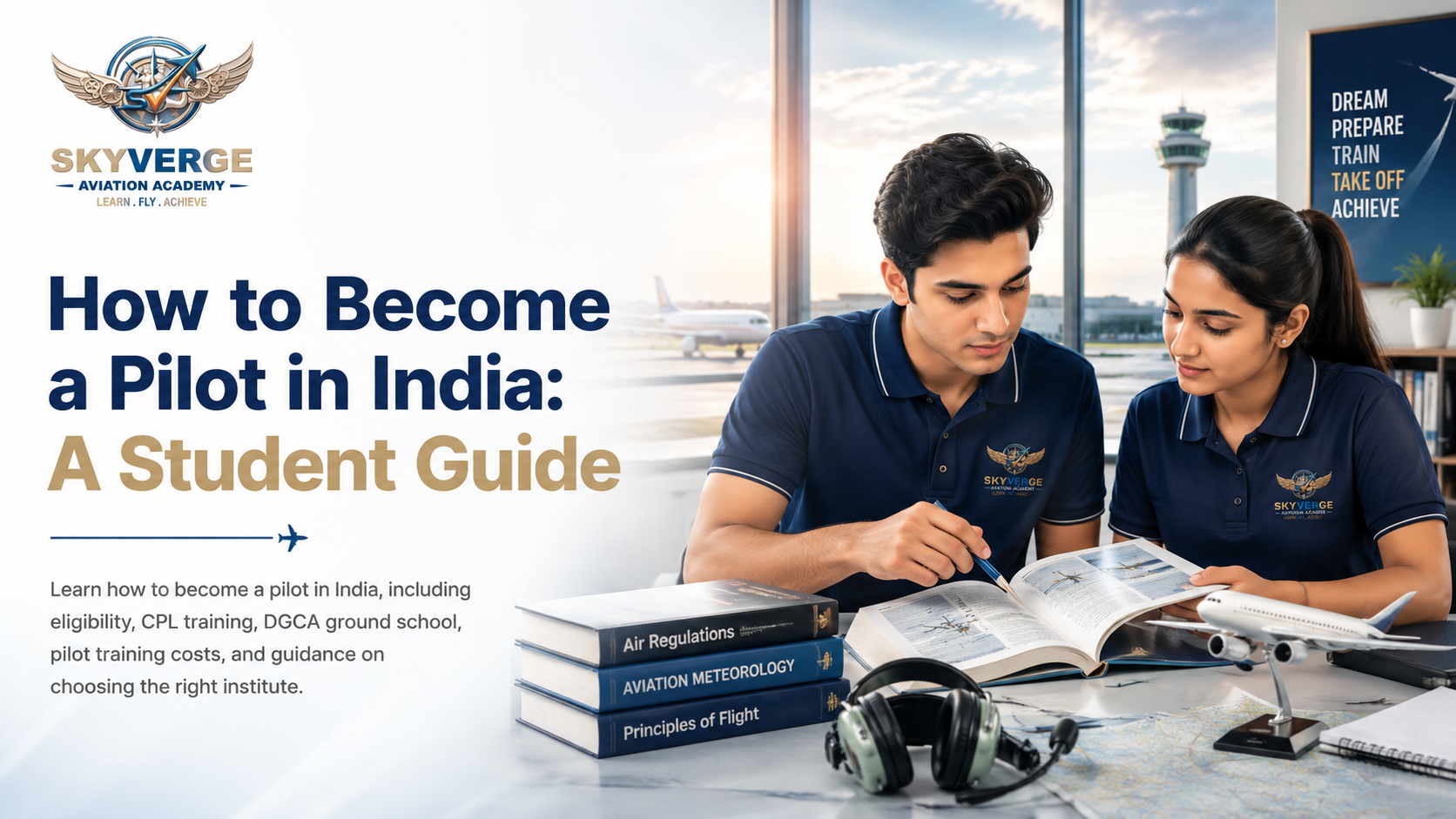
Becoming a pilot is a dream for many students who are fascinated by aviation, aircraft, and the opportunity to build a career in the skies. However, turning that dream into a profession requires more than simply learning how to fly. Students need to understand the eligibility requirements, licensing process, ground training, flight training, medical standards, examinations, and overall expenses involved.
For students planning to begin their aviation journey in India, having a clear understanding of the process can make preparation much easier. This guide explains the major steps involved in becoming a commercial pilot and introduces the role of flight schools and training academies such as Skyverge Aviation Academy.
Who Can Become a Pilot in India?
The first step is to check whether you meet the basic eligibility requirements. Students generally need to complete their Class 12 education with Physics and Mathematics from a recognized board.
A student should also meet the medical requirements prescribed by the Directorate General of Civil Aviation (DGCA). Medical fitness is particularly important because pilots must be physically and mentally capable of handling the responsibilities associated with operating an aircraft.
Students who are still in school and interested in aviation can therefore start preparing early by focusing on subjects such as mathematics, physics, English, and general science.
Step 1: Understand the Pilot Licensing Path
Students who want to fly professionally usually work toward a Commercial Pilot Licence (CPL). The CPL allows a qualified pilot to pursue professional flying opportunities, subject to meeting the applicable regulatory and employment requirements.
Before reaching this stage, students need to complete several components of training, including theoretical studies, examinations, medical requirements, and practical flight training.
Understanding the complete pathway before joining a training academy is useful because pilot training requires considerable time, commitment, and financial planning.
Step 2: Complete Your DGCA Medical Examination
Medical fitness is one of the important early considerations for aspiring pilots. Students should understand the applicable DGCA medical requirements before making a major financial commitment to training.
The medical assessment evaluates whether a candidate meets the required aviation health standards. Depending on the stage of licensing and the applicable regulations, candidates may need the relevant class of medical assessment.
It is therefore sensible for students to address their medical eligibility at an early stage rather than waiting until after investing heavily in their training.
Step 3: Prepare Through DGCA Ground School
Flying an aircraft requires strong theoretical knowledge. This is where DGCA ground school becomes an important part of pilot preparation.
Ground classes generally cover subjects related to aviation theory, such as:
-
Air Regulations
-
Air Navigation
-
Aviation Meteorology
-
Aircraft and Engines
-
Technical General
-
Radio Telephony-related preparation
-
Human factors and aviation knowledge
The exact subjects and examination requirements can vary according to the applicable DGCA licensing framework.
Ground training helps students understand what happens inside and outside the cockpit. For example, a pilot needs to understand weather conditions, navigation, aircraft systems, air traffic procedures, and aviation regulations before safely applying that knowledge during flight training.
Students should therefore avoid treating ground classes as a secondary part of pilot training. Strong theoretical preparation can make practical flying considerably easier to understand.
Step 4: Join a Recognized Flight Training Organization
After understanding the requirements and completing the necessary initial preparations, students can choose an appropriate flight training organization.
Choosing the Best pilot training institute in India should not be based only on advertisements or the lowest quoted fees. Students should investigate important factors such as:
-
DGCA approval and regulatory status
-
Aircraft availability
-
Instructor experience
-
Training infrastructure
-
Maintenance standards
-
Flight scheduling
-
Average training completion time
-
Ground school facilities
-
Student support
-
Transparency of fees
-
Safety culture
Skyverge Aviation Academy is one example of an aviation training academy that students can research when exploring their pilot training options. Before enrolling, students should independently verify the academy's current approvals, facilities, training structure, and applicable requirements.
Step 5: Begin Your Flight Training
Practical flying is one of the most exciting stages of becoming a pilot. Students gradually learn how to operate an aircraft under the guidance of qualified flight instructors.
Initial training introduces fundamental skills such as aircraft controls, take-offs, landings, circuits, navigation, communication, and emergency procedures. As students gain experience, their training becomes more advanced.
Flight training requires consistency. Weather conditions, aircraft availability, instructor schedules, and individual progress can all influence how quickly a student completes the required flying.
Students should therefore focus on developing safe and disciplined flying habits rather than trying to finish training as quickly as possible.
Understanding the Commercial Pilot Course in India
The Commercial Pilot Course in India involves both theoretical education and practical flight training. Students preparing for a CPL generally need to complete the applicable DGCA examinations, flight training requirements, medical requirements, and documentation.
The course is not simply about learning how to control an aircraft. Professional pilots need a broad understanding of aviation operations, regulations, navigation, meteorology, aircraft systems, communication, and safety procedures.
Students should also understand that completing flight training is one part of building a professional aviation career. After obtaining the required licence and qualifications, candidates may need additional training, ratings, examinations, or airline-specific requirements depending on their career path.
How Much Does Pilot Training Cost?
One of the most common questions students ask is about the Pilot training cost in India.
The total expense can vary significantly depending on the training organization, aircraft type, flying hours, fuel costs, examination requirements, accommodation, study materials, medical assessments, and whether additional flying is required.
Students should not select an academy solely because it advertises a low initial fee. Instead, ask for a detailed fee structure and understand what is included and excluded.
Some important expenses that students should consider include:
-
Ground training
-
Flight training
-
DGCA examinations
-
Medical examinations
-
Licensing and documentation
-
Study material
-
Accommodation and living expenses
-
Additional flying hours, if required
-
Skill tests and other applicable charges
A realistic financial plan can help students avoid unexpected expenses during their training.
How Long Does It Take to Become a Pilot?
The duration varies from student to student. A student's academic preparation, examination progress, flying consistency, weather conditions, aircraft availability, and individual performance can all affect the overall timeline.
Rather than focusing only on completing the course quickly, students should concentrate on developing strong knowledge and safe flying skills.
A professional pilot is responsible for passengers, crew, aircraft, and operational safety. Therefore, quality training should always be more important than simply reducing the training duration.
Questions Students Often Ask
Can I become a pilot after Class 12?
Yes. Students who meet the applicable educational, medical, and regulatory requirements can begin the pilot training pathway after completing Class 12. Physics and Mathematics are generally important subjects for the CPL pathway.
Is mathematics very important for pilot training?
Mathematics is useful for understanding several aviation concepts, particularly navigation, calculations, and aircraft-related problems. Students do not need to be mathematical experts, but they should be comfortable with basic mathematical concepts.
Is DGCA ground training necessary?
Yes, theoretical knowledge is an essential part of professional pilot preparation. Ground training helps students prepare for the required aviation subjects and examinations.
Is pilot training difficult?
Pilot training can be challenging because it combines academic studies with practical flying. However, students who maintain discipline, study consistently, listen to instructors, and practice regularly can progress effectively.
How should I choose a pilot training academy?
Students should compare regulatory approvals, aircraft availability, instructors, infrastructure, safety standards, training schedules, fees, and student support. Do not make the decision based only on marketing claims or fee comparisons.
Can I become an airline pilot after getting a CPL?
A CPL is an important qualification for a professional flying career, but becoming an airline pilot may require additional qualifications, experience, ratings, assessments, and airline-specific requirements. Students should understand the complete career pathway before joining training.
Start Your Aviation Journey With the Right Preparation
Becoming a pilot in India requires planning, dedication, financial preparation, academic effort, and practical training. From meeting the initial eligibility requirements to completing DGCA ground school, passing examinations, and developing practical flying skills, every stage contributes to becoming a competent aviation professional.
Students considering Skyverge Aviation Academy or another training organization should carefully research the available programs and verify current regulatory requirements before enrolling. Choosing the right training environment can make the learning journey more structured and productive.
Most importantly, aspiring pilots should remember that aviation is built around discipline, knowledge, professionalism, and safety. If you are serious about turning your passion for flying into a career, start by understanding the requirements, planning your finances, and choosing your training pathway carefully.

 English
 Arabic
 French
 Spanish
 Portuguese
 Deutsch
 Turkish
 Dutch
Dutch
 Russian
 Romaian
 Portuguese (Brazil)
 Greek
Greek
