


CPAP vs Oral Appliance Therapy: What Patients Should Know
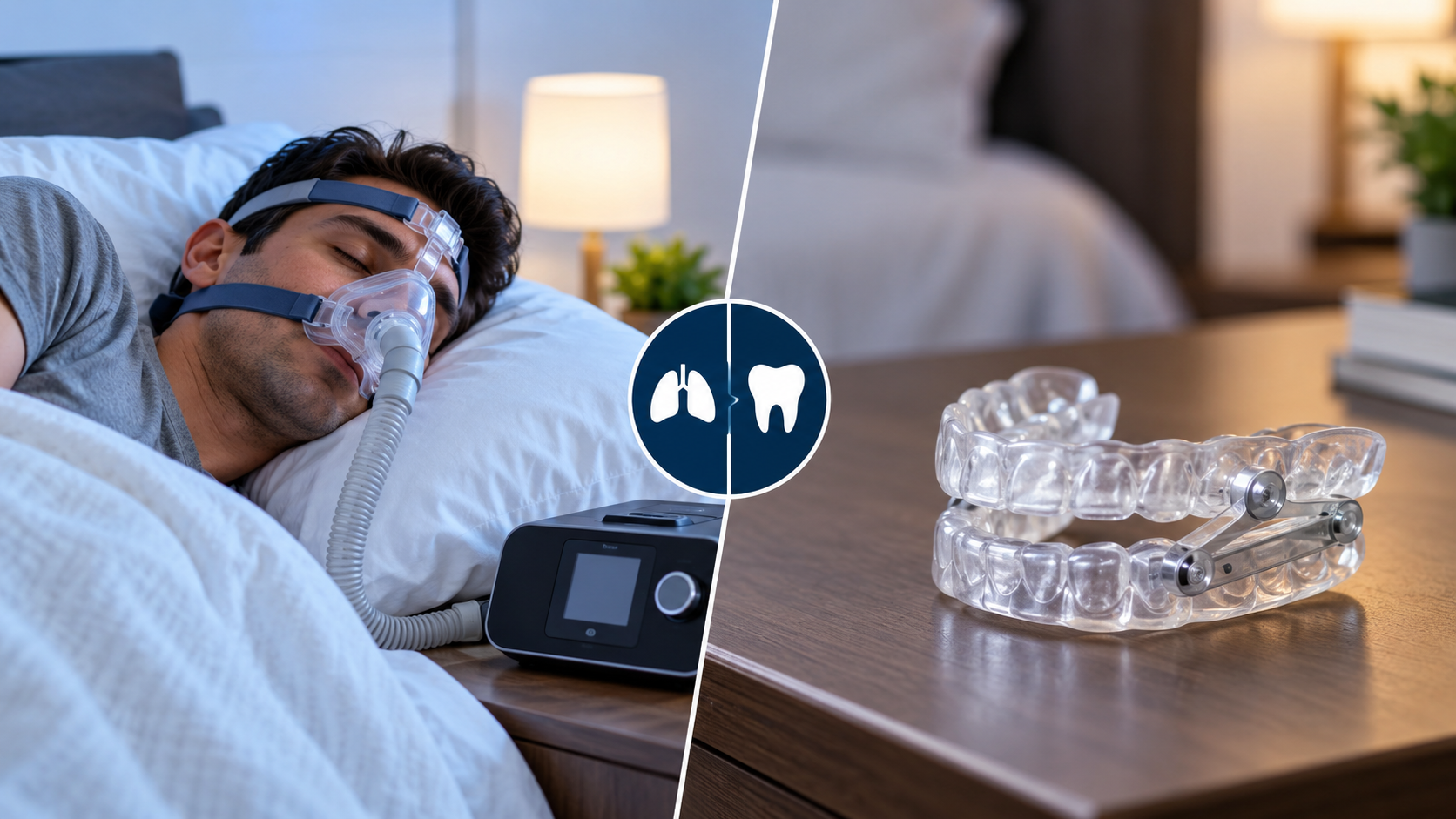
If you've recently started researching sleep apnea treatment, you've probably encountered two common options: CPAP and oral appliances.
CPAP works by delivering continuous positive airway pressure through a mask. The airflow helps prevent airway collapse during sleep. It is commonly recommended for people with moderate to severe obstructive sleep apnea.
An oral appliance takes a mechanical approach. The device is worn in the mouth and helps hold the lower jaw in a forward position. This can help maintain airway space during sleep.
Daily Experience
CPAP requires more equipment. Patients generally use a machine, tubing, and mask, and the equipment needs regular cleaning.
An oral appliance is much smaller. It can be stored easily and doesn't require electricity. This can make it attractive for travel and for people who prefer a less noticeable therapy.
However, oral appliances aren't simply over-the-counter mouthguards. Proper fitting and professional monitoring are important.
Potential Drawbacks
CPAP users may experience mask discomfort, dryness, leaks, or nasal symptoms.
Oral appliance users can experience jaw discomfort or bite changes.
Because every patient is different, treatment should be based on clinical evaluation rather than convenience alone.
Explore the complete CPAP vs. oral appliance treatment guide.

 English
 Arabic
 French
 Spanish
 Portuguese
 Deutsch
 Turkish
 Dutch
Dutch
 Italiano
 Russian
 Portuguese (Brazil)
 Greek
Greek
