


How Can a Fiber Laser Welder Improve Modern Metal Welding Precision and Production
Metal fabrication continues to evolve as manufacturers look for more precise, consistent, and practical methods of joining different materials. Traditional welding processes remain important across many industries, but modern production environments increasingly require equipment that can handle detailed work while maintaining a controlled welding process. This is where a fiber laser welder has become an important solution for workshops, manufacturers, fabricators, and industrial production facilities.
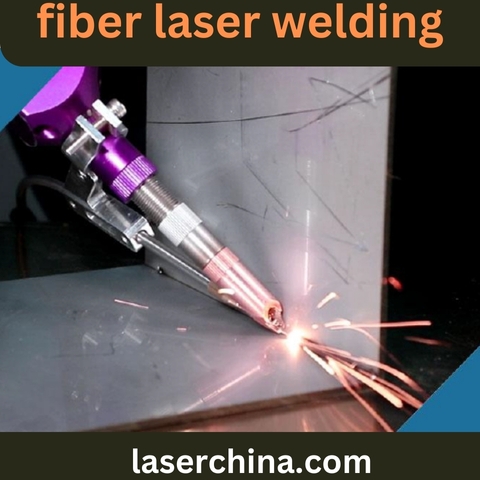
A fiber laser welder uses concentrated laser energy to create a controlled welding area between metal components. Instead of relying on a conventional heat source, the system directs a laser beam toward the selected welding position. The concentrated energy melts the material at the joint, allowing the components to form a strong connection as the molten area cools.
Understanding the Fiber Laser Welder
A fiber laser welder is an industrial or workshop welding system designed to join metal parts using a fiber-delivered laser beam. The laser source generates the beam, which travels through a fiber-optic delivery system before reaching the welding head.
The welding head directs the laser toward the workpiece with controlled positioning. Depending on the machine configuration, operators can work on sheets, tubes, frames, enclosures, and other metal components.
The welding process begins when the laser beam reaches the surface of the material. Its concentrated energy creates localized heat, melting the metal at the joint. When the material cools, the welded area forms a permanent connection.
The controlled nature of this process makes fiber laser welding suitable for applications where accurate joints and consistent production are important.
How Does Fiber Laser Welding Work?
The operation of a fiber laser welder involves several coordinated stages. First, the metal components are positioned according to the required joint design. Proper alignment is important because the laser follows a defined welding path.
The laser source then produces the required beam, which is delivered through the fiber-optic system to the welding head. The head focuses the beam onto the workpiece.
As the beam moves along the joint, the concentrated energy melts a small area of metal. Depending on the application, shielding gas can be used around the welding zone to help protect the molten material from atmospheric contamination.
Machine settings such as laser power, welding speed, focal position, and gas flow can be adjusted according to the material and thickness being processed.
Materials Commonly Used With Fiber Laser Welders
Fiber laser welding systems are used with many types of metals. Stainless steel is a common application because it is widely used in industrial equipment, kitchen products, architectural components, and fabrication.
Carbon steel can also be processed for numerous manufacturing and construction-related applications. Aluminum is another important material, particularly in industries where lightweight metal components are required.
Depending on the machine's specifications and configuration, fiber laser welding can also be used with materials such as galvanized steel, brass, copper, and various metal alloys.
Material thickness plays an important role when selecting welding parameters. Different metals absorb and transfer laser energy differently, so operators need to establish suitable settings for each application.
Applications Across Metal Fabrication
The versatility of a fiber laser welder allows it to be used in many production environments. Metal fabrication workshops can use laser welding systems for customized products, repair work, structural components, and production assemblies.
In the automotive sector, laser welding can be applied to selected metal components and assemblies where controlled welding is required. Manufacturers of machinery and industrial equipment can also use the technology for frames, cabinets, brackets, housings, and other fabricated parts.
Stainless steel products are another major application area. Manufacturers producing kitchen equipment, display structures, furniture, decorative products, and commercial fixtures can incorporate fiber laser welding into their production processes.
Fiber Laser Welder for Stainless Steel
Stainless steel fabrication requires careful control of heat because excessive thermal exposure can affect the appearance and condition of the material. A fiber laser welder concentrates energy into a relatively small working area, allowing operators to control the welding process according to the material and joint.
Stainless steel sheets, tubes, panels, frames, and customized components can be prepared for laser welding depending on their dimensions and application.
For visible products, weld appearance can also be an important consideration. Proper preparation, suitable parameters, correct shielding gas, and controlled movement all contribute to producing a consistent weld.
Fiber Laser Welding in Sheet Metal Production
Sheet metal production involves numerous components that require accurate joining. Enclosures, cabinets, covers, panels, frames, and custom assemblies may contain multiple welded joints.
A fiber laser welder can be integrated into this type of workflow to provide controlled welding along prepared seams. Operators can adjust the welding parameters based on the thickness and material being processed.
For manufacturers producing repeated components, establishing standardized welding settings can help create a more consistent production procedure.
The welding system can also be used for customized fabrication, where different designs and joint configurations are processed according to individual project requirements.
Choosing the Right Welding Configuration
Selecting a suitable fiber laser welder requires an understanding of the intended application. Manufacturers should consider the materials they regularly process, their typical material thicknesses, production volume, workspace, and operator requirements.
Laser power is one of the important specifications to evaluate. Different applications may require different power levels depending on the material and thickness.
The welding head and operating system should also match the intended workflow. Some machines are designed for handheld operation, while other configurations are developed for automated or integrated production environments.
Cooling requirements, shielding gas arrangements, electrical specifications, machine dimensions, and maintenance requirements should also be considered before purchasing equipment.
Preparing Metal Before Welding
Proper preparation is an important part of laser welding. Surfaces should be appropriately cleaned before the welding process begins. Dirt, oil, rust, paint, moisture, and other contaminants can affect the welding area.
The components should also be correctly positioned and aligned. Gaps between the parts may influence the welding result, particularly when working with thin materials.
Operators should select suitable laser settings based on the material and joint. Testing on sample pieces can help determine the appropriate parameters before beginning larger production runs.
Correct preparation helps establish a controlled and repeatable welding workflow.
Operator Skills and Workplace Practices
Although fiber laser welding systems can simplify many welding operations, proper operator training remains important. Users should understand machine controls, material preparation, welding parameters, shielding gas requirements, and workplace procedures.
Laser equipment should be operated in an environment appropriate for the machine and application. Operators should follow the manufacturer's safety instructions and use the recommended protective equipment.
Regular inspection of welding components, optical parts, cooling systems, and other machine elements can also support reliable operation.
Training is particularly important when a workshop introduces laser welding for the first time. A properly trained operator can understand how changes in speed, power, focus, and material preparation influence the welding process.
Integrating Fiber Laser Welding Into Production
For businesses moving toward modern metal fabrication, integrating a fiber laser welder requires planning. The machine should fit naturally into the existing workflow, from material preparation and cutting to welding, finishing, inspection, and final assembly.
Manufacturers can identify frequently repeated welding tasks and determine where laser welding equipment could be incorporated into their production process.
A suitable workspace, electrical supply, cooling arrangement, shielding gas system, and operator training should be prepared before installation.
For growing businesses, selecting equipment according to current production needs while considering future applications can help create a more practical manufacturing setup.
Maintenance and Long-Term Operation
Regular maintenance is essential for maintaining consistent machine operation. Operators should follow the manufacturer's recommended maintenance schedule and inspect the equipment regularly.
The welding head, protective components, cooling system, cables, and other relevant parts should be checked according to the machine's operating instructions.
Keeping the working environment clean is also important. Dust and contamination around sensitive optical components can affect equipment performance.
Proper maintenance records can help workshops monitor service intervals and identify potential issues before they interrupt production.
Fiber Laser Welder for Modern Fabrication
As metal fabrication becomes increasingly precise and production requirements continue to change, laser welding technology is becoming an important part of modern manufacturing. A fiber laser welder provides a controlled approach to joining metal components across numerous applications.
From stainless steel products and sheet metal assemblies to machinery components and customized fabrication, the technology can be adapted to different production requirements when the appropriate equipment and welding parameters are selected.
Final Thoughts
The development of fiber laser welding has introduced new possibilities for workshops and manufacturers working with metal. A fiber laser welder can be used across diverse fabrication applications, from individual customized components to repeated industrial production.

 English
 Arabic
 French
 Spanish
 Portuguese
 Deutsch
 Turkish
 Dutch
Dutch
 Italiano
 Romaian
 Portuguese (Brazil)
 Greek
Greek
