


How Proper CNC Tool Maintenance Reduces Production Costs
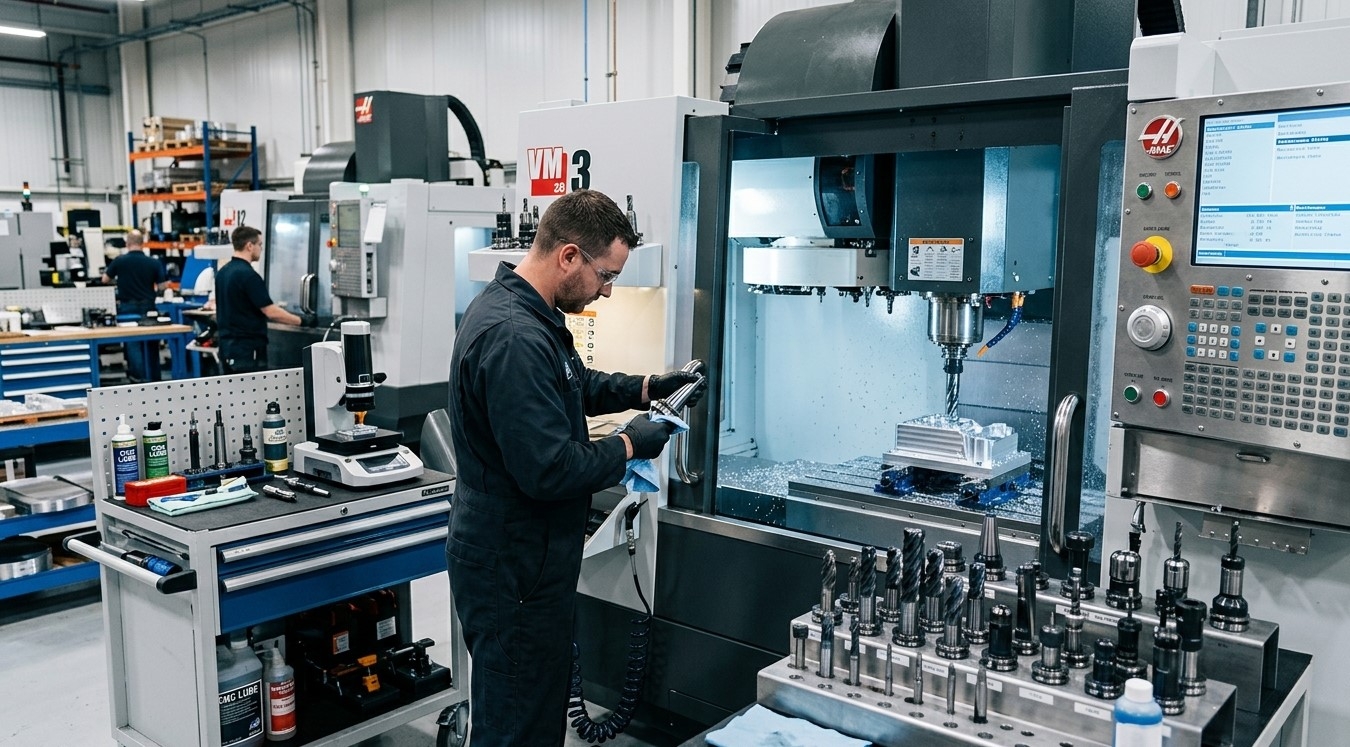
CNC machining depends on reliable cutting tools, tool holders, workholding systems, and measurement equipment to maintain consistent production quality. While many manufacturers focus on selecting high-performance CNC machining tools, proper maintenance is equally important for controlling operating costs. Regular CNC tool maintenance can extend tool life, reduce unexpected tool failures, improve machining accuracy, and minimize production downtime. For businesses seeking dependable industrial tooling solutions, Khokhawala Trading LLC is an Industrial Tools Supplier in Dubai, supporting manufacturing, engineering, CNC machining, and maintenance operations with professional tooling solutions.
Why CNC Tool Maintenance Matters
CNC cutting tools operate under demanding conditions. High spindle speeds, cutting forces, heat, vibration, coolant, and continuous material removal can gradually affect tool performance.
Without proper maintenance, manufacturers may experience:
- Premature tool wear
- Unexpected tool breakage
- Poor surface finish
- Dimensional inaccuracies
- Increased machine downtime
- Higher tooling costs
- More rejected components
- Longer production cycles
- Unplanned machine stoppages
Maintenance provides a systematic way to identify problems before they become expensive production issues.
A well-maintained tooling system can help manufacturers achieve more predictable performance and make better use of their tooling investment.
1. Regular Tool Inspection Prevents Unexpected Failures
One of the simplest maintenance practices is regular inspection.
Before and after machining operations, operators should check cutting tools for visible signs of damage or wear.
Common conditions to look for include:
- Flank wear
- Crater wear
- Edge chipping
- Cracks
- Built-up material
- Thermal damage
- Dull cutting edges
- Broken inserts
Early identification allows operators to replace or adjust a tool before it causes a defective component or unexpected machine stoppage.
Preventive inspection is generally less expensive than dealing with a broken tool during production.
2. Proper Tool Cleaning Extends Tool Life
Machining generates chips, metal particles, coolant residue, and other contaminants.
If these contaminants remain on cutting tools or tool holders, they can interfere with tool installation and performance.
Cleaning should include:
- Tool shanks
- Tool holders
- Collets
- Spindle interfaces
- Retention components
- Tool storage areas
Clean contact surfaces are especially important for CNC tool holders because even small particles between mating surfaces can affect tool positioning and runout.
Tools should be cleaned using appropriate methods that do not damage cutting edges or precision surfaces.
3. Maintain CNC Tool Holders
Cutting tools and holders work as a complete system.
A worn or damaged tool holder can compromise the performance of a high-quality cutting tool.
Regularly inspect CNC tool holders for:
- Damage
- Wear
- Corrosion
- Contamination
- Damaged threads
- Worn clamping surfaces
- Excessive runout
Collets should also be inspected and replaced when they no longer provide reliable clamping.
A damaged holder can create vibration, poor surface finish, uneven tool wear, and dimensional inaccuracies.
4. Control Tool Runout
Tool runout is an important factor in CNC machining accuracy.
When a tool does not rotate concentrically, some cutting edges may remove more material than others. This can result in uneven loading and accelerated tool wear.
Excessive runout can lead to:
- Poor surface finish
- Reduced tool life
- Tool chipping
- Dimensional variation
- Increased vibration
- Higher machining costs
Runout should be checked regularly, particularly when working with small-diameter tools, high-speed machining, or precision components.
Proper cleaning, correct tool assembly, and suitable tool holders can help control avoidable runout.
5. Use the Correct Cutting Parameters
Tool maintenance is not limited to physical cleaning and inspection.
Using appropriate cutting parameters is also essential for protecting tools.
Important parameters include:
- Cutting speed
- Feed rate
- Depth of cut
- Radial engagement
- Axial engagement
- Spindle speed
Incorrect parameters can accelerate wear and shorten tool life.
For example, excessive cutting speed may generate unnecessary heat, while an excessively aggressive feed can increase cutting forces.
Manufacturers should use tooling recommendations as a starting point and adjust parameters based on the material, machine, tool geometry, coolant strategy, and production conditions.
6. Maintain Proper Coolant and Lubrication
Coolant can play an important role in CNC tool performance.
Depending on the machining operation, coolant can help with:
- Temperature control
- Friction reduction
- Chip evacuation
- Surface finish
- Tool life
However, coolant itself requires maintenance.
Poor coolant management can result in contamination, concentration problems, reduced performance, and issues with the machining environment.
Maintenance activities may include:
- Checking coolant concentration
- Removing chips
- Cleaning filters
- Inspecting pumps
- Monitoring contamination
- Maintaining proper coolant levels
The correct coolant strategy depends on the workpiece, cutting tool, machine, and machining process.
7. Monitor Tool Wear and Establish Replacement Limits
Using a tool until it completely fails is rarely an efficient maintenance strategy.
Instead, manufacturers should establish practical tool-wear limits.
Tool wear can be monitored through:
- Visual inspection
- Dimensional inspection
- Surface-finish changes
- Cutting sound
- Spindle-load changes
- Tool-life records
- Automated monitoring systems
For production applications, predetermined tool-life limits can make replacement more predictable.
Replacing a tool slightly earlier may sometimes be more economical than risking a broken tool, damaged component, or unexpected machine stoppage.
8. Store Cutting Tools Properly
Storage has a direct impact on tool condition.
Cutting tools should be protected from:
- Impact
- Moisture
- Contamination
- Corrosion
- Improper handling
- Contact with other tools
Precision tools should be stored in suitable holders, cases, cabinets, or dedicated storage systems.
Sharp cutting edges should not be allowed to contact hard surfaces unnecessarily.
Proper organization also helps operators identify the correct tool quickly, reducing setup time.
9. Maintain Precision Measuring Tools
Machining accuracy depends on more than cutting tools.
Precision measuring tools such as micrometers, calipers, bore gauges, dial indicators, and height gauges should also be maintained and verified appropriately.
If measuring equipment is inaccurate, operators may make incorrect tooling decisions.
For example, an inaccurate measurement may cause an operator to replace a good cutting tool unnecessarily or continue using a worn tool.
Maintaining measurement equipment supports better decisions about tool wear and machining quality.
10. Use Tool Presetting and Tool Management
Tool presetting can reduce setup errors and help standardize tool preparation.
Before a tool assembly is installed in the machine, operators can verify relevant information such as:
- Tool length
- Tool diameter
- Tool identification
- Cutting-edge condition
- Tool-holder condition
A CNC tool management system can further help track tool usage, replacement intervals, inventory, and tool-life information.
This reduces the risk of using an incorrect or worn tool and helps production teams plan tool replacements more efficiently.
11. Reduce Unplanned Machine Downtime
Unexpected tool failures can stop production.
A broken cutting tool may require:
- Machine stoppage
- Tool replacement
- Workpiece inspection
- Offset adjustment
- Program verification
- Cleaning
- Additional setup
Each interruption can increase the cost per component.
Preventive CNC tool maintenance reduces the likelihood of unexpected failures and helps manufacturers plan maintenance activities around production schedules.
12. Prevent Scrap and Rework
Poor tool condition can directly affect part quality.
A worn tool may produce:
- Incorrect dimensions
- Poor surface finish
- Burrs
- Incorrect hole sizes
- Inconsistent profiles
- Poor threads
If these issues are discovered late, multiple parts may need to be reworked or rejected.
Regular tool inspection and measurement can identify problems earlier.
Reducing scrap is particularly important in high-volume production because even a small defect rate can result in substantial material and labor costs.
13. Improve Tool Life Through Better Workholding
Tool maintenance should also consider the machining setup.
Poor workholding can create vibration and movement, increasing stress on cutting tools.
A stable workholding system helps maintain:
- Part positioning
- Cutting stability
- Dimensional accuracy
- Surface finish
- Tool life
Suitable machining accessories and workholding equipment should therefore be included in the overall maintenance strategy.
14. Train Operators in Tool Maintenance
Even the best maintenance program depends on proper operator practices.
Operators should understand:
- How to inspect cutting tools
- How to identify common wear patterns
- How to clean tool holders
- How to install tools correctly
- How to recognize vibration
- When to replace damaged tools
- How to store tooling properly
- How to record tool usage
Training helps standardize maintenance practices across shifts and reduces avoidable mistakes.
Common CNC Tool Maintenance Mistakes
Several mistakes can increase tooling costs.
Waiting Until a Tool Breaks
Complete tool failure can cause additional damage and production downtime.
Ignoring Small Chips or Cracks
Small edge damage can develop into major tool failure.
Using Dirty Tool Holders
Contamination can affect runout and tool positioning.
Poor Storage
Improper storage can damage cutting edges and cause corrosion.
Ignoring Coolant Condition
Poor coolant quality can negatively affect tool performance.
Not Tracking Tool Life
Without tool-life records, replacement decisions become inconsistent.
Using Incorrect Cutting Parameters
Aggressive parameters can accelerate wear and reduce tool life.
A Practical CNC Tool Maintenance Checklist
Manufacturers can use a simple routine to maintain their tooling system.
Daily
- Inspect cutting tools.
- Check tool holders for contamination.
- Clean tool assemblies.
- Monitor coolant condition.
- Look for unusual vibration or cutting noise.
Weekly
- Inspect frequently used tool holders.
- Review tool-wear records.
- Check storage conditions.
- Verify commonly used measuring equipment.
Periodically
- Inspect collets and spindle interfaces.
- Check tool runout.
- Review tool-life data.
- Replace damaged holders.
- Review cutting parameters.
- Maintain tool-management records.
The exact schedule should be adjusted according to machine utilization, production volume, tooling type, and manufacturer recommendations.
How Maintenance Reduces Overall Production Costs
Proper maintenance can reduce several different cost categories at the same time.
Lower Tool Consumption
Extending useful tool life reduces unnecessary tool replacement.
Lower Downtime
Preventive maintenance reduces unexpected interruptions.
Less Scrap
Consistent tool condition helps maintain part quality.
Reduced Rework
Accurate machining reduces the need for corrective operations.
Better Productivity
Stable tools allow machines to operate more consistently.
Better Inventory Control
Tool-life records help businesses purchase and stock tools based on actual usage.
These savings can accumulate significantly in high-volume CNC operations.
Benefits of Proper CNC Tool Maintenance
A structured maintenance program can provide:
- Longer tool life
- Reduced tool consumption
- Improved machining accuracy
- Better surface finish
- Fewer tool failures
- Reduced machine downtime
- Lower scrap rates
- More predictable production
- Improved operator efficiency
- Better overall cost control
Maintenance should therefore be viewed as an investment in production reliability rather than simply an additional workshop task.
Conclusion
Proper CNC tool maintenance plays an important role in controlling production costs. Regular inspection, cleaning, tool-holder maintenance, runout control, correct cutting parameters, coolant management, proper storage, and tool-life tracking can help manufacturers get more value from their tooling investments.
Combining reliable industrial cutting tools, CNC machining tools, carbide cutting tools, CNC tool holders, machining accessories, and precision measuring tools with a structured maintenance program can improve machining consistency and reduce avoidable production expenses.
For manufacturers, engineering workshops, and CNC machining businesses seeking dependable tooling solutions, Khokhawala Trading LLC is an Industrial Tools Supplier in Dubai, supporting industrial and manufacturing applications with professional tooling products and solutions. With proper tool maintenance and disciplined production practices, businesses can extend tool life, minimize downtime, reduce scrap, and achieve more cost-efficient CNC machining operations.

 English
 Arabic
 French
 Spanish
 Portuguese
 Deutsch
 Turkish
 Dutch
Dutch
 Italiano
 Russian
 Romaian
 Portuguese (Brazil)
