


How Barcode Technology Helps Businesses Improve Warehouse Picking Accuracy
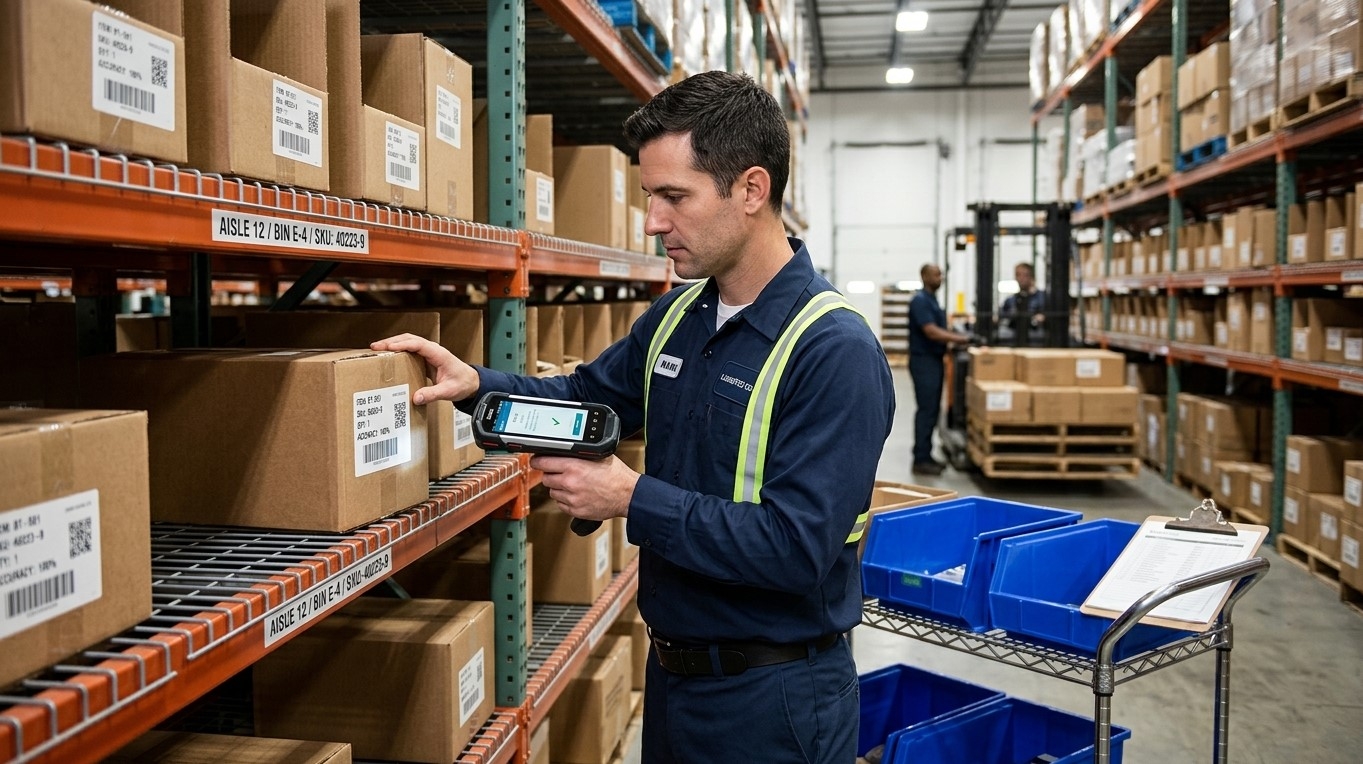
Warehouse picking is one of the most important activities in the order fulfillment process. Employees must locate the correct products, select the required quantities, and prepare them for packing and shipping. Even a small picking error can result in incorrect orders, customer complaints, returns, additional shipping costs, and inventory discrepancies. Pointus Solutions helps businesses improve warehouse operations through practical Auto-ID and barcode technologies. With the right Shop Barcode solutions and reliable Printing Products, businesses can create more accurate and efficient picking processes.
Barcode technology provides warehouse employees with a simple way to identify products and storage locations. Instead of relying entirely on product descriptions, handwritten notes, or manual data entry, workers can scan barcodes to verify what they are picking. When barcode scanners are connected to inventory or warehouse management systems, every scan can be recorded and validated in real time.
What Is Warehouse Picking?
Warehouse picking is the process of retrieving products from their designated storage locations to fulfill customer orders, production requirements, or internal stock requests.
A typical picking process involves:
- Receiving a picking order.
- Locating the required storage location.
- Identifying the correct product.
- Picking the required quantity.
- Confirming the selected items.
- Moving products to packing or dispatch.
- Updating inventory records.
Although the process sounds straightforward, it becomes increasingly challenging as the number of products, orders, and warehouse locations increases.
Products may have similar packaging, different sizes, multiple variants, or different stock-keeping units (SKUs). Barcode technology helps employees distinguish between these products more reliably.
Why Warehouse Picking Accuracy Matters
Picking errors can have a direct impact on warehouse performance and customer satisfaction.
Common picking mistakes include:
- Selecting the wrong product
- Picking the wrong quantity
- Picking from the wrong location
- Selecting an outdated product variant
- Missing an item from an order
- Recording the wrong SKU
- Sending products to the wrong destination
These errors can create additional work for warehouse and customer service teams. The business may need to process returns, issue replacements, correct inventory records, or pay for additional transportation.
Accurate picking helps businesses reduce these problems while keeping the fulfillment process moving efficiently.
How Barcode Technology Improves Picking Accuracy
Barcode systems provide a digital verification point throughout the picking process. Instead of relying only on visual identification, warehouse employees can scan products and locations to confirm that they are following the correct picking instructions.
1. Accurate Product Identification
Each SKU can be assigned a unique barcode. When an employee scans the product, the warehouse management system can identify the item and compare it with the picking order.
For example, if an order requires Product A but the employee scans Product B, the system can identify the discrepancy before the product reaches the packing area.
This simple verification step can prevent many picking errors.
2. Correct Storage Location Verification
Warehouses often contain hundreds or thousands of storage locations.
Location barcodes can be attached to:
- Aisles
- Racks
- Shelves
- Bins
- Pallet positions
- Picking zones
A warehouse worker can scan the location before picking the product. This provides another layer of verification and helps ensure that the employee is working at the correct location.
3. Reduced Manual Data Entry
Manual entry increases the possibility of errors. Employees may accidentally enter the wrong product code, quantity, or location.
Barcode scanning eliminates much of this repetitive typing.
Instead of manually entering product information, the employee scans the barcode and allows the system to capture the data automatically. This saves time while improving the consistency of inventory records.
4. Real-Time Picking Verification
Barcode scanning can provide immediate feedback during picking.
For example, the system may confirm:
Correct Product → Pick Accepted
or
Incorrect Product → Pick Rejected
This allows errors to be identified at the point where they occur rather than later during packing, shipping, or customer delivery.
Barcode-Based Warehouse Picking Process
A barcode-enabled picking workflow can be organized into several steps.
Step 1: Receive the Picking Order
The warehouse employee receives an order through a warehouse management system, mobile computer, tablet, or other connected device.
The order includes information such as:
- Product SKU
- Quantity
- Storage location
- Order number
- Picking sequence
Step 2: Navigate to the Correct Location
The system directs the employee to the appropriate storage location.
Location barcodes help confirm that the employee has reached the correct area.
Step 3: Scan the Location
The employee scans the location barcode before picking.
This confirms that the picking activity is taking place at the expected location.
Step 4: Scan the Product
The employee scans the product barcode.
The system checks the scanned product against the picking order.
Step 5: Confirm Quantity
The employee picks the required quantity. Depending on the system, the quantity can be confirmed manually or through repeated scans.
Step 6: Move to the Next Item
Once the pick is successfully completed, the system provides instructions for the next product.
Step 7: Complete the Picking Process
After all products have been picked, the items move to packing, sorting, or dispatch.
This workflow creates a controlled process where products are continuously verified.
The Role of Barcode Labels in Picking Accuracy
Barcode scanners are only effective when the barcodes they scan are clear and readable.
High-quality barcode labels should have:
- Clear printing
- Appropriate contrast
- Correct barcode dimensions
- Suitable label material
- Proper placement
- Adequate protection for the environment
Damaged, faded, poorly printed, or incorrectly sized labels can lead to scanning difficulties.
Businesses should therefore select appropriate barcode printers and label materials based on their warehouse conditions.
For example, warehouses with high humidity, temperature changes, dust, or frequent product handling may require more durable label materials.
Using Barcode Printers for Reliable Warehouse Labels
Barcode printers are an important part of an effective warehouse identification system. They allow businesses to create labels for products, cartons, pallets, bins, racks, and locations.
Thermal printing is widely used for warehouse labels because it can produce clear, machine-readable barcodes at high volumes.
Businesses should consider factors such as:
- Printing volume
- Print resolution
- Label size
- Connectivity
- Printing speed
- Label material
- Environmental conditions
Choosing the right printer helps maintain consistent barcode quality throughout warehouse operations.
Handheld Scanners and Mobile Computers
Different warehouse environments require different scanning devices.
Handheld Barcode Scanners
Handheld scanners are suitable for many standard picking operations. They are simple to operate and can quickly capture barcode information.
Wireless Barcode Scanners
Wireless scanners provide greater mobility because employees do not need to remain connected to a workstation.
Mobile Computers
Mobile computers combine barcode scanning with a screen and computing capabilities. Employees can receive picking instructions, scan products, check inventory, and confirm transactions directly from the warehouse floor.
The right device depends on warehouse size, workflow, scanning volume, connectivity requirements, and environmental conditions.
Integrating Barcode Scanning With WMS and ERP Systems
Barcode technology becomes significantly more useful when integrated with warehouse management systems (WMS) or enterprise resource planning (ERP) software.
Integration allows barcode scans to update inventory records automatically.
For example:
Picking Order → Location Scan → Product Scan → Quantity Confirmation → Inventory Update → Packing
This reduces the need for duplicate data entry and provides better visibility into warehouse activities.
Integration can also help managers monitor picking performance and identify recurring issues.
Benefits of Barcode-Based Picking
Implementing barcode technology can provide several operational benefits.
Improved Accuracy
Scanning provides multiple verification points during picking.
Faster Order Fulfillment
Employees can identify products and locations quickly without repeatedly entering information manually.
Better Inventory Records
Every successful scan can update inventory transactions and reduce discrepancies.
Reduced Training Requirements
Barcode-based workflows can provide clear instructions and simple scanning steps for warehouse employees.
Better Traceability
Businesses can maintain records of product movements and picking transactions.
Reduced Operational Costs
Fewer picking errors can reduce returns, rework, replacement shipments, and administrative effort.
Best Practices for Improving Picking Accuracy
Businesses can further improve their barcode picking systems by following several best practices.
Use Unique Product Barcodes
Each SKU or product variation should have a clear and appropriate identifier.
Label Every Important Location
Storage locations should have highly visible and easily scannable barcodes.
Maintain Barcode Printers
Regular printer maintenance helps prevent poor-quality labels.
Replace Damaged Labels
Damaged labels should be replaced promptly rather than allowing scanning problems to continue.
Train Warehouse Employees
Employees should understand the scanning process, error messages, product verification, and exception handling.
Monitor Picking Performance
Businesses should track metrics such as:
- Picking accuracy
- Orders picked per hour
- Picking errors
- Rework rates
- Returns caused by incorrect items
- Average picking time
These measurements can help identify areas for improvement.
How Barcode Technology Supports Warehouse Growth
As a business grows, warehouse operations often become more complex. More SKUs, employees, storage locations, and customer orders can make manual picking increasingly difficult.
A scalable barcode system can grow alongside the warehouse.
Businesses can gradually add:
- Additional barcode printers
- Wireless scanners
- Mobile computers
- New warehouse locations
- Automated picking workflows
- WMS integrations
- Advanced inventory tracking
This allows businesses to improve their operations without depending entirely on manual processes.
Choosing the Right Barcode Solution
The right barcode solution depends on the company's specific warehouse requirements.
Before implementing a system, businesses should evaluate:
- Number of SKUs
- Warehouse size
- Daily order volume
- Picking methods
- Existing WMS or ERP software
- Required scanning range
- Environmental conditions
- Label requirements
- Connectivity
- Future expansion plans
A properly planned system should support both current operations and future growth.
Conclusion
Warehouse picking accuracy is essential for reliable order fulfillment, inventory control, and customer satisfaction. Barcode technology provides businesses with a practical way to verify products, confirm storage locations, reduce manual data entry, and maintain accurate inventory records throughout the picking process.
By combining barcode scanners, mobile computers, reliable labels, barcode printers, and integrated warehouse software, businesses can establish a more controlled and efficient picking workflow. Pointus Solutions can help businesses explore suitable Auto-ID solutions, while Shop Barcode resources and dependable Printing Products can support the hardware and labeling requirements needed for accurate warehouse operations.
As warehouses become larger and order volumes increase, barcode technology can provide the foundation needed to maintain picking accuracy, improve productivity, and create greater visibility across the entire inventory management process.

 English
 Arabic
 French
 Spanish
 Portuguese
 Deutsch
 Turkish
 Dutch
Dutch
 Russian
 Romaian
 Portuguese (Brazil)
 Greek
Greek
