


Cabochon vs. Faceted Gemstones: How the Cut Changes Everything
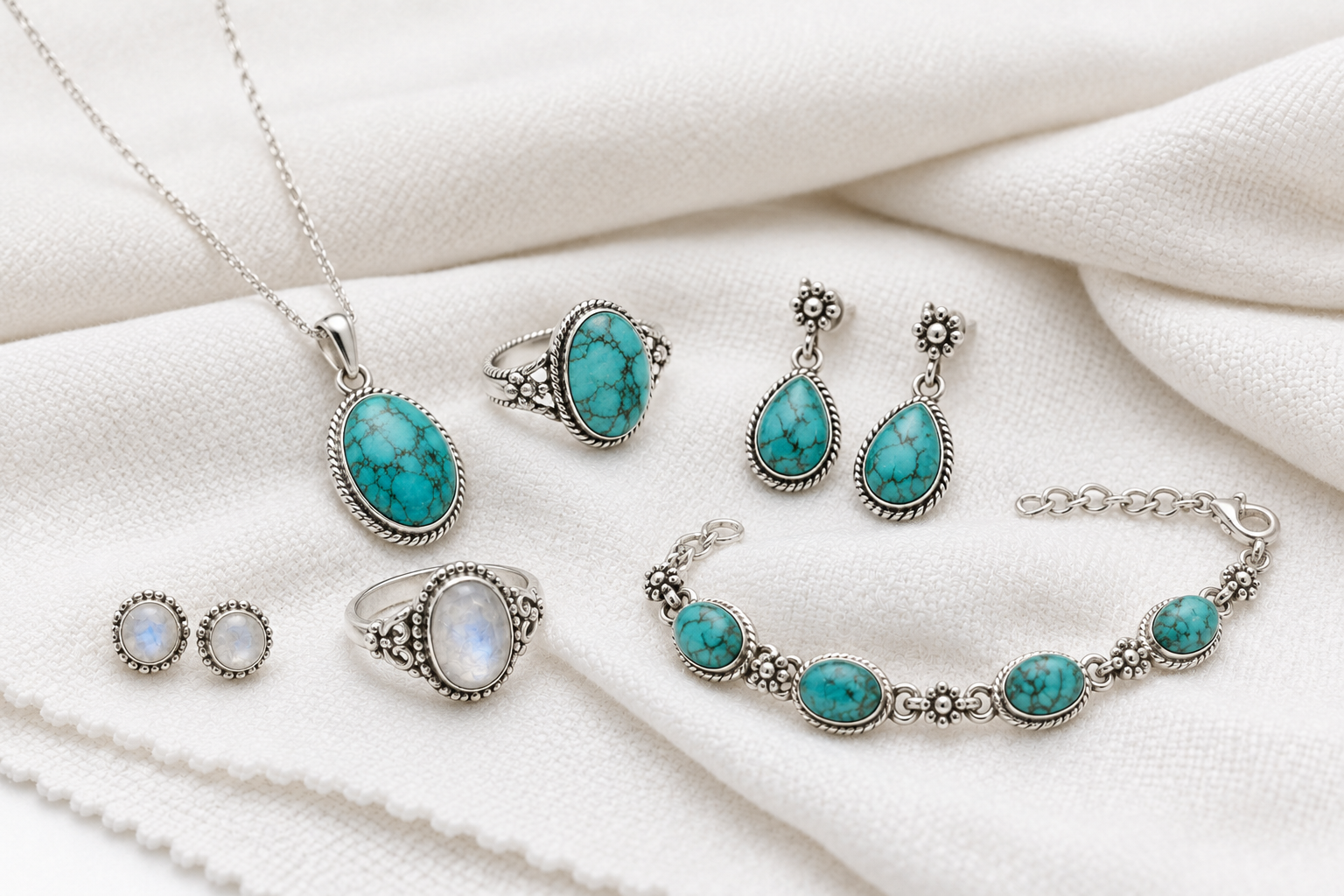
Two gemstones of the same type can look completely different depending on how they are cut, and the choice between a smooth, domed cabochon and a sparkling faceted stone affects far more than appearance. It changes how a stone is set, how it wears, what it costs to produce, and which jewelry designs it suits. For brands and buyers sourcing gemstone jewelry, understanding this difference leads to better design decisions and fewer surprises when samples arrive.
What a Faceted Cut Actually Does
A faceted stone is cut with many small, flat, polished surfaces called facets, each placed at a precise angle. The purpose is optical: light enters the stone, reflects off the internal facets, and exits through the top, creating brilliance and sparkle. This makes faceting the natural choice for transparent stones where light can travel through the material, such as sapphire, ruby, emerald, aquamarine, amethyst, and topaz. The quality of a faceted cut depends heavily on the cutter's precision, because poorly angled facets let light leak out through the bottom of the stone and leave it looking dull, even if the color and clarity of the rough material were excellent.
What a Cabochon Cut Does Instead
A cabochon is polished into a smooth, rounded dome with a flat or slightly curved back, without facets. Instead of sparkle, a cabochon shows color, depth, and surface effects. This cut suits opaque and translucent stones such as turquoise, lapis lazuli, moonstone, labradorite, and many varieties of agate, and it is also used for stones that display special optical phenomena. A star effect or a cat's-eye band of light only appears when the stone is cut as a smooth dome in the right orientation, so cabochon cutting is essential for showing these features at their best.
Why the Cut Decision Starts With the Rough Stone
The right cut depends first on the material. Transparent, clean rough usually rewards faceting, while stones with heavy inclusions or an opaque body often look better as cabochons, since smooth polishing can make those characteristics part of the stone's character rather than a flaw. A skilled cutter studies each piece of rough before deciding, balancing color, clarity, and the amount of material that will be lost during cutting. This is one reason that working with an experienced gemstone manufacturer matters, because the cutting decision can change the final value of a stone considerably.
Durability and Wear Differences
Cabochons are generally more forgiving in daily wear than faceted stones. A smooth dome has no sharp facet edges that can chip, and its rounded profile deflects impact better. Faceted stones have crisp edges and corners, particularly on shapes such as emerald cuts and princess cuts, which are more prone to chipping if struck. That said, hardness and toughness depend on the stone itself, so a faceted sapphire is still far more durable than a cabochon of a soft stone. The cut influences wear, but it does not override the material's own properties.
Setting Considerations
Cabochons and faceted stones are usually set differently. Faceted stones are often held with prongs that grip the stone while leaving the top and sides open to light. Cabochons sit well in bezel settings, where a metal rim surrounds the stone's edge, offering strong protection and a clean, modern look. Because the back of a cabochon is flat, it also lends itself to simple, secure settings in gold vermeil and silver pieces. Brands choosing between the two should consider the setting at the design stage, since a stone cut for one style may not suit another without modification.
Cost and Labor Differences
Faceting is generally more demanding than producing a basic cabochon, since each facet must be ground and polished at a precise angle, and the loss of material during cutting can be significant. Simple cabochons typically involve less labor and less waste, which can make them more economical to produce, particularly in larger sizes. However, high-quality cabochons, especially those showing a clean optical effect or fine, even color, can be just as valuable as faceted stones of comparable grade. Price should always be judged by the quality of the specific stone rather than by cut alone.
Design and Style Considerations
The two cuts create different design personalities. Faceted stones read as refined, luminous, and often traditional, which suits engagement rings, formal earrings, and classic pendants. Cabochons read as earthy, bold, and artisanal, which suits statement rings, bohemian styles, and designs where color and surface carry the look. Many brands use both within a single collection, giving customers a choice between sparkle and soft, saturated color, which broadens the appeal of a range without requiring entirely different materials.
What Buyers Should Check on Samples
When reviewing samples, look at how cleanly each cut has been executed. On faceted stones, check that facets are symmetrical, edges are crisp, and the stone sparkles evenly across its surface rather than showing dead, dark patches. On cabochons, check that the dome is smooth and evenly shaped, the polish is consistent, and the stone sits level in its setting. Also confirm treatment status in writing, since heat treatment, oiling, or dyeing affects both appearance and value regardless of the cut.
The Bottom Line
Faceted and cabochon cuts are not better or worse versions of the same thing. They are different approaches that suit different materials, settings, and design directions. Faceting maximizes sparkle in transparent stones, while cabochon cutting highlights color, depth, and special optical effects in opaque and translucent ones. Brands that match the cut to the material and to the intended style, and that evaluate cut quality carefully on samples, build gemstone collections that look better and wear better.
For brands looking for a manufacturing partner experienced in both cutting styles across natural and lab-grown stones, it is worth exploring sterling silver jewelry manufacturing with Eon Gems, a Jaipur-based manufacturer with more than 36 years of experience exporting to over 50 countries, working without a fixed minimum order quantity.

 English
 Arabic
 Spanish
 Portuguese
 Deutsch
 Turkish
 Dutch
Dutch
 Italiano
 Russian
 Romaian
 Portuguese (Brazil)
 Greek
Greek
