


Rust Cleaning Laser: Efficient Rust Removal for Industrial Surfaces
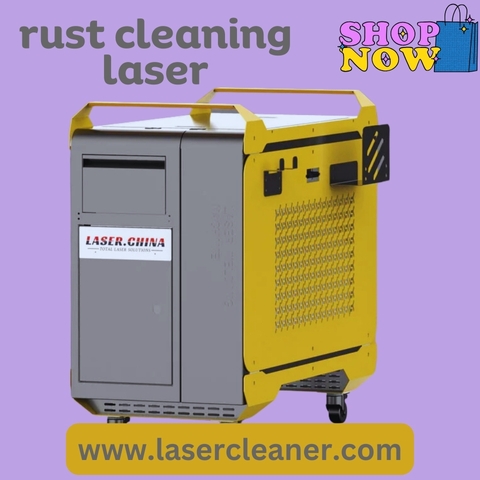
Rust can damage metal surfaces, reduce equipment performance, and affect the quality of industrial products. Traditional rust removal methods often require chemicals, abrasive materials, or extensive manual labor. A rust cleaning laser offers a modern solution by using concentrated laser energy to remove rust, oxide layers, and surface contaminants from metal components.
This technology is becoming increasingly popular in manufacturing, automotive maintenance, metal fabrication, and industrial restoration. It provides a controlled cleaning process that helps businesses maintain metal surfaces while improving cleaning efficiency.
What Is a Rust Cleaning Laser?
A rust cleaning laser is a specialized machine that uses high-energy laser pulses or continuous laser radiation to remove unwanted rust and other contaminants from metal surfaces. The laser interacts with the rust layer, helping separate or vaporize the unwanted material without relying on chemical cleaning agents or abrasive blasting media.
Depending on the machine's power, settings, and cleaning mode, operators can use this technology on different metal components, including steel structures, iron parts, machinery, and selected metal tools.
Laser cleaning systems are available in portable handheld models and larger industrial configurations. Portable units are suitable for maintenance work and cleaning hard-to-reach areas, while industrial systems can support repetitive cleaning tasks in production environments.
How Does Laser Rust Removal Work?
The cleaning process begins when the operator directs the laser beam toward the rusted surface. The laser energy interacts with the corrosion layer, causing it to detach or break down. A suitable combination of power, scanning speed, pulse settings, and focal distance helps achieve the desired cleaning result.
The process generally involves these steps:
-
Surface inspection: Examine the metal to determine the rust level and surface condition.
-
Machine adjustment: Select suitable laser parameters for the material and contamination.
-
Laser application: Direct the beam across the affected area using the recommended scanning technique.
-
Surface evaluation: Inspect the cleaned metal and repeat the process if necessary.
-
Post-cleaning protection: Apply an appropriate protective coating or rust inhibitor when required.
Proper parameter selection is essential to minimize unwanted changes to the underlying metal.
Applications of Rust Cleaning Laser Technology
Industrial Equipment Maintenance
Factories use laser cleaning equipment to remove corrosion from machine components, metal fixtures, and selected industrial tools. Regular maintenance can help prepare surfaces for inspection, repair, or recoating.
Automotive Restoration
Automotive workshops can use laser cleaning to remove rust from selected vehicle parts, brackets, and metal components. Controlled cleaning is particularly useful when preserving the original surface condition is important.
Metal Fabrication
Metal fabrication businesses often need clean surfaces before welding, painting, or applying protective coatings. Laser cleaning can help remove rust and surface contaminants before these processes, provided the surface meets the relevant preparation requirements.
Steel Structures and Manufacturing
Steel structures, industrial frames, and manufactured metal products can develop corrosion during storage or exposure to moisture. Appropriate laser cleaning systems can help prepare affected areas for maintenance and further processing.
Choosing the Right Laser Cleaning Machine
Selecting suitable equipment depends on the type of metal, rust thickness, cleaning area, and frequency of use. A portable system may suit maintenance teams working across different locations, whereas a higher-capacity industrial machine may be more appropriate for large surfaces or continuous production.
Before purchasing, consider laser power, pulse characteristics, scanning width, cooling requirements, extraction arrangements, maintenance support, and the availability of replacement parts. Ask the supplier for a demonstration using your actual workpiece to verify cleaning quality and processing speed.
It is also important to evaluate the total operating cost, warranty coverage, training, and local technical support rather than comparing machines on purchase price alone.
Safety Considerations for Laser Cleaning
Industrial laser equipment requires strict safety precautions. Many cleaning lasers are Class 4 systems and can cause serious eye or skin injuries. Direct and reflected laser beams may also present hazards beyond the immediate cleaning area.
Operators should use an appropriately enclosed or controlled work area, wavelength-specific laser protective eyewear, suitable interlocks, and equipment designed for the laser's hazard classification. Proper fume extraction is necessary because removing rust, paint, coatings, or unknown residues can generate hazardous airborne contaminants.
Always follow the manufacturer's instructions and applicable workplace laser safety regulations. Never operate a laser cleaning machine without appropriate training and safety controls.
Why Businesses Are Considering Laser Cleaning
As industries seek more controlled and efficient surface preparation methods, laser cleaning is gaining attention as an alternative to certain abrasive and chemical processes. It can reduce the need for consumable blasting media and chemical cleaning agents, depending on the application.
For businesses handling recurring corrosion problems, a suitable laser system may help streamline maintenance workflows and prepare components for subsequent manufacturing operations.
Final Thoughts
A rust cleaning laser provides a modern approach to removing corrosion from a wide range of metal surfaces. From industrial maintenance and automotive restoration to metal fabrication, this technology offers a controlled method of surface preparation when the correct equipment and operating parameters are selected.
Before investing, evaluate your cleaning requirements, test the machine on representative materials, and establish proper safety procedures. Choosing the right system can help your business improve surface preparation and maintain consistent cleaning standards.

 English
 Arabic
 French
 Spanish
 Portuguese
 Deutsch
 Turkish
 Dutch
 Russian
 Romaian
 Portuguese (Brazil)
 Greek
