


Can Siblings Get Different Results From an Ancestry DNA Test?
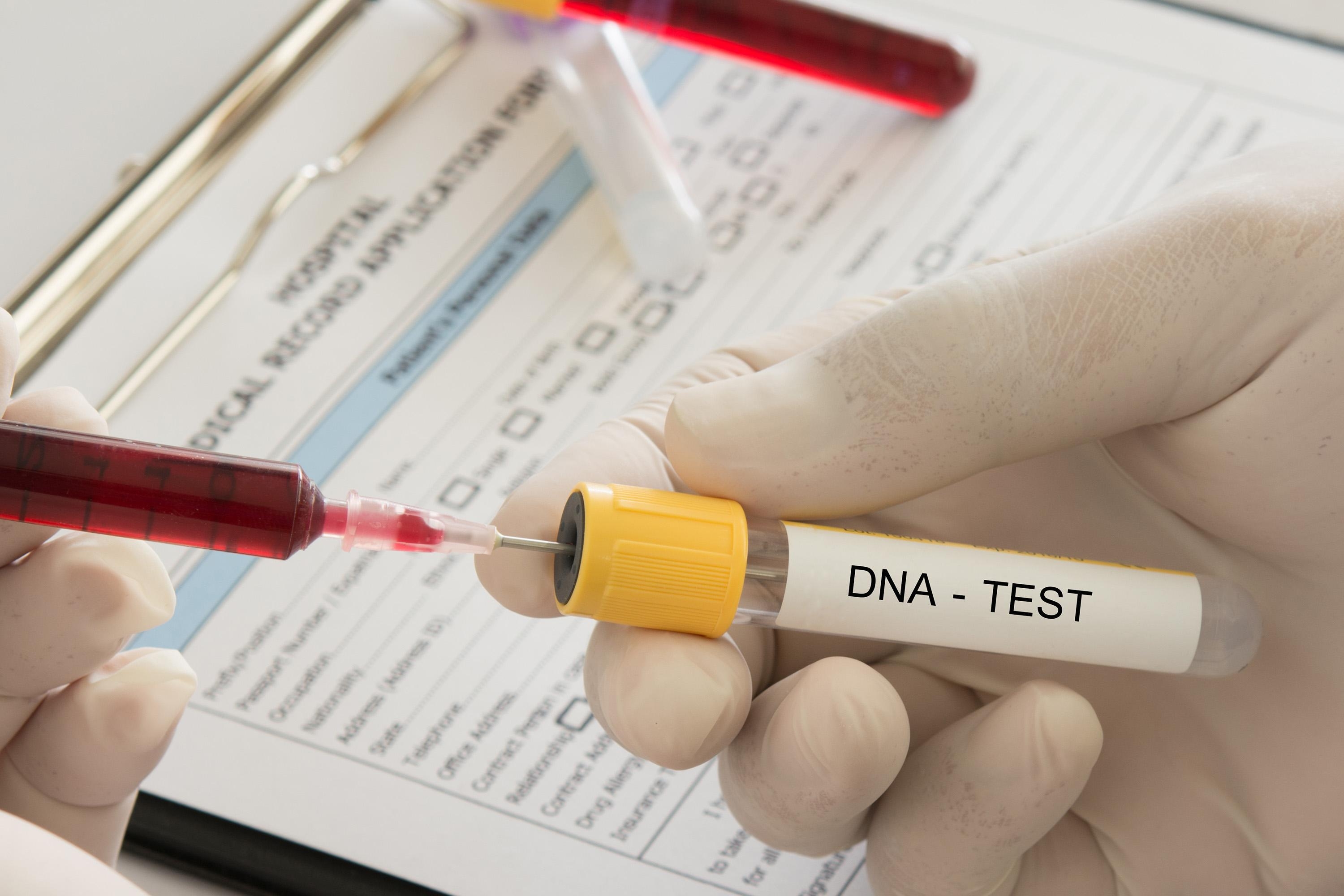
Have you and your sibling taken an ancestry DNA test and received surprisingly different results? Perhaps your report shows a higher percentage of ancestry from one region, while your brother or sister has a stronger connection to another. One sibling might discover several genetic communities, while the other receives different ethnicity estimates or a completely different list of Ancestry DNA Test UAE.
These differences can be confusing, especially when siblings share the same biological parents and family history. However, it is entirely normal for biological siblings to receive different ancestry DNA test results.
The explanation lies in how DNA is inherited, how genetic material is reshuffled between generations, and how testing companies interpret genetic information. Understanding these factors can help you make sense of your results without assuming that one report is more accurate than the other.
The Short Answer: Why Siblings Can Have Different DNA Results
Most full biological siblings share approximately 50% of their autosomal DNA, on average. However, they do not inherit exactly the same combination of genetic material from their parents.
Each child receives a different mixture of DNA from their mother and father. This process creates genetic variation between siblings, even when they share the same parents and grow up in the same household.
As a result, siblings can have differences in:
-
Ethnicity estimates and regional ancestry percentages
-
Genetic communities and ancestral population connections
-
The number and identity of DNA matches
-
The amount of DNA shared with particular cousins
-
The ability to detect small or distant ancestral contributions
These differences do not automatically indicate an error, an undisclosed family relationship, or an inaccurate test. In most cases, they reflect ordinary genetic inheritance combined with the limitations of ancestry estimation.
The Science Behind Sibling DNA Differences:
To understand why ancestry reports differ, it helps to look at what happens before a child is conceived.
Each Child Inherits a Different DNA Combination
A child inherits approximately half of their autosomal DNA from each biological parent. However, a parent does not pass down an identical copy of all their DNA to every child.
Instead, the DNA passed to each child contains a unique combination of genetic material inherited by that parent from previous generations.
For example, imagine that a mother has ancestry from two different regions because her own parents came from different backgrounds. One child may inherit a particular set of DNA segments associated with one side of her family, while another child inherits a different combination.
Both children still inherit approximately half their autosomal DNA from their mother, but the specific segments they receive differ.
This is why siblings can share the same grandparents yet show different genetic signals associated with those grandparents' ancestral populations.
How Genetic Recombination Creates Variation
The process responsible for much of this variation is called genetic recombination.
When eggs and sperm are formed, chromosomes undergo a process in which corresponding chromosomes exchange sections of genetic material. The resulting chromosomes contain new combinations of DNA.
Because each reproductive cell receives a different combination, every child inherits a distinct genetic mixture.
Full siblings therefore share many genetic segments, but they do not share all the same segments. On average, they share about half of their autosomal DNA, although the exact amount varies.
This natural variation is one of the main reasons that two siblings can receive different ethnicity estimates from the same DNA testing company.
Why Ethnicity Percentages Differ Between Brothers and Sisters?
Ethnicity estimates are often the most noticeable difference between sibling DNA reports. One sibling might receive a higher percentage associated with a particular region, while another receives a lower percentage or no reported percentage for that region.
These estimates are based on genetic patterns, not a direct count of ancestors from each country.
DNA Inheritance Does Not Divide Ancestry Into Perfect Percentages
Family trees may suggest that siblings have the same ancestral background, but inherited DNA is not distributed in perfectly equal portions from every ancestor.
Consider a simplified example in which a family has ancestors from several European regions. Both siblings may inherit DNA from the same broad ancestral branches, but one might receive more detectable segments resembling a particular reference population.
The other sibling may inherit fewer such segments or DNA that resembles a neighboring population more closely.
Their ethnicity reports can therefore differ even though their documented family trees are identical.
It is important to remember that a percentage assigned to a region does not necessarily correspond to an exact percentage of ancestors from that region. It represents a statistical estimate of genetic similarity.
Why Small Ethnicity Percentages May Appear in Only One Sibling's Report
Small ancestry percentages can be particularly inconsistent between siblings.
A testing company might identify a small genetic signal in one sibling's DNA but not detect it confidently in the other's. The difference may reflect random inheritance, similarities between neighboring populations, or the company's classification thresholds.
For instance, one sibling might receive a small percentage associated with a distant ancestral region, while the other receives no estimate for that region.
This does not prove that the first sibling has a documented ancestor from that location and the second does not. Additional genetic evidence and family records are needed to evaluate the possibility.
Can Siblings Have Different DNA Matches?
Yes. Siblings can have substantially different DNA match lists, even when they use the same testing service.
A DNA match is identified when a testing platform detects enough shared genetic material between two people. Because siblings inherit different combinations of DNA, they may share detectable segments with different relatives.
Why One Sibling May Match a Cousin More Closely
Suppose two siblings have a cousin through their maternal grandparents. Both may share DNA with that cousin, but one sibling could share more DNA than the other.
This happens because the siblings did not inherit identical DNA segments from their mother. The cousin also inherited a particular combination of DNA from the shared family line.
Consequently, the amount of DNA shared between each sibling and the cousin can vary.
In some cases, one sibling may have a detectable match with a more distant relative while the other does not. The second sibling may simply have inherited fewer matching segments from the relevant ancestor.
Why a Sibling's DNA Match List Can Reveal More Family Connections
Testing multiple siblings can improve family history research because each person contributes a different genetic perspective.
One sibling might match relatives connected to a particular grandparent, while another might have stronger matches associated with a different ancestral branch.
Comparing these results can help researchers:
-
Identify additional biological relatives
-
Investigate unknown branches of a family tree
-
Find possible connections to shared ancestors
-
Group DNA matches by maternal or paternal family lines
-
Explore distant cousins who do not appear on every sibling's match list
However, a missing DNA match does not automatically disprove a biological relationship. Database participation, privacy settings, testing methods, and the amount of shared DNA can all affect whether a match appears.
Why Genetic Communities May Differ Between Siblings?
Some ancestry testing services provide genetic communities, regional groups, or population connections based on patterns shared among tested individuals.
These features may offer clues about relatively recent ancestral origins, migration history, and connections to groups of families.
Because siblings inherit different DNA segments, a testing platform may identify a strong connection between one sibling and a particular community but not assign the same community to the other.
The difference can also depend on the company's classification methods, the available data, and the strength of the genetic evidence.
For example, one sibling might receive a community associated with a historical migration pattern because their inherited DNA and available family connections meet the provider's criteria. The other sibling might not meet those criteria.
This does not necessarily mean that the siblings have different documented ancestors. Instead, the platform may be detecting different parts of the same family's genetic history.
Genetic communities should be interpreted as research clues rather than definitive proof of a particular migration, nationality, or ancestral identity.
Does a Different DNA Result Mean One Sibling's Test Is Wrong?
Not necessarily. Different ancestry DNA results can be scientifically reasonable because each sibling inherits a unique combination of DNA.
Nevertheless, testing limitations and interpretation differences can also influence the reports.
Before assuming that one result is inaccurate, consider these factors:
| Factor | How it affects sibling results |
|---|---|
| Genetic recombination | Each sibling inherits different DNA segments |
| Reference populations | Genetic similarities may be classified differently |
| Testing algorithms | Companies may assign regional ancestry differently |
| Small DNA segments | Minor ancestral signals may be difficult to classify |
| Database size | Different relatives may be available for matching |
| Result updates | New methods may change ethnicity estimates or community assignments |
If the differences are substantial or unexpected, review the testing company's methodology and compare the results with known family information.
If both siblings tested with different companies, differences may be even more noticeable because each provider uses its own reference panels, statistical models, and reporting categories.
How to Compare Sibling Ancestry DNA Results More Effectively?
Instead of comparing ethnicity percentages alone, examine the complete reports and look for patterns that are consistent with your shared family history.
1. Compare Broad Ancestral Regions First
Begin with the largest ethnicity categories rather than focusing immediately on small percentages. Broad regional similarities may be easier to interpret than estimates involving closely related populations.
Remember that different labels can sometimes describe genetically similar neighboring regions.
2. Review Shared DNA Matches
Look at the relatives appearing in both siblings' match lists. Shared matches can help identify connections to common family branches.
Then investigate matches that appear for only one sibling. Those individuals may provide additional clues about a particular grandparent or ancestral line.
3. Use Family Trees and Historical Records
Compare the results with birth certificates, marriage records, immigration documents, census records, and family photographs.
A DNA result becomes more useful when it supports a documented connection rather than standing alone as an unexplained percentage.
4. Check Whether the Results Were Updated
Testing companies may revise ethnicity estimates as reference panels and algorithms improve. Make sure you are comparing current reports, and remember that updates can affect siblings differently.
5. Consider Testing Both Parents When Appropriate
If both biological parents are available and willing to participate, their results may help clarify which ancestral branches contributed particular DNA segments.
Parental testing can make it easier to distinguish maternal and paternal matches, although it will not eliminate every uncertainty in ethnicity estimates.
Frequently Asked Questions About Sibling DNA Results:
Do full siblings share exactly 50% of their DNA?
No. Full siblings share approximately 50% of their autosomal DNA on average, but the exact amount varies because of genetic recombination and inheritance.
Can siblings have different ethnicities according to a DNA test?
They can receive different ethnicity estimates, but their reports do not necessarily mean they have fundamentally different ancestral backgrounds. Each sibling inherits a different combination of DNA from the same parents.
Can one sibling have ancestry that another sibling does not?
One sibling may receive a detectable estimate for a particular region while the other does not. This can happen because of random inheritance and differences in how genetic signals are classified. It does not automatically establish that only one sibling has an ancestor from that region.
Should siblings use the same DNA testing company?
Using the same company can make comparisons easier because the siblings' results are evaluated using similar reference populations and methods. However, even results from the same company will differ naturally.
Conclusion: Different Results Can Tell a Shared Family Story
Siblings can receive different ancestry DNA Lab tests results because genetic inheritance is a process of variation, not duplication. Each child receives a unique combination of DNA from their biological parents, leading to differences in ethnicity estimates, DNA matches, and genetic communities.
These variations are usually a normal part of human genetics rather than evidence of a problem with the test. By examining shared DNA matches, comparing broad ancestral regions, and reviewing family history records, siblings can gain a more complete understanding of their common heritage.
Ultimately, the most valuable approach is to treat each DNA report as one piece of a larger family history puzzle. When siblings compare their findings thoughtfully, their different results can reveal additional clues about the ancestors they share and the genetic history that makes each person unique.

 English
 Arabic
 French
 Spanish
 Portuguese
 Deutsch
 Turkish
 Dutch
 Italiano
 Russian
 Portuguese (Brazil)
 Greek
