


RMC Inventory Management Software | REMICON
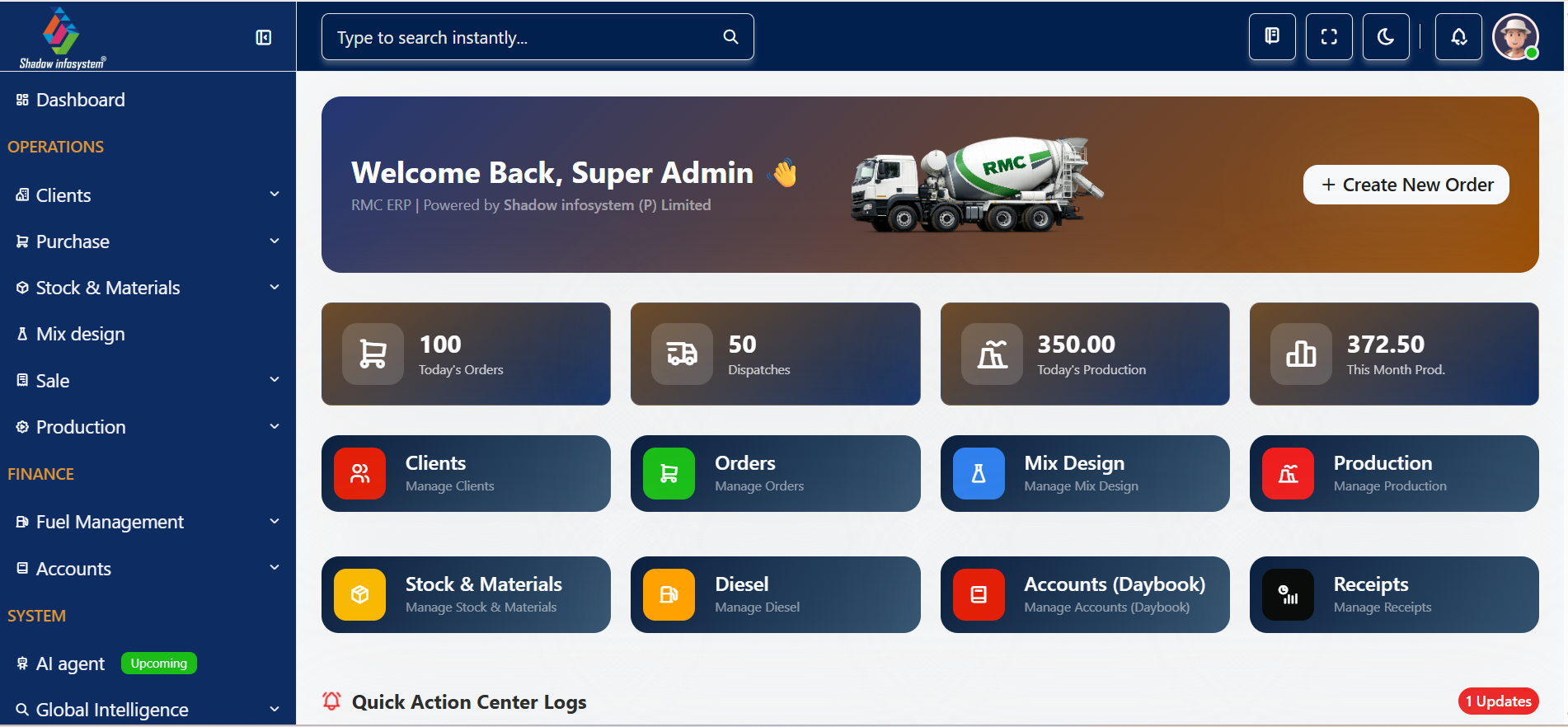
Inventory management is one of the most important aspects of running a ready-mix concrete (RMC) business. From cement and aggregates to sand, water, and chemical admixtures, every raw material plays a critical role in concrete production. Poor stock management can lead to material shortages, unnecessary purchases, production delays, and increased operational costs.
Many RMC businesses still rely on spreadsheets and manual registers to maintain inventory records. Although these methods may work for smaller operations, they become difficult to manage as production volumes increase and multiple batching plants are involved.
Implementing RMC inventory management software helps businesses maintain accurate stock records, monitor material consumption, and improve coordination between procurement, production, and dispatch teams. With a centralized system, RMC operators can make informed decisions and maintain better control over their daily operations.
Why Is Inventory Management Important for RMC Businesses?
Ready-mix concrete production requires the timely availability of different raw materials in the correct quantities. A shortage of even one essential ingredient can interrupt production and affect delivery schedules.
At the same time, maintaining excessive inventory can increase storage costs and tie up working capital. Inaccurate records may also create discrepancies between actual stock and the quantities recorded in business systems.
Effective inventory management helps RMC businesses address these challenges by providing better visibility into available materials, daily consumption, purchase requirements, and stock movements.
A well-organized inventory process supports production planning, improves resource utilization, and helps businesses control unnecessary expenses.
Common Inventory Management Challenges in the RMC Industry
1. Inaccurate Stock Records
Manual inventory entries can lead to calculation errors, duplicate records, and discrepancies between physical stock and recorded quantities. These issues make it difficult for managers to determine the actual availability of raw materials.
Digital inventory management helps centralize stock information and makes it easier to monitor material receipts, consumption, and transfers.
2. Unexpected Material Shortages
Production schedules depend on the availability of cement, aggregates, sand, and other essential materials. When inventory levels are not monitored properly, businesses may discover shortages only when materials are needed.
An inventory management system helps teams identify low-stock situations earlier and plan purchases according to operational requirements.
3. Excessive Material Wastage
Uncontrolled material consumption can increase production costs and reduce profitability. Without accurate records, identifying the reasons behind wastage becomes difficult.
By maintaining production and consumption records, RMC businesses can compare planned material requirements with actual usage and investigate significant variations.
4. Procurement and Supplier Coordination Issues
Inventory management is closely connected to procurement. Delayed purchase orders, inconsistent supplier records, and poor communication between departments can affect material availability.
An integrated ERP system helps connect inventory records with purchasing activities, allowing teams to make more informed procurement decisions.
5. Limited Visibility Across Multiple Plants
Businesses operating several batching plants need accurate information about stock availability at each location. Managing separate spreadsheets for every plant can make consolidated reporting difficult.
A centralized system provides plant-wise inventory information and helps management review stock levels across different locations.
How RMC Inventory Management Software Improves Operational Efficiency
Modern inventory management solutions help RMC businesses replace disconnected records with a structured, data-driven approach to stock control.
Real-Time Raw Material Tracking
RMC inventory management software helps businesses maintain records of essential materials, including cement, aggregates, sand, water, and admixtures.
By recording stock receipts, consumption, and transfers, the system provides better visibility into material availability. Authorized users can review inventory information and identify discrepancies that require attention.
Accurate stock records also help production teams coordinate their requirements with procurement and warehouse personnel.
Automated Inventory Updates
Manual stock updates require regular data entry and reconciliation. When these activities are delayed, inventory reports may not reflect the actual material position.
Integrated inventory software can update stock records based on recorded transactions and production consumption. This reduces repetitive administrative work and helps maintain more consistent inventory information.
Automation also allows teams to spend less time maintaining spreadsheets and more time monitoring operational performance.
Low-Stock Alerts and Better Reordering
Running out of essential materials can interrupt batching operations and affect customer commitments.
Inventory management systems can support minimum-stock thresholds and alerts to help teams identify materials that may need replenishment. Managers can use this information to coordinate purchase orders and supplier deliveries before shortages disrupt production.
Better visibility into stock requirements also helps businesses avoid unnecessary purchases and excessive inventory accumulation.
Material Consumption Monitoring
Tracking raw material consumption is essential for understanding production costs and identifying potential wastage.
An integrated RMC ERP system can connect inventory information with production records, allowing businesses to review material usage against planned requirements.
These insights help managers investigate unusual consumption patterns, improve stock accountability, and make more informed decisions about production planning.
Multi-Plant Inventory Management
For RMC businesses operating multiple batching plants, consolidated inventory visibility can simplify daily management.
A centralized ERP platform can help authorized users review plant-wise stock levels, material movements, and inventory reports from one system.
This makes it easier to identify where materials are available, coordinate stock transfers where appropriate, and plan procurement according to individual plant requirements.
The Role of ERP Software in RMC Inventory Control
Inventory management does not operate independently of other business functions. Material availability affects production planning, purchasing, batching schedules, delivery commitments, and financial performance.
This is why many ready-mix concrete businesses benefit from integrating inventory management with a broader ERP solution.
An RMC ERP system connects essential business processes through a centralized platform. Instead of maintaining separate records for procurement, production, dispatch, and accounts, teams can work with connected operational information.
For example, production records can help managers understand material consumption, while purchase and goods-receipt records support inventory reconciliation. Financial reports can provide additional visibility into material purchasing and operating expenses.
This integrated approach helps reduce information gaps and improves coordination across departments.
REMICON: Simplifying Inventory Management for Ready-Mix Concrete Businesses
Choosing the right technology is an important step toward improving inventory accuracy and operational control. Businesses looking to modernize their processes can explore specialized solutions designed for the requirements of the ready-mix concrete industry.
Shadow Infosystem offers REMICON, a cloud-based RMC ERP solution designed to help ready-mix concrete businesses manage their operations through an integrated platform.
The solution brings together important business functions, including inventory management, procurement, production, dispatch, fleet management, finance, and reporting.
Its inventory-related capabilities support raw material stock tracking, cement and aggregate inventory, stock transfers, and stock alerts. Integration with procurement and production processes helps businesses maintain better visibility into material movements and operational requirements.
With centralized information and reporting, RMC businesses can improve coordination between departments and make more informed decisions about stock replenishment and material utilization.
Businesses can also explore the wider capabilities of REMICON to understand how an integrated ERP system can support production planning, operational monitoring, and multi-plant management.
Learn more about the solution through Shadow Infosystem's guide on how RMC ERP software simplifies ready-mix concrete operations in 2026.
Key Benefits of Implementing RMC Inventory Management Software
Adopting a specialized inventory management solution can support several improvements in daily operations.
Improved Stock Accuracy: Centralized records help businesses maintain better visibility into material receipts, consumption, and transfers.
Reduced Material Wastage: Consumption tracking helps managers identify unusual variations and investigate potential inefficiencies.
Better Production Planning: Accurate inventory information helps production teams plan activities according to available materials and expected requirements.
More Efficient Procurement: Stock visibility and replenishment alerts help purchasing teams plan orders more effectively.
Improved Cost Control: Inventory and consumption reports help businesses review material usage and identify opportunities to manage expenses.
Centralized Multi-Plant Monitoring: Consolidated reporting supports better oversight of inventory across multiple batching plant locations.
The results depend on accurate transaction records, appropriate system configuration, and consistent use by employees. However, a well-implemented solution can provide a stronger foundation for managing inventory and improving operational efficiency.
How to Choose the Right Inventory Management Software for Your RMC Plant
Before selecting an inventory solution, RMC businesses should evaluate their operational requirements and future growth plans.
Consider the following factors:
-
Industry-specific functionality: The system should support the inventory requirements of ready-mix concrete production.
-
Material consumption tracking: Look for features that help record and analyze raw material usage.
-
Procurement integration: Purchasing activities should connect with stock records to improve visibility.
-
Multi-plant support: Businesses with several locations should be able to review plant-wise inventory and consolidated reports.
-
Reporting capabilities: Inventory reports should help managers understand stock movements, material consumption, and replenishment requirements.
-
Scalability: The solution should accommodate additional users, plants, and operational requirements as the business grows.
-
Ease of use: Employees should be able to record transactions and access relevant information without unnecessary complexity.
Evaluating these features against actual business requirements can help companies choose a system that supports both current operations and long-term development.
Conclusion
Effective inventory management is essential for maintaining consistent production, controlling material costs, and avoiding unnecessary operational disruptions in the ready-mix concrete industry.
Relying entirely on manual records can make it difficult to track stock accurately, monitor consumption, and coordinate procurement across multiple plants. Implementing RMC inventory management software provides a more structured approach to stock monitoring, replenishment planning, and operational reporting.
By connecting inventory with procurement, production, and financial processes, RMC businesses can improve visibility across their operations and make better-informed decisions.
With REMICON from Shadow Infosystem, ready-mix concrete businesses can explore an integrated ERP approach to inventory management and broader operational control. Adopting the right digital solution can help establish more reliable processes and create a stronger foundation for sustainable business growth.

 Arabic
 French
 Spanish
 Portuguese
 Deutsch
 Turkish
 Dutch
 Italiano
 Russian
 Romaian
 Portuguese (Brazil)
 Greek
