


Choosing a Manufacturing Partner for Custom Stamped Components
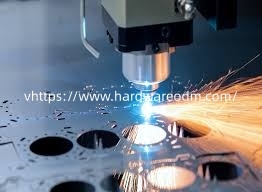
Many industrial products rely on metal parts that must fit neatly into a larger assembly while supporting practical use. From brackets and covers to functional hardware, these components often begin as flat material and are shaped through coordinated manufacturing operations. When a product requires Stamping Machining, the final result depends on how material properties, tooling, forming methods, and finishing work together. For product designers and sourcing teams, understanding this relationship helps turn an initial concept into a component that can be produced consistently and integrated into its intended application.
Material selection is an important starting point because different metals respond differently to forming. Steel is commonly considered for components that need structural support, while stainless steel may be selected when corrosion resistance or surface appearance is important. Aluminum can be useful in designs where lower weight is a consideration, although its forming behavior must be taken into account. The material should be evaluated not only for its appearance or strength, but also for how it responds to bending, drawing, cutting, and other operations. A suitable choice supports the intended function while helping reduce unnecessary processing difficulties.
Selecting a manufacturing solution begins with understanding the component's purpose. Buyers should consider where the part will be installed, what other components it must connect with, and how it will be handled during assembly. A decorative cover may place emphasis on visible surfaces and edge quality, while a structural bracket may require careful attention to shape retention and connection points. Product drawings, samples, and clear descriptions of the working environment help a manufacturer understand the design intent. Discussing these details early can also reveal opportunities to simplify the part without compromising its required function.
The technical process involves more than pressing a piece of metal into a desired shape. Stamping may include operations such as blanking, piercing, bending, or forming, depending on the component's geometry. Tooling guides the material through the intended transformation, while the sequence of operations influences the shape and consistency of the finished part. For some products, additional machining or finishing may be needed to complete features that are not practical to create during stamping alone. Coordinating these stages helps maintain continuity between the original design and the finished component.
Tooling design plays a central role in production quality. The tool must accommodate the material's behavior and support the intended shape without creating unnecessary stress or distortion. Clear communication between product designers and manufacturing engineers can help identify areas where a design may be difficult to form. Changes to bends, edges, or transitions may sometimes improve manufacturability while preserving the component's purpose. Reviewing a design before production begins can therefore be valuable for both custom projects and repeat orders, especially when a part is intended to fit within a complex assembly.
The user experience of a stamped component is often reflected in how easily it can be installed, handled, and maintained. Smooth edges can make parts more convenient to handle during assembly, while consistent shapes help components align with neighboring elements. If a part is visible in the finished product, surface quality and the absence of unwanted marks may also affect the perceived quality of the overall item. Manufacturing teams should consider these practical details alongside the component's primary function. Buyers can evaluate samples to understand how the part feels, fits, and performs within the intended assembly.
Design and appearance are closely connected to manufacturing choices. A simple, clean profile may suit functional hardware, while a more distinctive contour can contribute to the visual identity of a finished product. Surface treatments, coatings, and finishes can further influence the appearance of the component and its suitability for the working environment. However, decorative choices should be coordinated with the material and forming process. A finish that looks appropriate in a design concept must also be compatible with production, handling, and the expected use of the finished part.
Yongkang Ruizan Industry and Trade Co., Ltd. provides a potential manufacturing partner for businesses developing customized metal hardware and related components. Buyers can discuss material preferences, part geometry, assembly requirements, surface finishing, and quality expectations to clarify the scope of a project. Sharing drawings or sample references can help establish a common understanding before production moves forward. Further information about the company's products and manufacturing services is available at https://www.hardwareodm.com/product

 English
 Arabic
 French
 Spanish
 Portuguese
 Deutsch
 Turkish
 Dutch
 Italiano
 Russian
 Romaian
 Portuguese (Brazil)
