


Choosing the Right Pilot Training Path in India: A Guide for Aspiring Pilots
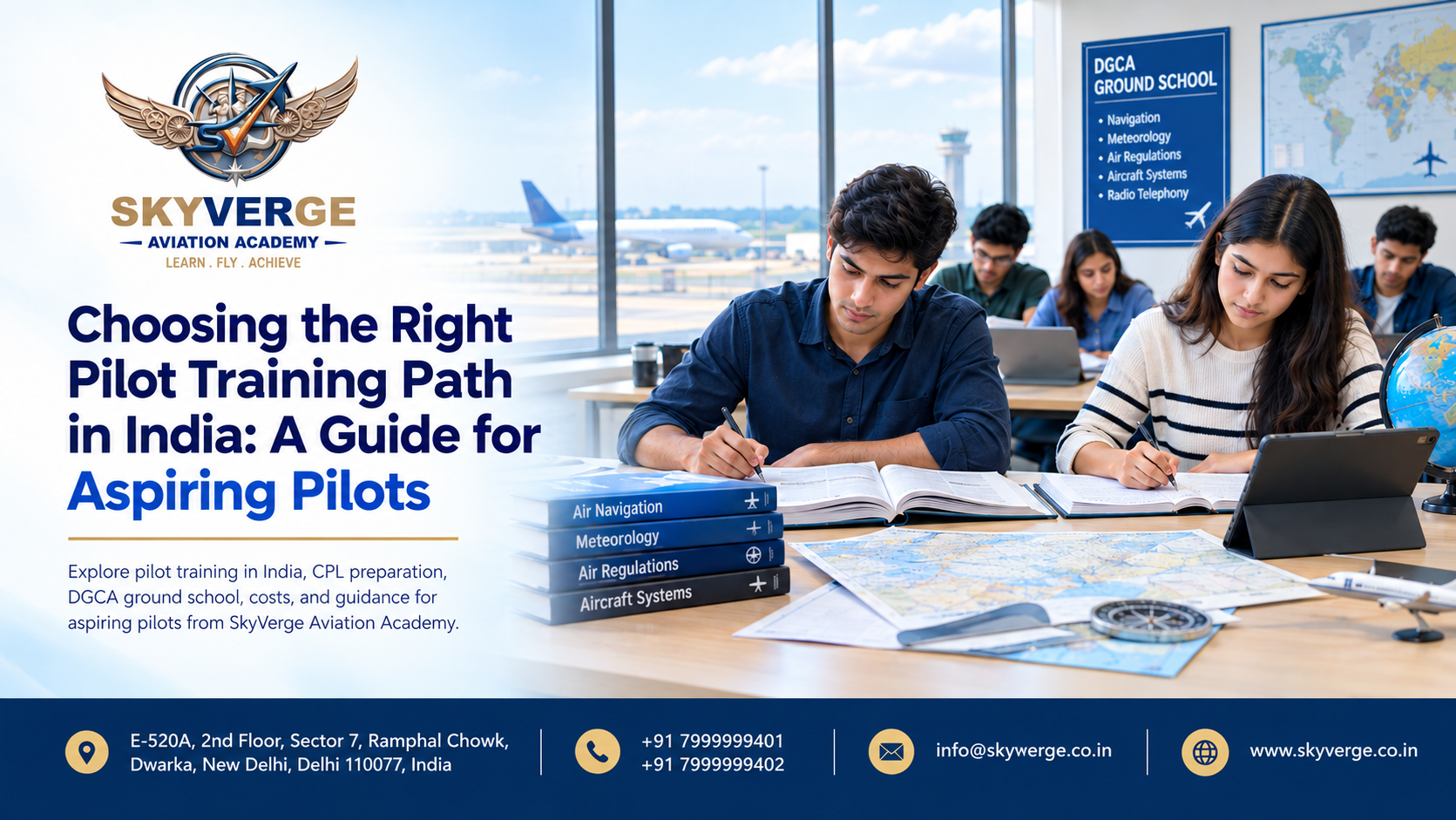
Becoming a commercial pilot is a goal that requires planning, academic preparation, financial awareness, and a clear understanding of the aviation training process. For students beginning their journey, the number of courses, examinations, flying requirements, and aviation terms can initially feel overwhelming.
The first step is to understand how pilot training works in India and what preparation is required before moving into practical flight training. Students also need to understand the role of the Directorate General of Civil Aviation (DGCA), the importance of theoretical subjects, and the financial commitment involved.
For many aspiring pilots, finding the Best pilot training institute in India is not simply about choosing an institute with an attractive name. Students should evaluate the quality of academic preparation, faculty support, course structure, guidance, learning resources, and overall approach to pilot training.
SkyVerge Aviation Academy, located in Dwarka, New Delhi, focuses on aviation education and preparation for students who are planning to build a career in the aviation sector. The academy provides guidance to students as they understand the requirements and prepare for the different stages of their aviation journey.
Understanding the Commercial Pilot Training Journey
A commercial pilot career involves several stages rather than a single course. Students generally need to understand the academic requirements, medical eligibility, DGCA examinations, ground preparation, flight training, and licensing requirements.
Before beginning the practical flying phase, students need a strong foundation in aviation theory. Subjects can include areas such as air regulations, air navigation, meteorology, technical subjects, and other areas relevant to pilot licensing.
This is why choosing the right educational environment is important. A student who understands the theory properly can approach examinations and later flight training with greater confidence.
The process can also involve considerable planning. Students may need to consider their educational background, medical requirements, training location, estimated expenses, and the overall timeline of their training.
What Is a CPL Course in India?
A Commercial Pilot Licence (CPL) is an important qualification for individuals who want to pursue professional flying as a career. However, obtaining a CPL involves more than simply learning how to operate an aircraft.
The CPL course in India generally involves both theoretical preparation and practical flight training. Students have to meet the applicable regulatory requirements and complete the required examinations, training, and flying experience.
The theoretical component helps students understand the principles behind aviation operations. For example, pilots need knowledge of navigation, weather conditions, regulations, aircraft systems, and operational procedures.
Practical flight training then allows students to apply this knowledge in an aircraft under the supervision and instruction of qualified flight instructors.
Because the journey involves multiple stages, students should avoid making decisions based solely on the advertised duration or price of a course. Understanding exactly what is included in a training program can help students plan more effectively.
Why DGCA Ground Preparation Matters
One of the most important parts of pilot education is theoretical preparation. This is where DGCA ground school becomes particularly relevant.
Ground school is designed to help aspiring pilots develop their theoretical understanding before and alongside practical flight training. Instead of treating aviation subjects as isolated examination topics, students can learn how different concepts connect to actual flight operations.
For example, meteorology helps pilots understand weather conditions and their effect on flying. Navigation develops an understanding of routes, charts, calculations, and position. Air regulations introduce students to the rules and procedures governing aviation operations.
A structured learning environment can also help students identify difficult topics, practise questions, revise important concepts, and prepare for examinations systematically.
Students should therefore look at ground training as an important part of their overall pilot education rather than something that can simply be completed at the last minute.
Understanding Pilot Training Cost in India
Cost is naturally one of the biggest considerations for students and parents planning a pilot career.
The Pilot training cost in India can vary considerably depending on factors such as the flight training organisation, aircraft type, flying hours, training location, accommodation, examination-related expenses, medical requirements, study materials, and other associated costs.
Students should therefore avoid relying on one general figure when preparing their financial plan.
A better approach is to ask the training provider for a detailed breakdown. Students can consider questions such as:
- What training components are included in the quoted fee?
- How are flying hours charged?
- Are examination-related expenses included?
- Are accommodation and living expenses separate?
- What happens if additional flying hours are required?
- Are there other administrative or training-related charges?
- What expenses should students expect during the licensing process?
Understanding these details beforehand can make financial planning more realistic.
What Should Students Look for in a Pilot Training Institute?
When students search for a suitable aviation academy, they should look beyond advertisements and promotional claims.
A useful comparison can include the following factors:
Academic Support
Students should understand how theoretical subjects are taught and whether they have access to structured study material, revision support, practice sessions, and academic guidance.
Faculty and Mentorship
Experienced instructors and mentors can make difficult aviation subjects easier to understand. Students should feel comfortable asking questions and discussing areas where they need additional support.
Training Structure
A clearly explained training pathway can help students understand what comes next. The institute should be able to explain the relationship between theoretical preparation, examinations, and practical flying.
Transparency
Students and parents should receive clear information about fees, course components, requirements, and expected responsibilities.
Student Guidance
Pilot training can involve many decisions. Having access to appropriate guidance can help students understand the process rather than making decisions based on incomplete information.
A Conversation Between a Student and a Counselor
Student: I want to become a commercial pilot, but I'm confused about where I should start.
Counselor: That's completely understandable. The first step is to understand the overall pathway. We can discuss your educational background, the licensing process, medical requirements, ground preparation, and flight training.
Student: Do I need to start flying immediately?
Counselor: Not necessarily. You first need to understand the theoretical and regulatory requirements. Ground preparation is an important part of building your aviation knowledge.
Student: I've also heard that pilot training can be expensive. How should I plan for it?
Counselor: You should look at the complete cost rather than focusing only on the initial course fee. Flight training, examinations, medical requirements, accommodation, and other expenses can all affect your overall budget.
Student: How do I choose an institute?
Counselor: Compare institutes based on their training structure, academic support, transparency, faculty guidance, and how clearly they explain the complete pathway. Don't choose an institute only because of a promotional claim.
Student: Can SkyVerge help me understand these steps?
Counselor: Yes. SkyVerge Aviation Academy in Dwarka provides aviation education and preparation and helps students understand the different stages involved in pursuing their aviation goals.
Student: What should I do first?
Counselor: Start by understanding your eligibility and the complete training pathway. Once you know what is required, you can make better decisions about your preparation and future flight training.
Five Questions Students Commonly Ask Before Starting Pilot Training
1. What qualifications do I need to become a commercial pilot?
Students should first understand the applicable educational and regulatory eligibility requirements for the licence they want to pursue. It is also important to understand medical requirements and examination obligations before committing to training.
2. How long does pilot training take?
The timeline can vary depending on several factors, including the student's preparation, examination progress, weather, aircraft availability, flying schedules, and the training organisation.
Therefore, students should think of pilot training as a structured process rather than assuming that everyone will complete it within exactly the same timeframe.
3. Is ground training really necessary?
Yes, theoretical knowledge is an important part of pilot preparation. Understanding aviation regulations, navigation, meteorology, and technical concepts gives students the knowledge needed to approach aviation examinations and practical training more effectively.
4. How much money should I budget for pilot training?
There is no single amount that applies to every student. The overall expense can depend on the training organisation, flying requirements, location, accommodation, examination costs, and additional training needs.
Students should always request a transparent fee structure before making a financial commitment.
5. How should I choose between different aviation institutes?
Students should compare institutes based on academic support, faculty, training structure, transparency, learning resources, guidance, and the clarity of information they receive.
A good institute should help students understand the process rather than simply encouraging them to enrol.
Why Proper Preparation Can Make a Difference
Pilot training requires discipline and consistency. Students may encounter subjects that initially seem difficult, particularly when they are introduced to aviation terminology and technical concepts for the first time.
Regular revision, practice, instructor guidance, and a structured study routine can make the learning process more manageable.
Students should also remember that becoming a pilot is not only about passing examinations. Aviation requires responsibility, decision-making, situational awareness, communication, technical understanding, and professional discipline.
Developing these qualities from the beginning can help students build a stronger foundation for their future aviation careers.
Begin Your Aviation Journey with Better Understanding
Choosing an aviation training pathway is an important decision, and students should take the time to understand what they are committing to. From theoretical preparation and DGCA examinations to practical flight training and licensing requirements, each stage contributes to the overall journey.
SkyVerge Aviation Academy is based in Dwarka, New Delhi, and supports students through aviation education and preparation. The academy aims to help aspiring pilots understand the requirements of their chosen pathway and approach their preparation with greater clarity.
Students and parents can contact SkyVerge Aviation Academy to discuss their questions and understand the available guidance.
SkyVerge Aviation Academy
E-520A, 2nd Floor, Sector 7, Ramphal Chowk,
Dwarka, New Delhi, Delhi 110077, India
Phone: +91 7999999401
Phone: +91 7999999402
Email: info@skyverge.co.in
Aviation is a demanding career, but with proper planning, consistent preparation, and a clear understanding of the training pathway, aspiring pilots can take their first steps with greater confidence.

 English
 Arabic
 French
 Spanish
 Portuguese
 Deutsch
 Turkish
 Italiano
 Russian
 Romaian
 Portuguese (Brazil)
 Greek
Greek
